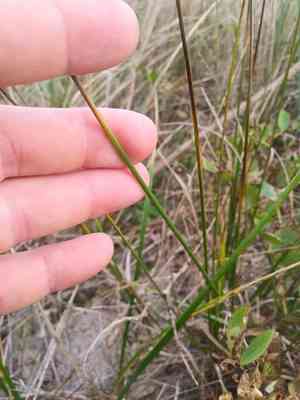
Beach sedge (Carex silicea)
Also known as: Beach Sedge, Sand Sedge
Beach sedge is a perennial plant that flourishes in coastal sand dunes and sandy shorelines. It develops dense clumps of slender, upright leaves topped with delicate flower spikes. Its extensive root system plays a key role in stabilizing shifting sands, exemplifying its adaptation to wind-exposed environments. This plant is often essential in dune ecosystem restoration and conservation due to its ability to prevent erosion and support native biodiversity.
In This Article
Attributes of Beach sedge
Lifespan
Perennial
Plant Height
30 cm to 91 cm
Spread
N/A
Leaf Color
Green
Flower Size
N/A
Flower Color
Brownish
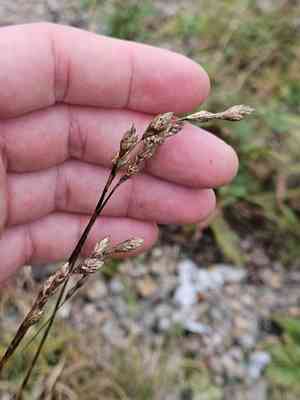
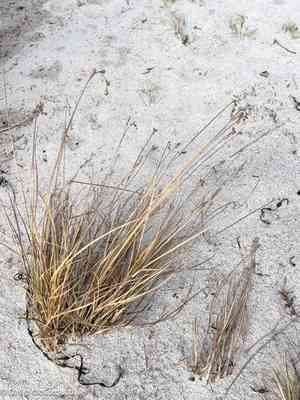
Images of Beach sedge


Quickly Identify Beach sedge
1
To identify Carex silicea, look for its distinctive narrow, grass-like leaves and its dense clumps that are often found in sandy soils near the coast. The plant produces small, inconspicuous flowers.
Scientific Classification of Beach sedge
Phylum
Vascular plants
Class
Monocotyledons
Order
Poales
Family
Sedge
Genus
True sedges
Species
Beach sedge
Planting and Growing of Beach sedge
Care Difficulty
Easy
Watering Schedule
Every 2 days
Sunlight Requirements
Partial sun
Sunshine Duration
4-6 hours
Ideal Temperature
60-75℉
Soil Type
Potting Mix, Peat Mix
Soil pH
6.5-7.5
Fertilizer Type
Balanced
Pruning Season
Spring, Summer
Pruning Area
Branches, Leaves
Pruning Frequency
2 times a year
Repotting Season
Spring
Pot Type
Plastic, Ceramic
 How to Water Beach sedge?
Water Carex silicea with about 500 milliliters in one go, ensuring the soil remains evenly moist but never waterlogged. The principle here is to simulate the plant's natural environment, where water is abundant but drains quickly, so the soil should feel consistently damp but not swampy.
What are the symptoms of an underwatered Beach sedge?
›
What should I do if my Beach sedge is not getting enough water?
›
What are the symptoms of an overwatered Beach sedge?
›
How to save an overwatered Beach sedge?
›
 What Are the Sunlight Requirements for Beach sedge?
Carex silicea benefits from partial to full sun exposure. In such settings, the plant tends to flourish with vibrant foliage and strong growth patterns, optimizing its natural aesthetics and providing better resistance against unfavorable conditions.
What are the ideal light conditions for Carex silicea?
›
How to achieve ideal lighting for Carex silicea?
›
Benefits of providing ideal light to Carex silicea
›
 What Is the Ideal Temperature Range for Beach sedge?
The ideal temperature range for Carex silicea is between 60°F and 75°F. Within this range, the plant is able to maintain its metabolic processes effectively and exhibit optimal growth and vigor. Ensuring temperatures are maintained within this range supports healthy leaf and root development, enhancing the plant's resilience to stress and disease.
 What Soil is Best for Beach sedge?
Carex silicea thrives in well-drained soils, which prevent waterlogging that can cause root rot. This quality enhances the survival rate of the plant, especially in areas prone to heavy rainfall. A nutrient-rich substrate boosts the growth and vitality of Carex silicea, providing essential elements for photosynthesis and robust root development. Regular organic matter additions can greatly support this need. While preferring well-drained soil, Carex silicea also benefits from moisture-retentive soils, allowing for sustained water availability during dry spells which aids in maintaining its lush green foliage.
 How to Fertilize Beach sedge?
For Carex silicea, use a mild, balanced fertilizer diluted to half the recommended strength for liquid fertilizers. Apply approximately 1 ounce per plant for solid fertilizers, ensuring there is no direct contact with the roots to avoid burning.
 How to Prune Beach sedge?
Begin by cleaning your clippers with alcohol to prevent disease spread. Trim back any dead or damaged leaves, cutting them at the base. Next, shape the plant by cutting back overly long stems to create a neat, rounded form. Aim to trim about one-third of the overall growth. Be cautious not to cut into the main crown of the plant, as this can cause stress or damage. Finally, remove any weeds or debris from around the base to maintain a clean environment.
More About Pruning Techniques→
 How to Propagate Beach sedge plant?
1
Collect seeds when they are ripe, usually after flowering in late spring. It's important to store them in a cool, dry place if not sown immediately, to maintain viability.
2
Prepare seed trays with a quality seed mix, and plant the seeds at the appropriate depth, covering them lightly. Ensure the soil remains moist but not waterlogged during the germination period.
3
Dig up established clumps of Carex silicea and use the sharp spade to separate them into smaller sections. Replant these sections promptly, ensuring each has healthy roots and shoots.
 How to Repot Beach sedge plant?
1
Carex silicea shows signs of needing a change when its roots begin to circle the pot or grow out of the drainage holes. Another signal may include slow growth, or when the soil seems unable to retain moisture effectively. Choose a warm spring or summer day when the carex is actively growing to make the transition smoother.
2
Opt for a pot that is two inches larger in diameter than the current one, ensuring it has good drainage capabilities. A suitable pot provides enough room for growth, preventing root bound conditions and thus supporting healthier plant development and resilience against diseases.
3
A well-draining potting mix is imperative for Carex silicea, as it prevents waterlogging which can lead to root rot. An ideal mix provides adequate aeration and nutrient availability, ensuring the roots receive sufficient oxygen. This contributes to healthier plant growth and more vibrant foliage.



