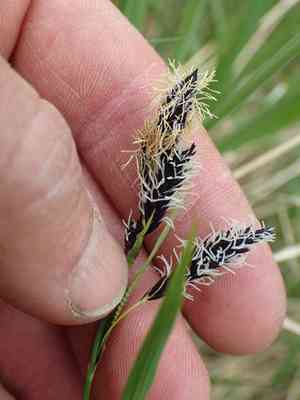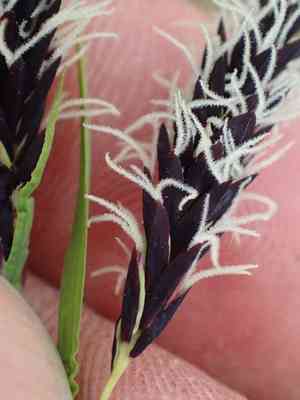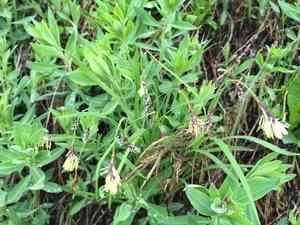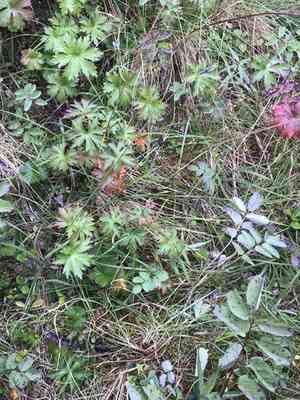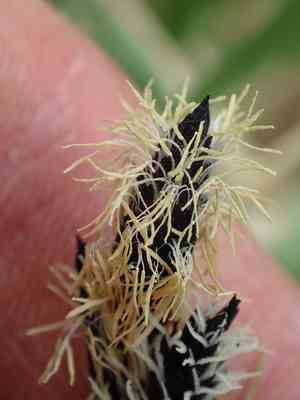
Short-stalk sedge(Carex podocarpa)

Short-stalk sedge (Carex podocarpa)

Also known as: Narrow-leaved Alpine Sedge

Short-stalk sedge (Carex exilis) is a resilient perennial known for its narrow, arching leaves and distinctive, slender flower spikes. It excels in damp, mountainous regions due to several adaptive traits:

1. **Robust Root System**: Its extensive root network offers both stability and efficient water absorption, crucial for survival in soggy soils.
2. **Resilient Seed Pods**: The round, greenish-brown seed pods are designed to withstand varying climatic conditions, aiding in successful seed dispersal and germination.
3. **Cold Adaptation**: This sedge is well-suited to endure the cold temperatures typical of alpine environments.
4. **Flexible Structure**: Its flexible stems can endure the mechanical stress of snow and flowing water without damage.

These characteristics collectively enable short-stalk sedge to thrive in its challenging, moisture-rich mountain habitats.

Attributes of Short-stalk sedge

Lifespan
Perennial
Plant Type
Grass
Plant Height
15-30 cm
Spread
20-30 cm
Leaf Color
Dark green
Flower Size
Small, less than 1 cm
Flower Color
Brownish

ForwardPlant - Identify plants with a snap

Identify and diagnose plants, get toxicity alerts, and explore safety guides for all types of fungi.

Try for Free

Images of Short-stalk sedge

Short-stalk sedge(Carex podocarpa)

Quickly Identify Short-stalk sedge

1
Carex podocarpa can be identified by its narrow, grass-like leaves and characteristic spiky seed heads. The leaves are typically dark green, and the stems are triangular in cross-section. It also forms dense tufts.

Scientific Classification of Short-stalk sedge

Phylum
Vascular plants
Class
Monocotyledons
Order
Poales
Family
Sedge
Genus
True sedges
Species
Short-stalk sedge

Planting and Growing of Short-stalk sedge

Care Difficulty
Moderate
Watering Schedule
Every 2 days
Sunlight Requirements
Partial sun
Sunshine Duration
6-8 hours
Ideal Temperature
50-68℉
Soil Type
Potting Mix, Peat Mix
Soil pH
6.5-7.5
Fertilizer Type
Balanced
Pruning Season
Spring, Summer
Pruning Area
Branches, Leaves
Pruning Frequency
2 times a year
Repotting Season
Spring
Pot Type
Plastic, Terracotta

water icon How to Water Short-stalk sedge?

When watering Carex podocarpa, it's essential to provide approximately 150 milliliters of water per session. The goal is to ensure the soil remains consistently moist but not waterlogged. The soil should feel damp to the touch but should not retain standing water, which can lead to root issues.
What are the symptoms of an underwatered Short-stalk sedge?
What should I do if my Short-stalk sedge is not getting enough water?
What are the symptoms of an overwatered Short-stalk sedge?
How to save an overwatered Short-stalk sedge?

sunlight icon What Are the Sunlight Requirements for Short-stalk sedge?

Sunlight Requirements: Partial sun, Full shade
Duration of light: 3 to 6 hours
Carex podocarpa benefits from partial shade to full shade, helping to maintain vivid leaf coloration and robust growth. Adequate light balance ensures energy buildup for effective growth and resistance to disease.
Preferred Light Conditions
Solutions for Ideal Lighting
Benefits of Ideal Lighting

temperature icon What Is the Ideal Temperature Range for Short-stalk sedge?

Ideal Temperature: 50 ~ 68℉
The ideal temperature range for the growth of Carex podocarpa is between 50°F and 68°F. This range allows the plant to thrive by providing an optimal balance of warmth without the risk of heat stress, ensuring robust growth and healthy foliage.

soil icon What Soil is Best for Short-stalk sedge?

Soil type: Loam, Sandy loam, Sand soil
Soil PH: 6.5 ~ 7.5
Carex podocarpa thrives in well-draining soil which prevents waterlogging. This type of soil ensures that the roots receive adequate oxygen and reduces the risk of root rot. Having soil with moderate nutrient content supports healthy growth and development. Carex podocarpa benefits from balanced nutrients to maintain its lush green foliage. The ability of the soil to retain moisture is crucial for Carex podocarpa, as it enables the plant to access water consistently without being overly saturated.

fertilize icon How to Fertilize Short-stalk sedge?

Fertilizer type: Balanced
Carex podocarpa requires a moderate amount of fertilizer. When using liquid fertilizer, apply at a concentration of 1/2 to 1/4 of the recommended dose for houseplants. This sedge plant doesn’t need heavy feeding, so ensure not to over-fertilize.

prune icon How to Prune Short-stalk sedge?

Pruning Time: Spring, Summer
Begin by inspecting the plant and identifying any brown or withered leaves. Remove these by cutting them at the base to encourage new growth and maintain overall health. Focus on areas that appear overly dense, trimming them back to create an even appearance and allowing for better airflow and light penetration to the plant's base. More About Pruning Techniques

propagate icon How to Propagate Short-stalk sedge plant?

Propagate Time: Spring, Early spring
1
Begin by preparing a well-draining soil mix rich in organic matter, as Carex podocarpa prefers a nutrient-rich environment for optimal growth of newly planted propagules.
2
Sow the seeds evenly across the seed tray, lightly covering them with soil. Ensure they are not buried too deep, as they require light to germinate.
3
Gently remove the plant from its pot, and use a sharp spade to divide the root ball into sections, ensuring each section has a good amount of roots and shoots.
More About Propagating Techniques

repot icon How to Repot Short-stalk sedge plant?

Repotting frequency: Every 2 to 3 years
1
Carex podocarpa usually needs repotting when you notice slowed growth, roots emerging from the drainage holes, or the soil drying out too quickly. Ideally, you should choose a time during its active growing seasons of spring or summer to ensure the plant can adapt quickly to its new environment.
2
Select a pot that is one size larger than the current one, ensuring it has sufficient drainage holes. A larger pot gives the roots space to grow, preventing them from becoming pot-bound, which can lead to poor plant health and stunted growth.
3
Use a well-draining sandy loam soil to provide adequate aeration and prevent waterlogging. This type of soil mimics its natural habitat conditions, thus helping to maintain optimal root health and supporting robust growth.

ForwardPlant - Identify plants with a snap

Find the best spots for them to optimize their health, simply using your phone.

Try for Free