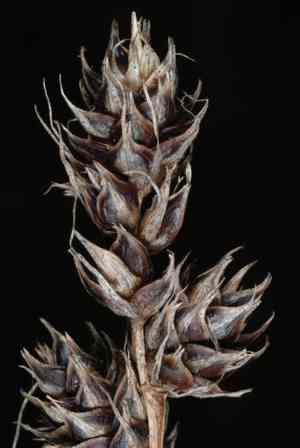
Heavy sedge (Carex gravida)
Also known as: Heavy-Fruited Sedge, Heavy-Fruited Oval Sedge
The heavy sedge (Carex ponderosa) is a hardy perennial plant commonly found in wet meadows and along woodland peripheries.
**Distinctive Features:**
- **Growth Form:** It creates thick clumps and has slender, grass-like leaves.
- **Leaf Color:** Exhibits blue-green foliage.
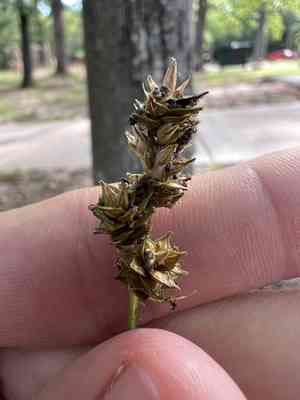
- **Fruit:** Characterized by substantial, inflated, green to brownish fruiting clusters that appear in late spring. These clusters are crucial for seed dispersion and the plant's propagation.
**Ecological Contributions:**
- **Wildlife Support:** The fruiting clusters serve as an essential food source for various wildlife species.
- **Habitat Preference:** Prefers moist environments, contributing to its role in maintaining the health of wetland ecosystems.
- **Soil Stabilization:** Its robust root system helps prevent soil erosion.
- **Water Quality:** Aids in filtering pollutants, thus enhancing the quality of water in its growing areas.
Heavy sedge plays a significant role in its ecosystem, offering both stabilizing and nutritional benefits.
Attributes of Heavy sedge
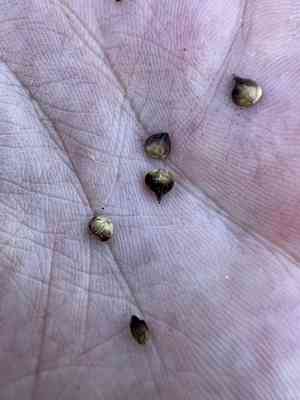
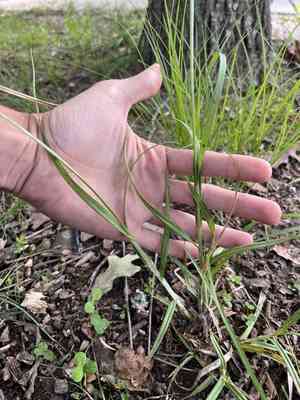
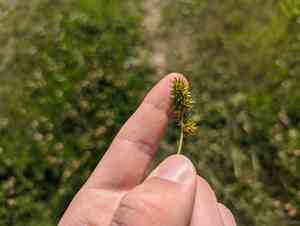
Images of Heavy sedge
 How to Water Heavy sedge?
  What Are the Sunlight Requirements for Heavy sedge?
  What Is the Ideal Temperature Range for Heavy sedge?
  What Soil is Best for Heavy sedge?
  How to Fertilize Heavy sedge?
  How to Prune Heavy sedge?
  How to Propagate Heavy sedge plant?
 How to Repot Heavy sedge plant?



