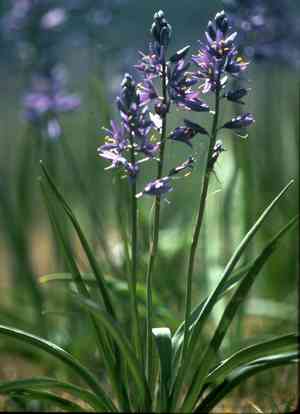
Small Camas (Camassia quamash)
Also known as: Common Camassia, Common Camash, Swamp Sego
Camassia quamash, commonly known as small camas, is a perennial wildflower originating from western North America. Native Americans traditionally harvested its bulbs for food, and it was noted by the explorers Lewis and Clark. This hardy plant flourishes in moist loam and clay soils and is well-suited to cold climates.
In This Article
Attributes of Small Camas
Lifespan
Perennial
Plant Type
Herb
Plant Height
30 cm to 90 cm
Spread
20 cm
Leaf Color
Green
Flower Size
7 cm
Flower Color
Blue Violet
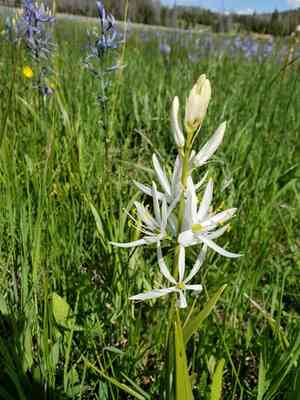
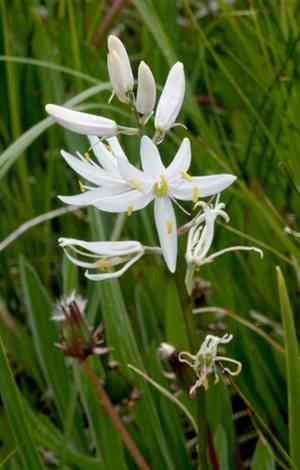
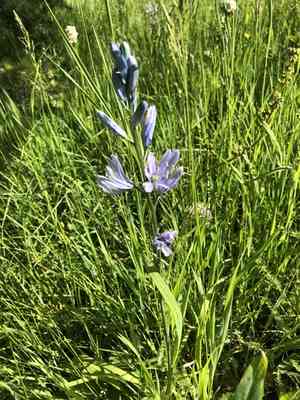
Images of Small Camas
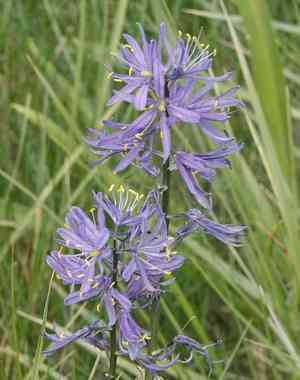
Quickly Identify Small Camas
1
Camassia quamash can be identified by its narrow, grass-like leaves and racemes of star-shaped flowers that range in color from blue to violet. The plant typically grows from a bulb and can be found in moist meadows and open forests.
Scientific Classification of Small Camas
Phylum
Vascular plants
Class
Monocotyledons
Order
Asparagales
Family
Asparagus
Genus
Camas
Species
Small Camas
Planting and Growing of Small Camas
Care Difficulty
Easy
Watering Schedule
Every 2 days
Sunlight Requirements
Full sun
Sunshine Duration
6-10 hours
Ideal Temperature
60-70℉
Soil Type
Potting Mix, Peat Mix
Soil pH
6.5-7.5
Fertilizer Type
Balanced
Pruning Season
Spring, Summer
Pruning Area
Branches, Leaves
Pruning Frequency
2 times a year
Repotting Season
Spring
Pot Type
Plastic, Ceramic
 How to Water Small Camas?
Camassia quamash thrives on a watering regime that ensures the soil is evenly moist but never soggy. The ideal amount of water is approximately 250 ml per session, allowing the soil to absorb thoroughly without excess. If the soil surface feels damp but not waterlogged, the watering has been successful.
What are the symptoms of an underwatered Small Camas?
›
What should I do if my Small Camas is not getting enough water?
›
What are the symptoms of an overwatered Small Camas?
›
How to save an overwatered Small Camas?
›
 What Are the Sunlight Requirements for Small Camas?
Camassia quamash thrives best in partial to full sun environments. Achieving the ideal light conditions will ensure healthy growth, robust foliage, and vibrant flower production.
More About Sunlight Requirements Techniques→
How much sun does Camassia quamash need?
›
What are the solutions to achieve ideal light for Camassia quamash?
›
What are the benefits when Camassia quamash receives adequate light?
›
 What Is the Ideal Temperature Range for Small Camas?
Camassia quamash thrives best within a temperature range of 60-70°F. This range ensures optimal growth, allowing the plant to maintain healthy physiological processes. Maintaining this temperature helps the plant in photosynthesis, nutrient absorption, and overall vitality. Deviation from this range may lead to stress and impact its blooming and reproduction.
 What Soil is Best for Small Camas?
Camassia quamash thrives in well-draining soil to prevent root rot. Proper drainage ensures that excess water doesn't pool around the roots, which is essential for the plant's health and robust growth. While drainage is crucial, the soil should also retain some moisture. This balance keeps the roots hydrated, promoting a vigorous development and a consistent flowering season. The presence of organic matter is vital. Nutrient-rich soil supports Camassia quamash's growth by providing essential minerals, leading to lush foliage and vibrant blooms.
 How to Fertilize Small Camas?
For Camassia quamash, a balanced fertilizer with an N-P-K ratio of 10-10-10 is ideal. When using liquid fertilizer, dilute it to half the recommended strength to avoid over-feeding. Slow-release granules should be applied at a quarter cup per plant in early spring.
 How to Prune Small Camas?
Begin by thoroughly inspecting your Camassia quamash plant for any dead, diseased, or damaged foliage. Identifying these elements is crucial for a successful pruning session. Carefully cut away any dead leaves or stems using a bypass pruner. Make sure you snip at the base to prevent leaving stubby remnants that can invite pests and disease. If your plant has become too dense or unruly, selectively trim some of the older growth to open up the canopy. This allows light and air to circulate, reducing disease risk.
More About Pruning Techniques→
 How to Propagate Small Camas plant?
1
Collect seeds from mature Camassia quamash flowers. Ensure seeds are fully dry and mature before harvesting. Store them in a cool, dry place until ready to plant.
2
Use well-draining soil with organic matter when preparing a spot for seed sowing or bulb division. This type of soil will provide the necessary nutrients and drainage for healthy growth.
3
Plant seeds shallowly in seed trays or directly in the garden. Cover lightly with soil and water gently. Keep soil moist but not waterlogged until seedlings emerge.
 How to Repot Small Camas plant?
1
Camassia quamash needs repotting when the current pot becomes too tight or you observe overcrowding of bulbs. Look for signs like reduced flowering or root-bound conditions. The best time to repot is during dormancy or in early spring when the bulbs are less active.
2
Select a pot that is one size larger than the current one to allow adequate space for bulb growth. The pot should have drainage holes to prevent waterlogging, as Camassia quamash thrives in well-draining conditions. Having a heavier pot will also provide stability as the plant grows taller.
3
Choose a well-draining loamy mix, which provides the perfect balance of moisture retention and drainage. This soil type prevents waterlogging around the bulbs and promotes healthy root growth, ensuring your plant can thrive and bloom vibrantly.
Toxicity
Ingestion
WARNING
The judgment on toxicity and danger is for reference only. We DO NOT GUARANTEE any accuracy of such judgment. Therefore, you SHALL NOT rely on such judgment. It is IMPORTANT TO SEEK PROFESSIONAL ADVICE in advance when necessary.
Learn More About Small Camas Diseases
Anthracnose
Bacterial Leaf Spot
Bacterial Soft Rot
Bacterial Wilt
Black Spot
Chemical Injury
Crown Gall
Cyst Nematode
Damping-off
Downy Mildew
Drought Stress
Fusarium Wilt
Gray Mold
Leaf Spot
Mosaic
Nutrient Deficiency
Nutrient Toxicity
Powdery Mildew
Root Rot
Root-knot Nematode
Rusts
Sooty Mold
Spider Mites
Temperature Stress
Thrips Damage
White Mold



