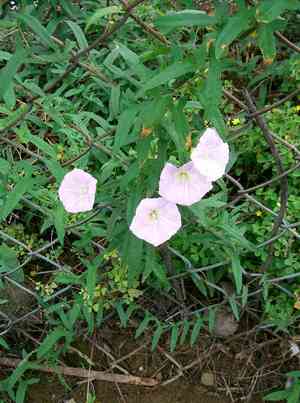
Japanese morning glory (Calystegia pubescens)
Also known as: Japanese false bindweed
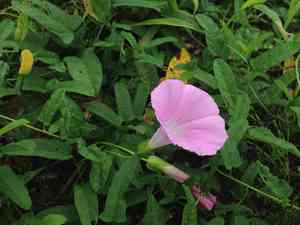
Japanese morning glory (Calystegia pubescens) can be distinguished from other bindweeds by its uniquely lobed leaves, which feature divided side-lobes. Originating from Japan and Eastern Asia, this plant is also recognized for its charming pink flowers. While it has ornamental value, it should be managed carefully or grown in containers to prevent it from becoming invasive.
In This Article
Attributes of Japanese morning glory
Lifespan
Perennial
Plant Type
Herb
Plant Height
20 cm to 70 cm
Spread
Variable, can spread extensively due to its twining nature
Leaf Color
Green Blue
Flower Size
2 to 5 cm
Flower Color
White Pink
Images of Japanese morning glory
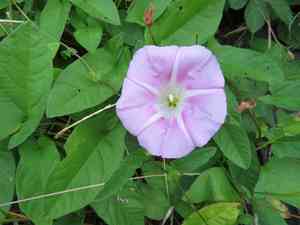
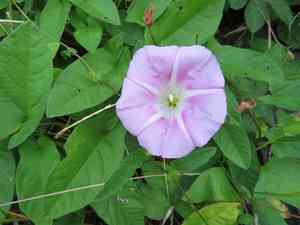
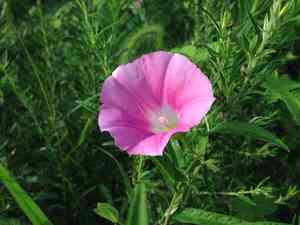
Quickly Identify Japanese morning glory
1
It can be identified by its twining habit, heart-shaped leaves with prominent veins, and its funnel-shaped flowers that bloom in pink to white colors.
Scientific Classification of Japanese morning glory
Phylum
Vascular plants
Class
Dicotyledons
Order
Solanales
Family
Morning-glory
Genus
Bindweeds
Species
Japanese morning glory
Planting and Growing of Japanese morning glory
Care Difficulty
Easy
Watering Schedule
Every 4 days
Sunlight Requirements
Partial sun
Sunshine Duration
6-10 hours
Ideal Temperature
60-75℉
Soil Type
Potting Mix, Peat Mix
Soil pH
6.5-7.5
Fertilizer Type
Balanced
Pruning Season
Spring, Summer
Pruning Area
Branches, Leaves
Pruning Frequency
2 times a year
Repotting Season
Spring
Pot Type
Plastic, Ceramic
 How to Water Japanese morning glory?
Calystegia pubescens prefers consistent moisture levels without being waterlogged. A good rule of thumb is to water it until moisture seeps through the drainage holes. This allows the soil to absorb ample water while preventing root rot.
What are the symptoms of an underwatered Japanese morning glory?
›
What should I do if my Japanese morning glory is not getting enough water?
›
What are the symptoms of an overwatered Japanese morning glory?
›
How to save an overwatered Japanese morning glory?
›
 What Are the Sunlight Requirements for Japanese morning glory?
For Calystegia pubescens, a light exposure of partial to full sun is ideal. This balance allows the plant to engage in robust photosynthesis, supporting lush foliage and vibrant blooming while ensuring resilience against environmental stressors.
More About Sunlight Requirements Techniques→
What is the preferred light condition for Calystegia pubescens?
›
How can I achieve the ideal lighting for Calystegia pubescens?
›
What are the benefits of ideal lighting for Calystegia pubescens?
›
 What Is the Ideal Temperature Range for Japanese morning glory?
The ideal temperature for growing Calystegia pubescens ranges between 60°F and 75°F. This temperature range supports optimal growth, allowing the plant to photosynthesize efficiently and maintain healthy cellular functions.
 What Soil is Best for Japanese morning glory?
Calystegia pubescens thrives in well-drained soil. This is crucial to prevent waterlogging, which can lead to root rot and other diseases. Ensuring the soil allows excess water to escape keeps the roots healthy and promotes vigorous plant growth. The plant doesn't require overly rich soil but benefits from nutrients that support its robust foliage and flowering. A balanced nutrient profile in the soil encourages continuous blooming and maintains the plant's overall health. While drainage is important, the soil should also retain some moisture to keep the plant hydrated. A soil that balances drainage with moisture retention will support consistent growth and reduce the frequency of watering.
 How to Fertilize Japanese morning glory?
For Calystegia pubescens, the amount of fertilizer you use should be moderate to ensure the right nutrient balance. When using liquid fertilizers, dilute them to half-strength to prevent nutrient burn. Apply approximately 200 ml of this solution per plant every two weeks. For slow-release fertilizers, use about 30 grams per plant, sprinkled evenly around the base.
 How to Prune Japanese morning glory?
Begin by using clean, sharp pruning shears to trim the plant. Start from the outer edges and work inwards, clipping any long, unruly vines. Aim to cut just above a healthy node to promote new growth. Remove any dead or diseased branches to keep the plant healthy. To achieve a specific shape or size, gently guide the plant with your cuts. It's helpful to step back occasionally to assess your work and ensure you're achieving the desired form. Regular shaping helps control the spread of this typically exuberant grower.
More About Pruning Techniques→
 How to Propagate Japanese morning glory plant?
1
For seed propagation, collect mature seeds from the plant. For cuttings, choose healthy stems and cut just below a node. Ensure the collected material is free from disease and pests.
2
Prepare a well-draining mix of soil, sand, and compost to promote root development. This medium should be moistened but not wet to provide a conducive environment for plant growth.
3
Sow seeds shallowly and cover lightly with soil. For cuttings, insert the cut end into the soil. Keep the medium consistently moist and place in a location with indirect sunlight to prevent drying out.
 How to Repot Japanese morning glory plant?
1
Look for signs like roots emerging from drainage holes, slowed growth, or compacted soil and it's time to repot. Choose the growing months of spring or summer when the plant is most resilient and can recover faster from the stress of repotting.
2
Opt for a pot that is 1-2 inches larger than the current one to allow root expansion. Ensure it has drainage holes to prevent waterlogging, which could lead to root rot. A terracotta pot is ideal because its porous material allows for better moisture control.
3
A well-draining loamy mix with some sand and compost is perfect. It retains the right amount of moisture while allowing excess water to drain, promoting healthy root growth without the risk of soil compaction or overwatering.
Learn More About Japanese morning glory Diseases
Anthracnose
Bacterial Leaf Spot
Bacterial Wilt
Chemical Injury
Cyst Nematode
Damping-off
Downy Mildew
Drought Stress
Fusarium Wilt
Gray Mold
Leaf Curl
Leaf Spot
Mosaic
Nutrient Deficiency
Nutrient Toxicity
Powdery Mildew
Root Rot
Root-knot Nematode
Rusts
Sooty Mold
Spider Mites
Temperature Stress
Thrips Damage
White Mold



