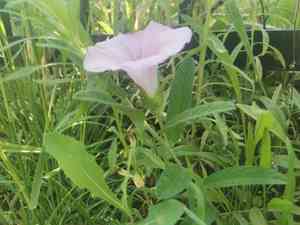
Hairy bindweed (Calystegia pellita)
Also known as: Hairy Bindweed, Hairy Morning Glory
Calystegia pellita, also known as hairy bindweed, is characterized by its distinctive hairy or felty texture. The plant exhibits a range of growth habits, from low-lying to weakly climbing or occasionally more upright, with stems that can extend up to 1 meter in length. The leaves are attached via petioles measuring between 1 to 12 mm. The leaf blades themselves are narrow, triangular to elongated, and typically measure 3 to 7 cm in length, with a comparable width. This plant's unique features, including its hairy stems and leaves, make it easily identifiable.
In This Article
Attributes of Hairy bindweed
Lifespan
Perennial
Plant Type
Herb
Plant Height
5 m
Spread
3 cm to 10 cm
Leaf Color
Green, with a noticeable hairy texture
Flower Size
3-5 centimeters
Flower Color
White Pink
Images of Hairy bindweed
Quickly Identify Hairy bindweed
1
Identify Calystegia pellita by its twining stem, hairy leaves, and trumpet-shaped white or pink flowers. The plant often forms dense ground cover and can be distinguished from other bindweeds by its hairy texture.
Scientific Classification of Hairy bindweed
Phylum
Vascular plants
Class
Dicotyledons
Order
Solanales
Family
Morning-glory
Genus
Bindweeds
Species
Hairy bindweed
Planting and Growing of Hairy bindweed
Care Difficulty
Easy
Watering Schedule
Every 2 days
Sunlight Requirements
Partial sun
Sunshine Duration
4-6 hours
Ideal Temperature
60-75℉
Soil Type
Potting Mix, Peat Mix
Soil pH
6.5-7.5
Fertilizer Type
Balanced
Pruning Season
Spring, Summer
Pruning Area
Branches, Leaves
Pruning Frequency
2 times a year
Repotting Season
Spring
Pot Type
Plastic, Ceramic
 How to Water Hairy bindweed?
Calystegia pellita requires a moderate amount of watering, approximately 250 milliliters each time. The key principle is to keep the soil evenly moist without soaking it. It's important to ensure the water reaches the root zone but does not create standing water, which can lead to root rot.
What are the symptoms of an underwatered Hairy bindweed?
›
What should I do if my Hairy bindweed is not getting enough water?
›
What are the symptoms of an overwatered Hairy bindweed?
›
How to save an overwatered Hairy bindweed?
›
 What Are the Sunlight Requirements for Hairy bindweed?
Calystegia pellita prefers partial sun, meaning it thrives with around 4-6 hours of morning sunlight. Ideal lighting promotes steady growth, vibrant foliage, and abundant blooms.
Solution for Ideal Sunlight
›
Practical Steps for Sunlight
›
Benefits of Ideal Light
›
 What Is the Ideal Temperature Range for Hairy bindweed?
Calystegia pellita thrives best in a temperature range of 60 to 75°F. This range ensures that the plant can perform essential physiological processes such as photosynthesis and respiration efficiently. It is important to maintain stability within this range to promote healthy growth and flowering.
 What Soil is Best for Hairy bindweed?
Calystegia pellita thrives in soils that are abundant in organic content. This helps ensure lush growth and vibrant blooms by providing the necessary nutrients that sustain its growth cycle. For optimal health, Calystegia pellita requires soil that drains well to prevent waterlogging. This prevents root rot and keeps the root system healthy and robust, promoting overall vitality. Although well-draining, the soil should also have good moisture retention capabilities. This balance helps maintain consistent soil moisture, which is crucial for sustained plant health during drier periods.
 How to Fertilize Hairy bindweed?
For Calystegia pellita, it's important to use a balanced fertilizer. When using liquid fertilizers, mix at half the recommended strength to avoid over-fertilization. A good starting point is applying about 10 ml of liquid fertilizer for every liter of water used. For solid fertilizers, consider using approximately 30 grams per square meter.
 How to Prune Hairy bindweed?
Start by observing the growth patterns of your Calystegia pellita. Look for the older, woody stems and the fresher, greener growth. This understanding helps you decide which parts to prune to encourage the plant to put energy into new growth and blooming. Carefully trim away any dead or diseased leaves and stems. Cutting these parts not only improves the plant's appearance but also helps it redirect energy to healthy growth. Make your cuts at a 45-degree angle just above a node, ensuring precise and effective trimming. Calystegia pellita can be quite vigorous, so pruning is essential to control its invasive tendencies. Cut back stems that are extending beyond their desired area, ensuring the plant remains contained and maintains a tidy structure.
More About Pruning Techniques→
 How to Propagate Hairy bindweed plant?
1
Gather mature seeds directly from the plant in late summer. Ensure seeds are fully ripe and dry them thoroughly to prevent mold. This is a crucial step to ensure successful seed propagation.
2
Select healthy stems and make an angled cut below a node. Remove the lower leaves and plant the cutting in well-draining soil. Water the cutting to settle the soil around it.
3
Gently remove the plant from the soil and carefully separate the roots into sections. Each section should have healthy roots and several stems. Replant immediately to encourage quick establishment.
 How to Repot Hairy bindweed plant?
1
Calystegia pellita needs repotting when roots start growing out of the drainage holes, the plant looks pot-bound, or growth seems stunted even with proper care. Ideally, observe these signs at the onset of spring or summer, when the plant can recover quickly.
2
Select a pot that's just a few inches larger in diameter than the current one. Ensure it has good drainage to prevent waterlogging, which can damage Calystegia pellita's root system. A well-chosen pot ensures better root health and promotes vigorous growth.
3
Opt for a well-draining sandy soil mix, as it closely mimics the plant's natural environment and prevents root rot. This type of soil provides the perfect balance of moisture retention and drainage, ensuring your Calystegia pellita thrives.



