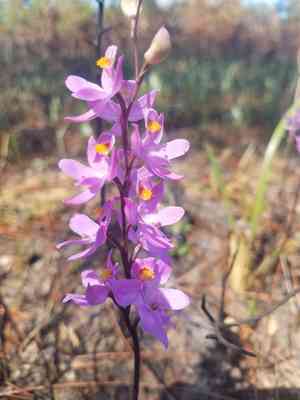
Manyflower grasspink (Calopogon multiflorus)
Also known as: Many-flowered Grass-pink, Many-flowered Calopogon
Calopogon multiflorus, commonly known as the many-flowered grass-pink, is a type of perennial orchid. This species thrives in habitats maintained by recurring ground fires. These fires are essential as they clear out competing vegetation, allowing more light to reach the ground and fostering the conditions necessary for this orchid to flourish. The name Calopogon, derived from Greek, translates to "beautiful beard," highlighting the distinctive bristly structures on the flower's lip.
In This Article
Attributes of Manyflower grasspink
Lifespan
Perennial
Plant Type
Herb
Plant Height
0 mm to 30 cm
Spread
N/A
Leaf Color
Green
Flower Size
2-3 cm
Flower Color
Pink, Purple
Images of Manyflower grasspink
Quickly Identify Manyflower grasspink
1
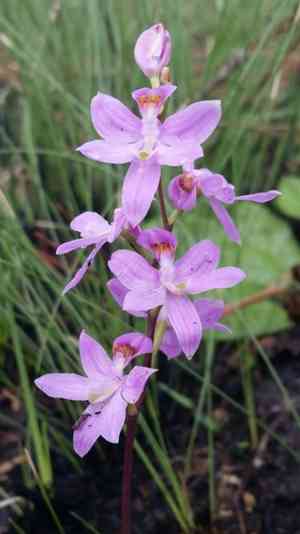
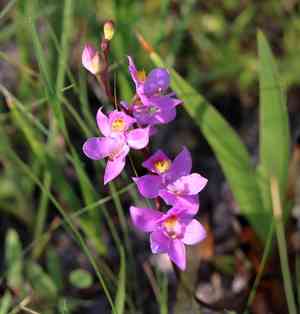
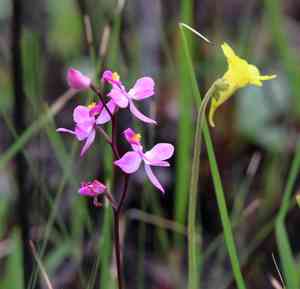
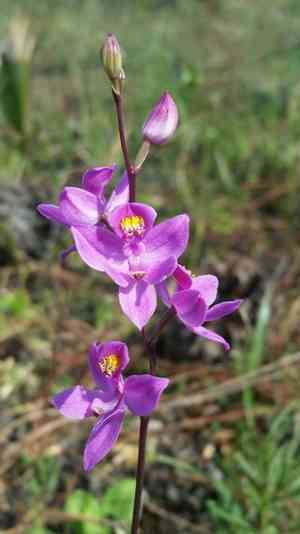
Calopogon multiflorus can be identified by its grass-like leaves and multiple vibrant pink to purple flowers arranged in loose spikes. The flowers possess a distinctive lip adorned with a tuft of white or yellow trichomes.
Scientific Classification of Manyflower grasspink
Phylum
Vascular plants
Class
Monocotyledons
Order
Asparagales
Family
Orchid
Genus
Grass pink
Species
Manyflower grasspink
Planting and Growing of Manyflower grasspink
Care Difficulty
Hard
Watering Schedule
Every 2 days
Sunlight Requirements
Full sun
Sunshine Duration
4-6 hours
Ideal Temperature
70-80℉
Soil Type
Potting Mix, Peat Mix
Soil pH
6.5-7.5
Fertilizer Type
Balanced
Pruning Season
Spring, Summer
Pruning Area
Branches, Leaves
Pruning Frequency
2 times a year
Repotting Season
Spring
Pot Type
Plastic, Ceramic
 How to Water Manyflower grasspink?
The recommended watering amount for Calopogon multiflorus is around 200ml per session. Ensure the water thoroughly moistens the soil but does not leave it soggy. The goal is to allow the roots to absorb enough moisture without drowning them, promoting healthy growth.
What are the symptoms of an underwatered Manyflower grasspink?
›
What should I do if my Manyflower grasspink is not getting enough water?
›
What are the symptoms of an overwatered Manyflower grasspink?
›
How to save an overwatered Manyflower grasspink?
›
 What Are the Sunlight Requirements for Manyflower grasspink?
Calopogon multiflorus thrives best under full to partial sun, ideally receiving between 6 to 8 hours of sunlight daily. Sufficient sunlight fosters robust growth and bountiful blooms.
Preferred Sunlight Intensity
›
How to Achieve Optimal Lighting
›
Benefits of Ideal Lighting
›
 What Is the Ideal Temperature Range for Manyflower grasspink?
For optimal growth, Calopogon multiflorus thrives best in a climate where the temperature maintains a stable range between 70°F and 80°F. This range supports essential physiological processes such as photosynthesis and respiration, ensuring the plant remains healthy and blooms profusely. Maintaining this temperature consistency is crucial for both its root development and general vitality.
 What Soil is Best for Manyflower grasspink?
Calopogon multiflorus thrives in well-drained soils that prevent waterlogging. This type of soil helps ensure the roots receive adequate oxygen and reduces the risk of root rot, promoting healthy plant growth. Rich, loamy soils provide essential nutrients that aid the growth of Calopogon multiflorus. Adequate fertility ensures the plant develops strong foliage and vibrant blossoms, enhancing its ornamental appeal. Soil with a stable pH range between 6.5 and 7.5 is ideal for Calopogon multiflorus. This helps maintain nutrient availability and prevents toxic build-up of certain soil elements, ensuring optimal growth conditions.
 How to Fertilize Manyflower grasspink?
Calopogon multiflorus thrives with moderate fertilization. When using liquid fertilizers, make sure to apply a diluted solution usually at half the recommended strength, to avoid nutrient burn. For solid fertilizers, a scoop of a balanced 10-10-10 or 20-20-20 slow-release formula is adequate for enhancing growth and flowering.
 How to Prune Manyflower grasspink?
Begin by identifying and removing any dead or damaged stems. This will promote healthier growth and prevent potential disease from spreading to the rest of the plant. Calopogon multiflorus should be pruned after its flowering cycle. Cut back the faded blooms to a lateral bud or healthy leaf pair to refresh the plant and encourage the formation of new flowering shoots. To maintain a desirable shape and size, selectively prune branches that cause crowding. Try to open up the center of the plant to allow light and air to reach the foliage more evenly, promoting robust growth.
More About Pruning Techniques→
 How to Propagate Manyflower grasspink plant?
1
Fill seed trays with a sterile seed-starting mix. This type of mix generally contains peat moss and vermiculite, providing a lightweight and nutrient-rich environment that encourages seed germination and robust root growth.
2
Scatter the seeds evenly across the prepared seed tray and cover them lightly with a thin layer of soil or vermiculite. Ensure that seeds are not buried too deeply as they require light for germination.
3
Carefully lift the plant from its container and gently separate the rhizomes with a knife or hands, ensuring each division has healthy roots. Replant immediately in a new pot with fresh soil to encourage establishment.
 How to Repot Manyflower grasspink plant?
1
Watch for overcrowded pots with roots protruding or water pooling on the surface—these are signals it's time to repot Calopogon multiflorus. Typically, this species prefers repotting in Spring or early Summer when it's not in active bloom. This timing allows the plant to recover during its growth cycle, minimizing stress and optimizing conditions for root establishment.
2
Choose a pot that is one size larger than the current one to allow room for growth. Ensure it has ample drainage holes to prevent waterlogging, which can lead to root rot. The right size helps maintain the plant's structure and promotes healthy root expansion, supporting vigorous growth and flowering.
3
Opt for a loose orchid bark mix that replicates the plant's natural environment. This ensures good aeration and adequate drainage, essential for epiphytic orchids. Such a medium prevents root suffocation and sustains moisture levels without oversaturation, fostering robust growth.
Learn More About Manyflower grasspink Diseases
Anthracnose
Bacterial Leaf Spot
Bacterial Soft Rot
Bacterial Wilt
Black Spot
Chemical Injury
Crown Gall
Cyst Nematode
Damping-off
Downy Mildew
Drought Stress
Fusarium Wilt
Gray Mold
Leaf Spot
Mosaic
Nutrient Deficiency
Nutrient Toxicity
Powdery Mildew
Root Rot
Root-knot Nematode
Rusts
Sooty Mold
Spider Mites
Temperature Stress
Thrips Damage
White Mold



