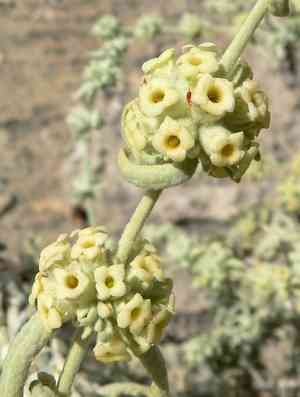
Utah butterfly-bush (Buddleja utahensis)
Also known as: Utah Butterfly Bush
The Desert Globe Mallow is a hardy plant native to arid desert regions, thriving in rocky and dry environments. It features silvery-green leaves that help minimize water loss by reflecting sunlight. This shrub blooms with small, vibrant orange flowers that provide nectar to local pollinators. Its deep root system is designed to extract limited moisture from the soil, allowing it to endure in tough desert conditions.
In This Article
Attributes of Utah butterfly-bush
Lifespan
Perennial
Plant Type
Shrub
Plant Height
2-4 feet (0.6-1.2 meters)
Spread
3-5 feet (0.9-1.5 meters)
Leaf Color
Grey-green
Flower Size
0.2-0.3 inches (5-8 mm)
Flower Color
Yellow to pale orange
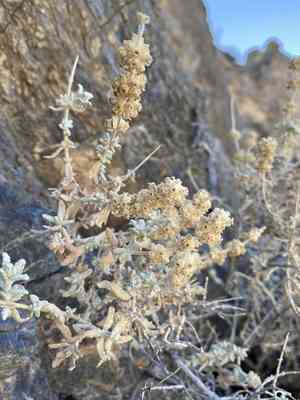
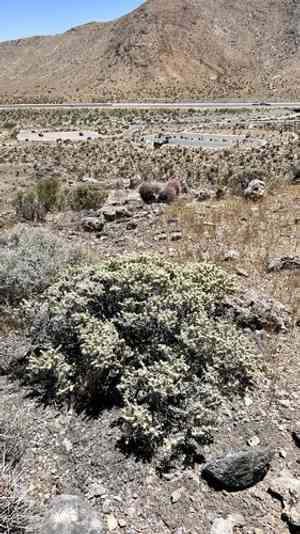
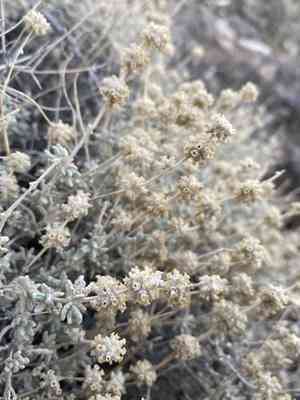
Images of Utah butterfly-bush
Quickly Identify Utah butterfly-bush
1
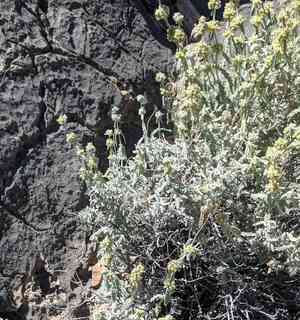
Buddleja utahensis is characterized by its narrow, lance-shaped leaves that are grey-green in color, and its small, yellow to pale orange inflorescences. The plant typically grows in rocky and dry soils.
Scientific Classification of Utah butterfly-bush
Phylum
Vascular plants
Class
Dicotyledons
Order
Lamiales
Family
Figwort
Genus
Butterfly bushes
Species
Utah butterfly-bush
Planting and Growing of Utah butterfly-bush
Care Difficulty
Easy
Watering Schedule
Every 2 days
Sunlight Requirements
Full sun
Sunshine Duration
4-8 hours
Ideal Temperature
65-75℉
Soil Type
Potting Mix, Peat Mix
Soil pH
7-8
Fertilizer Type
Balanced
Pruning Season
Spring, Summer
Pruning Area
Branches, Leaves
Pruning Frequency
2 times a year
Repotting Season
Spring
Pot Type
Plastic, Ceramic
 How to Water Utah butterfly-bush?
The Utah Butterfly Bush, or Buddleja utahensis, requires a delicate balance when it comes to watering. Generally, you should aim for about 250 milliliters per watering session. This modest amount ensures that the soil is moistened but not drenched, which aligns with its natural arid habitat. It’s crucial to water at the base, avoiding leaves, as moisture on foliage can lead to mildew or fungal issues.
What are the symptoms of an underwatered Utah butterfly-bush?
›
What should I do if my Utah butterfly-bush is not getting enough water?
›
What are the symptoms of an overwatered Utah butterfly-bush?
›
How to save an overwatered Utah butterfly-bush?
›
 What Are the Sunlight Requirements for Utah butterfly-bush?
Full sun exposure is ideal for Buddleja utahensis, fostering robust growth and prolific flowering. Consistent sunshine helps maintain the plant's vitality and enhances its resistance to environmental stresses.
How does Buddleja utahensis thrive under ideal lighting?
›
What solutions ensure optimal sunlight for Buddleja utahensis?
›
What are the benefits of ensuring adequate sunlight for Buddleja utahensis?
›
 What Is the Ideal Temperature Range for Utah butterfly-bush?
Buddleja utahensis thrives best in temperatures ranging from 65°F to 75°F. This range supports vigorous growth and promotes vibrant blooming. Maintaining this temperature ensures the plant’s metabolic functions operate efficiently, leading to robust and healthy development.
 What Soil is Best for Utah butterfly-bush?
Buddleja utahensis thrives in well-drained soil, preventing waterlogging and root rot. This condition allows roots to access air and nutrients properly, fostering healthy growth and vibrant blooms. Preferring soil with low organic matter, Buddleja utahensis avoids excessive nutrients that can lead to weak stems. A well-balanced soil nurtures sturdy, resilient plants capable of withstanding harsh conditions. Buddleja utahensis prospers in soils with minimal fertility, reducing the need for additional fertilization. This characteristic makes it a low-maintenance plant ideal for xeriscaping and water conservation landscapes.
 How to Fertilize Utah butterfly-bush?
For Buddleja utahensis, use a balanced 10-10-10 NPK fertilizer. For liquid fertilizers, dilute to half the recommended strength to avoid root burn. Use about 200 ml per plant for liquid feeds, ensuring the soil is moist before application. For slow-release, a tablespoon spread evenly at the plant base, mixed slightly into the topsoil, works well.
 How to Prune Utah butterfly-bush?
Before pruning, carefully assess the entire plant. Look for any dead or diseased wood that needs to be removed. This initial evaluation will guide your cutting decisions and help rejuvenate Buddleja utahensis. Begin your pruning by cutting away any dead, damaged, or diseased branches. Use sharp pruning shears to make clean cuts close to the branch's base, ensuring you do not leave stubs behind. Focus on shaping the plant by cutting back any overly long stems. You should trim them back by one third to maintain an appealing form and promote bushier growth, which enhances flowering. After forming the shape you desire, make strategic cuts just above a node where you want new growth to flourish. This will stimulate fresh shoots and increase future flowering chances.
More About Pruning Techniques→
 How to Propagate Utah butterfly-bush plant?
1
To collect seeds from Buddleja utahensis, allow seed pods to mature on the plant before harvesting. Once the pods dry, they can be carefully opened to retrieve seeds.
2
Select healthy, non-flowering stems and cut them at a 45-degree angle during the late spring for cutting propagation. Ensure that each cutting is 4-6 inches long with at least two leaf nodes.
3
Dip the cut end of each cutting into rooting hormone, then plant them into pots filled with a mixture of sand and peat. Ensure the leaf nodes are buried and provide gentle moisture.
 How to Repot Utah butterfly-bush plant?
1
Buddleja utahensis needs repotting when its roots outgrow the current pot, indicating visible root growth through the drainage holes or stunted top growth. Spring or autumn are ideal seasons for this task, allowing roots to establish before extreme weather.
2
Opt for a pot that is just one size larger than the current one, ideally with efficient drainage holes. This prevents waterlogging and promotes healthy root development, essential for the plant’s adaptation to its new environment.
3
Select a well-draining cactus mix, preferably one amended with sand or perlite, as it mirrors the plant’s natural habitat. This type of soil prevents root rot by ensuring excess water drains away efficiently, keeping roots healthy.
Learn More About Utah butterfly-bush Diseases
Anthracnose
Bacterial Leaf Spot
Bacterial Soft Rot
Bacterial Wilt
Black Spot
Chemical Injury
Crown Gall
Damping-off
Downy Mildew
Drought Stress
Fusarium Wilt
Gray Mold
Leaf Spot
Mosaic
Nutrient Deficiency
Nutrient Toxicity
Powdery Mildew
Root Rot
Root-knot Nematode
Rusts
Sooty Mold
Spider Mites
Temperature Stress
Thrips Damage
White Mold



