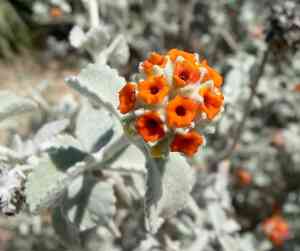
Woolly butterflybush (Buddleja marrubiifolia)
Also known as: Woolly Butterflybush, Hierba del Pasmo
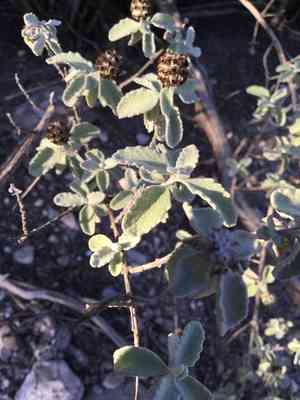
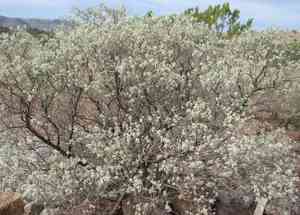
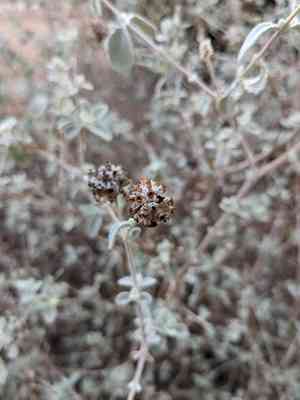
Buddleja marrubiifolia is a dioecious shrub, growing between 50 to 200 cm tall. It features multi-branched stems with gray to black, cracked bark. The young branches are round and covered in a fine, dense hair, and the plant has ovate to rhomboid leaves. Its flowers form in spherical clusters at the tips of the branches.
In This Article
Attributes of Woolly butterflybush
Lifespan
Perennial
Plant Type
Herb
Plant Height
91 cm to 1.8 m
Spread
2.5 m
Leaf Color
Silver-grey
Flower Size
1 to 2 cm
Flower Color
Bright orange to yellow
Images of Woolly butterflybush
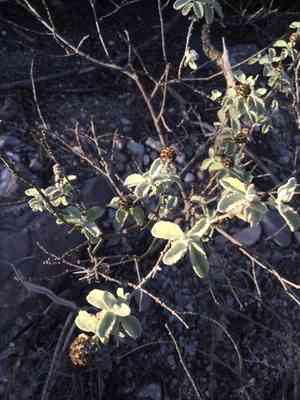
Quickly Identify Woolly butterflybush
1
Look for a shrub with distinctive silver-grey, woolly leaves and bright orange or yellow spherical flower clusters. The leaves are usually ovate and covered in tiny hairs.
Scientific Classification of Woolly butterflybush
Phylum
Vascular plants
Class
Dicotyledons
Order
Lamiales
Family
Figwort
Genus
Butterfly bushes
Species
Woolly butterflybush
Planting and Growing of Woolly butterflybush
Care Difficulty
Easy
Watering Schedule
Every 2 days
Sunlight Requirements
Full sun
Sunshine Duration
4-6 hours
Ideal Temperature
65-80℉
Soil Type
Potting Mix, Peat Mix
Soil pH
6.5-7.5
Fertilizer Type
Balanced
Pruning Season
Spring, Summer
Pruning Area
Branches, Leaves
Pruning Frequency
2 times a year
Repotting Season
Spring
Pot Type
Plastic, Ceramic
 How to Water Woolly butterflybush?
Buddleja marrubiifolia, also known as Woolly Butterfly Bush, requires careful attention to its watering needs. The soil should be allowed to dry out slightly between waterings, ensuring that the plant does not sit in water, which can lead to root rot. Watering should be thorough to ensure the roots have sufficient moisture, but always make sure the pot has good drainage.
What are the symptoms of an underwatered Woolly butterflybush?
›
What should I do if my Woolly butterflybush is not getting enough water?
›
What are the symptoms of an overwatered Woolly butterflybush?
›
How to save an overwatered Woolly butterflybush?
›
 What Are the Sunlight Requirements for Woolly butterflybush?
Buddleja marrubiifolia ideally flourishes in full sun. Such sunlight exposure ensures optimal growth, abundant flowering, and rich foliage color, enhancing its landscape appeal.
Question 1: How much sunlight does Buddleja marrubiifolia need?
›
Question 2: What are some solutions to ensure Buddleja marrubiifolia gets ideal light?
›
Question 3: What is the effect of optimal lighting on Buddleja marrubiifolia?
›
 What Is the Ideal Temperature Range for Woolly butterflybush?
What is the ideal temperature range for Buddleja marrubiifolia growth? To ensure optimal growth and flowering, Buddleja marrubiifolia prefers a temperature range between 65°F and 80°F. This range supports the plant's physiological processes, contributing to healthy development and vibrant blooms.
 What Soil is Best for Woolly butterflybush?
Buddleja marrubiifolia thrives in well-draining soils. This requirement helps prevent root rot, ensuring the plant’s roots can access necessary nutrients while avoiding waterlogged conditions. The plant prefers soils with moderate fertility. This condition supports robust growth and floral displays, while overly rich soils can lead to excessive foliage at the expense of flowers. Buddleja marrubiifolia can tolerate slightly alkaline soils. This adaptability allows the plant to thrive in areas where soil pH is naturally higher, without nutrient uptake issues.
 How to Fertilize Woolly butterflybush?
Buddleja marrubiifolia typically requires a balanced, all-purpose fertilizer. For liquid fertilizers, use a diluted solution of about 1/4 strength. For slow-release fertilizers, apply the recommended quantity based on the manufacturer's instructions for shrubs of similar size and growth habits.
 How to Prune Woolly butterflybush?
Start by removing any dead, damaged, or diseased branches. Cut back to the base of the plant to prevent rot or further disease spread. Next, step back and identify any stems that are crossing or rubbing against each other, and remove them to promote healthy growth and airflow. After addressing the health of the plant, focus on its shape. Buddleja marrubiifolia can be gently shaped by trimming back long or unruly stems. Aim for an open and airy structure to ensure sunlight reaches all parts of the plant, helping it to blossom fully during its flowering season. Trim the plant back a little more aggressively in early spring to encourage dense, new growth. Buddleja marrubiifolia blooms on new wood, so heavier pruning in spring ensures a bounty of flowers during the blooming season. Always make cuts just above a node or bud for best results.
More About Pruning Techniques→
 How to Propagate Woolly butterflybush plant?
1
Collect seeds from mature Buddleja marrubiifolia plants in early spring when the seed pods have dried on the plant. Ensure that the seeds are fully mature to increase germination rates.
2
In spring, select healthy, non-flowering stems and cut them just below a node. Cuttings should be about 10-15 cm long. Remove the lower leaves and dip the cut end in rooting hormone for better root development.
3
Place the prepared seed or cutting into well-draining soil or a seed tray with a mix of sand and perlite. Water thoroughly but ensure that the medium does not become waterlogged.
 How to Repot Woolly butterflybush plant?
1
Buddleja marrubiifolia needs repotting when you spot roots circling the pot's bottom, plant growth slowing, or water draining too quickly. These signs indicate it's time for a new pot to ensure healthy growth.
2
Choose a pot with ample drainage holes, slightly larger than the current one, to allow for root expansion. This prevents root rot and encourages plant vigor by providing enough space for development.
3
Select a gritty, well-draining soil mix, ideally containing sand, to mimic the plant's natural arid habitat. This prevents waterlogging and keeps the roots healthy, promoting prosperous growth.
Learn More About Woolly butterflybush Diseases
Anthracnose
Bacterial Leaf Spot
Bacterial Soft Rot
Bacterial Wilt
Black Spot
Chemical Injury
Crown Gall
Cyst Nematode
Damping-off
Downy Mildew
Drought Stress
Fusarium Wilt
Gray Mold
Leaf Curl
Leaf Spot
Mosaic
Nutrient Deficiency
Nutrient Toxicity
Powdery Mildew
Root Rot
Root-knot Nematode
Rusts
Sooty Mold
Spider Mites
Temperature Stress
Thrips Damage
White Mold



