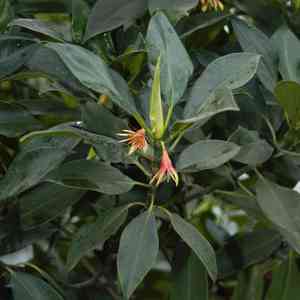
Oriental mangrove(Bruguiera gymnorhiza)

Oriental mangrove (Bruguiera gymnorhiza)

Also known as: Burmese mangrove

The oriental mangrove (Bruguiera gymnorhiza) is a medium-sized tree commonly found in estuaries and mudflats, often coexisting with other mangrove species. Here are some of its uses:

1. **Coastal Defense**: Its extensive root systems help stabilize shorelines and protect against erosion and storm surges.
2. **Habitat**: Provides crucial habitat for a variety of marine life and bird species.
3. **Edible Leaves**: The leaves can be consumed as a salad or used as a seasoning.
4. **Tannin and Dye**: The bark is a rich source of tannins and dyes, useful in leather processing.
5. **Timber and Charcoal**: The wood is used for construction, making rafters, and producing charcoal.

These trees are vital for both ecological balance and local livelihoods.

Attributes of Oriental mangrove

Lifespan
Perennial
Plant Type
Tree, Shrub
Plant Height
7 m to 35 m
Spread
4 to 15 meters
Leaf Color
Dark green
Flower Size
3 cm to 5 cm
Flower Color
White Red

ForwardPlant - Identify plants with a snap

Identify and diagnose plants, get toxicity alerts, and explore safety guides for all types of fungi.

Try for Free

Images of Oriental mangrove

Oriental mangrove(Bruguiera gymnorhiza)

Quickly Identify Oriental mangrove

1
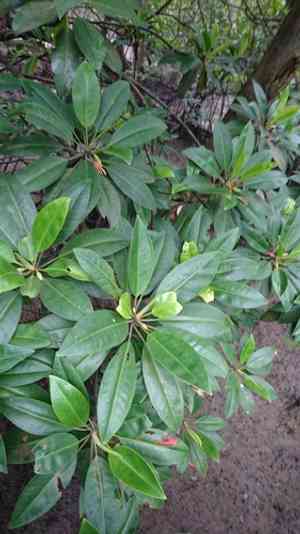
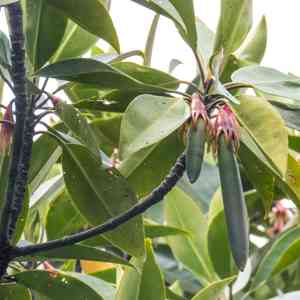
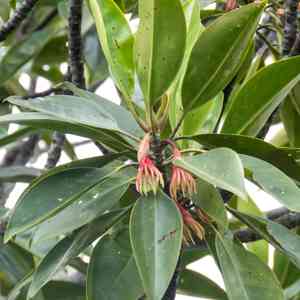
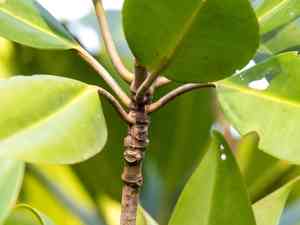
Identification of Bruguiera gymnorhiza can be done by looking at its large glossy green leaves with a pointed tip, reddish-brown bark, and distinctive knee-like roots. The flowers are erect, with a unique reddish hue and sepals that look like teeth.

Scientific Classification of Oriental mangrove

Phylum
Vascular plants
Class
Dicotyledons
Order
Malpighiales
Family
Red mangrove
Genus
Bruguiera
Species
Oriental mangrove

Planting and Growing of Oriental mangrove

Care Difficulty
Hard
Watering Schedule
Every 2 days
Sunlight Requirements
Partial sun
Sunshine Duration
6-10 hours
Ideal Temperature
68-86℉
Soil Type
Potting Mix, Peat Mix
Soil pH
6.5-7.5
Fertilizer Type
Balanced
Pruning Season
Spring, Summer
Pruning Area
Branches, Leaves
Pruning Frequency
2 times a year
Repotting Season
Spring
Pot Type
Plastic, Terracotta

water icon How to Water Oriental mangrove?

Bruguiera gymnorhiza, commonly known as the large-leafed mangrove, requires careful attention to its watering needs. This plant thrives in consistently moist soil, typical of its natural habitat in mangrove environments. The watering should simulate its natural flooding and draining cycle, ensuring the soil is soaked to the depth of the root system, approximately 500 ml per watering session, allowing for slight drying to mimic tidal changes.
What are the symptoms of an underwatered Oriental mangrove?
What should I do if my Oriental mangrove is not getting enough water?
What are the symptoms of an overwatered Oriental mangrove?
How to save an overwatered Oriental mangrove?

sunlight icon What Are the Sunlight Requirements for Oriental mangrove?

Sunlight Requirements: Partial sun, Full sun
Duration of light: 6 to 8 hours daily
Bruguiera gymnorhiza thrives in partial to full sun light ranges, ideally 6 to 8 hours daily. This light availability ensures healthy photosynthesis and supports the plant's tropical growth habits, yielding vigorous foliage.
What is the ideal lighting condition for Bruguiera gymnorhiza?
How to achieve the ideal lighting for Bruguiera gymnorhiza?
What are the benefits of ideal lighting for Bruguiera gymnorhiza?

temperature icon What Is the Ideal Temperature Range for Oriental mangrove?

Ideal Temperature: 68 ~ 86℉
What is the ideal temperature range for Bruguiera gymnorhiza? It grows best between 68°F and 86°F, providing an environment resembling its natural tropical habitat. This range ensures optimal metabolic and physiological processes, crucial for its growth and photosynthesis.

soil icon What Soil is Best for Oriental mangrove?

Soil type: Clay soil, Sandy soil, Loam
Soil PH: 6.5 ~ 7.5
Bruguiera gymnorhiza thrives in well-drained soils which prevent waterlogging, ensuring the roots receive enough oxygen. This is vital as it helps the plant grow robustly by supporting its root development. This species can withstand moderate salinity, making it suitable for coastal regions. The ability to tolerate some salinity means it can grow in environments where other plants might struggle, offering ecological stability. Enriching the soil with organic matter benefits Bruguiera gymnorhiza by providing essential nutrients, enhancing soil structure, and improving moisture retention. This support leads to healthier growth and vibrant foliage.

fertilize icon How to Fertilize Oriental mangrove?

Fertilizer type: Balanced
Bruguiera gymnorhiza, commonly known as the large-leafed mangrove, appreciates a balanced nutrition approach. Use a standard liquid fertilizer, diluted at half strength, about 20 ml per liter of water to prevent burning the roots, ensuring the soil remains nutrient-rich and conducive to growth.

prune icon How to Prune Oriental mangrove?

Pruning Time: Spring, Summer, Autumn, Winter
Begin by identifying any dead, damaged, or diseased branches and remove them using clean, sharp pruning shears. Cut these branches back to the healthy wood to stimulate growth. Then, focus on thinning out the canopy to improve air circulation and light penetration, targeting crossing branches that might rub against each other. Encourage a naturally balanced growth by selectively trimming the longer branches to maintain a pleasing form. To maintain a desirable shape, especially in a garden setting, trim back the outer growth gently to keep the plant dense and bushy. Use subtle cuts to reshape the plant without causing too much stress. Take care to only prune up to one-third of the plant at a time to avoid over-pruning, which could weaken the plant. More About Pruning Techniques

propagate icon How to Propagate Oriental mangrove plant?

Propagate Time: Early summer, Late summer
1
Collect mature seeds from existing Bruguiera gymnorhiza plants. Look for fully developed, naturally falling seeds, ensuring they are undamaged and fresh for optimal germination.
2
Select a healthy, semi-hardwood stem from the parent plant. Cut a section about 10-15 cm long, ensuring to include several nodes. Remove any leaves from the lower half of the cutting.
3
Fill a seed tray with a well-draining substrate such as a mix of peat moss and sand. Sow the seeds, covering them lightly with the substrate. Water gently and keep them in a warm, humid environment.

repot icon How to Repot Oriental mangrove plant?

Repotting frequency: Every 2-3 years
1
Bruguiera gymnorhiza should be repotted when roots start peeking out from drainage holes or the plant outgrows its current pot. These are clear indicators that the plant requires more space to allow its roots enough room to grow and expand healthily.
2
Opt for a pot that is slightly larger than the current one, ideally with good drainage holes. This ensures proper water movement and prevents waterlogging, providing optimal conditions for root health.
3
Use a rich, well-draining loam to support the plant’s growth. This type of soil mimics its natural mangrove environment, providing essential nutrients and preventing excess moisture retention.

ForwardPlant - Identify plants with a snap

Find the best spots for them to optimize their health, simply using your phone.

Try for Free