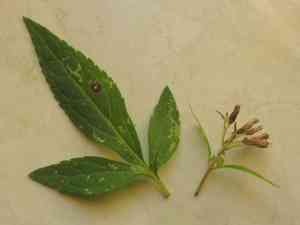
False boneset (Brickellia eupatorioides)
Also known as: Florida brickell-bush
The **Prairie Milkweed (Asclepias sullivantii)** is a native Midwest plant commonly found in prairies and savannas. This tall plant features roots that can extend up to 5 meters deep. Its white flower clusters are known for attracting numerous insects, while grasshoppers often feed on its leaves. Though not typically favored by mammals, they may consume it when other food sources are scarce.
In This Article
Attributes of False boneset
Lifespan
Perennial
Plant Type
Herb, Shrub
Plant Height
30 cm to 1.2 m
Spread
30 cm
Leaf Color
Green
Flower Size
2.5 cm
Flower Color
White Yellow Green Pink Purple Red
Images of False boneset
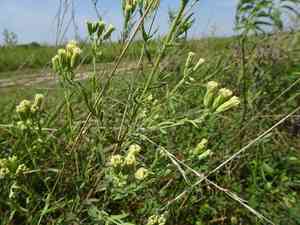
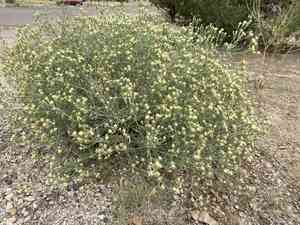
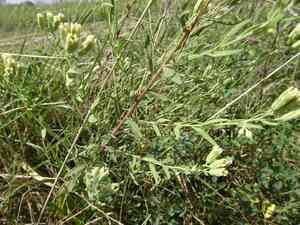
Quickly Identify False boneset
1
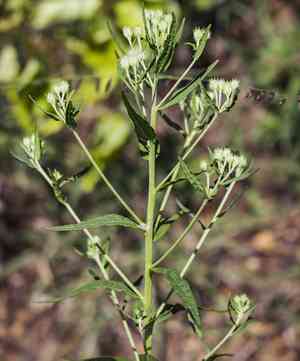
Look for an erect, clumpy plant with lanceolate, serrated leaves and clusters of small, white to pale yellow flowers arranged in dense terminal clusters. The stem is often purplish, especially near the base.
Scientific Classification of False boneset
Phylum
Vascular plants
Class
Dicotyledons
Order
Asterales
Family
Daisy
Genus
Brickellbushes
Species
False boneset
Planting and Growing of False boneset
Care Difficulty
Easy
Watering Schedule
Every 2 days
Sunlight Requirements
Full sun
Sunshine Duration
4-6 hours
Ideal Temperature
65-75℉
Soil Type
Potting Mix, Peat Mix
Soil pH
6.5-7.5
Fertilizer Type
Balanced
Pruning Season
Spring, Summer
Pruning Area
Branches, Leaves
Pruning Frequency
2 times a year
Repotting Season
Spring
Pot Type
Plastic, Ceramic
 How to Water False boneset?
Brickellia eupatorioides prefers a well-draining soil with moderate moisture. Water this plant about 200ml each time, ensuring that the soil is evenly moistened but never waterlogged. The key is to allow the top inch of soil to dry out completely between watering sessions to prevent root rot.
What are the symptoms of an underwatered False boneset?
›
What should I do if my False boneset is not getting enough water?
›
What are the symptoms of an overwatered False boneset?
›
How to save an overwatered False boneset?
›
 What Are the Sunlight Requirements for False boneset?
Brickellia eupatorioides flourishes in full sun to partial sun environments, ideally receiving 6-8 hours of sunlight. This light range promotes vigorous growth, vibrant blooms, and overall plant vitality.
More About Sunlight Requirements Techniques→
How much light does Brickellia eupatorioides need?
›
How can you achieve the ideal lighting conditions?
›
What are the benefits of ideal lighting for Brickellia eupatorioides?
›
 What Is the Ideal Temperature Range for False boneset?
The ideal temperature range for Brickellia eupatorioides is between 65°F and 75°F. This range ensures that the plant has optimal conditions for growth and metabolic activities. Within this bracket, the plant can efficiently carry out photosynthesis and respiration, promoting healthy development and flowering. Consistent temperatures in this range help in maintaining foliage vitality and preventing stress-related issues.
 What Soil is Best for False boneset?
Brickellia eupatorioides thrives in well-drained soil as it prevents waterlogging, which can lead to root rot. Well-drained conditions ensure that the roots have access to necessary oxygen and can efficiently absorb nutrients, promoting healthy plant growth. Adequate levels of essential nutrients in the soil are crucial for Brickellia eupatorioides to flourish. Nutrient-rich soil supports robust flowering and foliage development, ensuring the plant's vitality and sustainability over time. While organic matter is beneficial, Brickellia eupatorioides performs better in soils with low to moderate organic content, as excessive organic matter can retain too much moisture. Maintaining appropriate levels helps balance water retention and drainage.
 How to Fertilize False boneset?
Brickellia eupatorioides does not require a large amount of fertilizer. For liquid fertilizers, use a diluted solution of a balanced 10-10-10 fertilizer at half the recommended strength, approximately 1 tablespoon per gallon of water. Apply lightly to avoid over-fertilization.
 How to Prune False boneset?
Over-pruning can lead to stress and reduced flowering. Keep in mind to only remove around 25-30% of the plant at once to avoid shock. When trimming, be on the lookout for signs of pests such as unusual spots or holes in the leaves, which might mandate additional care tactics.
More About Pruning Techniques→
 How to Propagate False boneset plant?
1
Start by preparing a well-draining soil mix. Use a combination of potting soil and sand or perlite to ensure proper aeration and moisture retention.
2
Scatter the seeds thinly and cover them lightly with soil. Ensure they are kept moist at all times till they germinate, usually within a few weeks.
3
Select healthy, non-flowering stems for cuttings. Make a clean cut directly below a node, and ensure the cutting is about 4-6 inches long.
 How to Repot False boneset plant?
1
Brickellia eupatorioides requires repotting when it shows signs of being root-bound, such as roots growing out of the drainage holes or a halt in growth. These indicators suggest that the current pot is no longer adequate, and repotting can help facilitate healthier growth by providing more space for root expansion.
2
Choose a pot that is one size larger than the current pot and has good drainage holes at the bottom. A pot that is too large may lead to overwatering issues, while a correctly sized pot helps ensure optimal soil moisture levels and encourages root development without unnecessary water retention.
3
Select a well-draining sandy soil mix that can mimic the native habitat of Brickellia eupatorioides, ensuring that water can flow through the soil easily. This choice prevents waterlogging, which can lead to root rot, and provides a stable environment for nutrient uptake by the plant.
Learn More About False boneset Diseases
Anthracnose
Bacterial Leaf Spot
Bacterial Soft Rot
Bacterial Wilt
Chemical Injury
Crown Gall
Cyst Nematode
Damping-off
Downy Mildew
Drought Stress
Fusarium Wilt
Gray Mold
Leaf Spot
Mosaic
Nutrient Deficiency
Nutrient Toxicity
Powdery Mildew
Root Rot
Root-knot Nematode
Rusts
Sooty Mold
Spider Mites
Temperature Stress
Thrips Damage
White Mold



