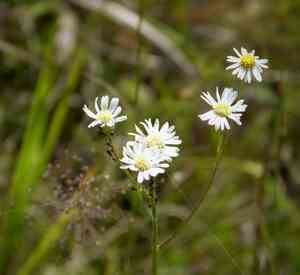
Smallhead doll's daisy (Boltonia diffusa)
Also known as: False Aster, Smallhead False Aster
Bellis perennis, commonly known as the English daisy, is a low-growing perennial that rarely exceeds 20 cm in height. It propagates through stolons, which are horizontal stems that spread across the soil surface. This plant produces numerous daisy-like flowers featuring white or lavender petals and a central cluster of yellow florets.
In This Article
Attributes of Smallhead doll's daisy
Lifespan
Perennial
Plant Type
Herb
Plant Height
30 cm to 91 cm
Spread
1 to 2 feet (30 to 60 cm)
Leaf Color
Green
Flower Size
0.5 inches (1.3 cm)
Flower Color
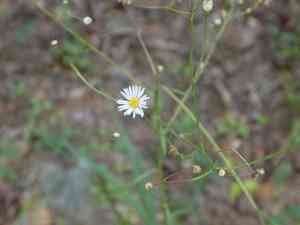
White or pale pink
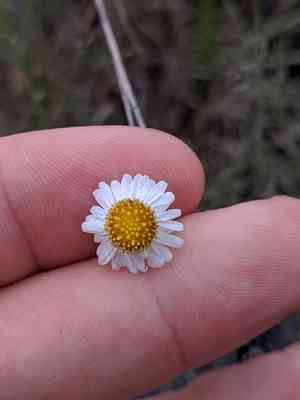
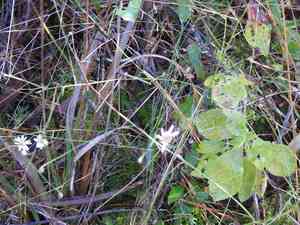
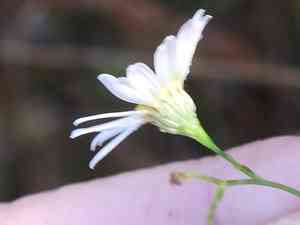
Images of Smallhead doll's daisy
Quickly Identify Smallhead doll's daisy
1
Identification of Boltonia diffusa can be done by looking for its small, rayless flower heads that appear in clusters, and its alternate, narrow leaves. The plants typically have a bushy growth habit and can grow up to several feet tall.
Scientific Classification of Smallhead doll's daisy
Phylum
Vascular plants
Class
Dicotyledons
Order
Asterales
Family
Daisy
Genus
Boltonia
Species
Smallhead doll's daisy
Planting and Growing of Smallhead doll's daisy
Care Difficulty
Easy
Watering Schedule
Every 3 days
Sunlight Requirements
Full sun
Sunshine Duration
6-10 hours
Ideal Temperature
60-75℉
Soil Type
Potting Mix, Peat Mix
Soil pH
6.5-7.5
Fertilizer Type
Balanced
Pruning Season
Spring, Summer
Pruning Area
Branches, Leaves
Pruning Frequency
2 times a year
Repotting Season
Spring
Pot Type
Plastic, Ceramic
 How to Water Smallhead doll's daisy?
For Boltonia diffusa, the watering amount should ensure that the soil is consistently moist but not soggy. Aim for about 500 ml per watering session. The key is to maintain a balance where the roots have enough hydration without sitting in water.
What are the symptoms of an underwatered Smallhead doll's daisy?
›
What should I do if my Smallhead doll's daisy is not getting enough water?
›
What are the symptoms of an overwatered Smallhead doll's daisy?
›
How to save an overwatered Smallhead doll's daisy?
›
 What Are the Sunlight Requirements for Smallhead doll's daisy?
Full sunlight, with six to eight hours a day, is ideal for Boltonia diffusa. Such exposure ensures robust photosynthesis, supporting healthy growth, foliage vitality, and abundant blooming.
Optimal Sun Exposure
›
Innovative Solutions to Achieve Ideal Conditions
›
Benefits of Ideal Lighting
›
 What Is the Ideal Temperature Range for Smallhead doll's daisy?
The ideal temperature range for Boltonia diffusa is between 60°F and 75°F. This range provides optimal conditions for growth and health, ensuring the plant can effectively photosynthesize and respirate without experiencing thermal stress.
 What Soil is Best for Smallhead doll's daisy?
Boltonia diffusa thrives in soil with good drainage. Excess water can lead to root rot, so ensuring the soil has adequate drainage will help maintain healthy root systems and robust plant growth. This plant benefits from soil with moderate fertility levels. Overly rich soils can encourage excessive foliage growth at the expense of flowering, so a balanced nutrient supply supports optimal blooms without overly vigorous leaf growth. Boltonia diffusa prefers a soil pH ranging from 6.5 to 7.5. This pH range ensures the availability of essential nutrients needed for healthy growth and vibrant flowering.
 How to Fertilize Smallhead doll's daisy?
For Boltonia diffusa, the recommended amount of fertilizer is modest; avoid over-fertilizing to prevent root burn. Use a balanced 10-10-10 liquid fertilizer, applying half the recommended strength to ensure gentle nutrition.
 How to Prune Smallhead doll's daisy?
Before starting any major pruning, inspect the plant for any stems that appear dead or diseased, and carefully remove these first to prevent any potential spread. Once the flowering season is over, cut back the stems by about a third to encourage new growth and future blooms. This will help maintain an aesthetically pleasing shape. Consider the overall shape you desire for your Boltonia diffusa, and trim accordingly. Shaping can enhance air circulation within the plant, reducing disease risk.
More About Pruning Techniques→
 How to Propagate Smallhead doll's daisy plant?
1
Fill trays with a seed-starting mix and plant Boltonia diffusa seeds at a depth of about 1/8 inch. Lightly cover with soil and water gently. Place the tray in a warm area with plenty of sunlight to facilitate germination.
2
Select healthy, non-flowering stems from a mature Boltonia diffusa plant. Cut a 4 to 6-inch segment just below a node. Remove the lower leaves and prepare the cutting for planting in a well-draining medium.
3
Carefully dig up a mature Boltonia diffusa plant, ensuring minimal damage to the root system. Gently separate the clump into sections, making sure each section has roots attached. Replant these sections in desired locations and water them well.
 How to Repot Smallhead doll's daisy plant?
1
Observe Boltonia diffusa's growth pattern: If growth seems stunted, roots are protruding from drainage holes, or soil is compacted, it's time to repot. Optimal repotting occurs in spring or summer when growth is vigorous, ensuring swift recovery.
2
Select a pot that is 1-2 inches larger in diameter than the current one. Ensure it has drainage holes to prevent waterlogging, which can lead to root rot. A slightly larger pot allows room for growth while avoiding soil moisture issues.
3
Opt for a well-draining sandy loam mix that's rich in organic matter. This blend promotes healthy root growth and ensures excess water drains away, providing the plant with a balanced environment and reducing the risk of root diseases.



