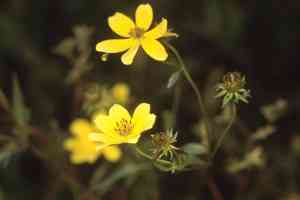
Bearded beggarticks (Bidens aristosa)
Also known as: Tickseed beggarticks, Swamp marigold, Bur marigold, Tickseed Sunflower
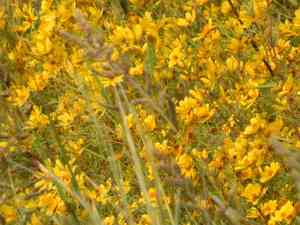
Bidens aristosa, commonly called the bearded beggarticks, belongs to the sunflower family. This herb can grow up to 1.5 meters tall and features bright yellow flowers that bloom in the fall. Each flower head measures between 2.5 to 5 cm in diameter. It's frequently utilized for enhancing landscapes.
In This Article
Attributes of Bearded beggarticks
Lifespan
Annual, Biennial
Plant Type
Herb
Plant Height
61 cm to 1.2 m
Spread
30 cm to 60 cm
Leaf Color
Green
Flower Size
2.5 cm to 8 cm
Flower Color
Yellow
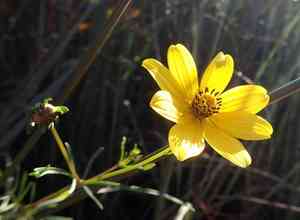
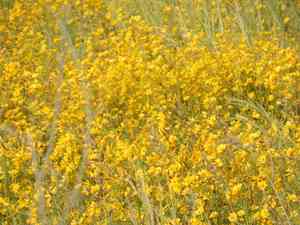
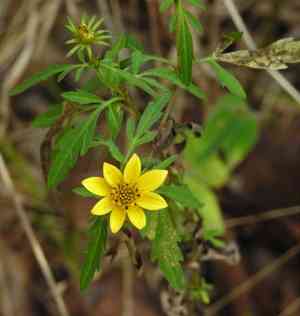
Images of Bearded beggarticks
Quickly Identify Bearded beggarticks
1
Solitary bright yellow flower heads with 6-8 ray florets surrounding central disc florets.
2
Opposite, serrated leaves that are pinnately compound or bi-pinnate with fine hairs.
3
Robust taproot and 4-angled stems, purplish or mottled, rarely exceeding 0.2 inches wide.
4
Radiant yellow blooms persisting into early autumn, followed by slender, dry achenes with barbs.
5
Achenes measuring 0.2 to 0.4 inches in length, with 2-4 conspicuous barbs at the apex.
Scientific Classification of Bearded beggarticks
Phylum
Vascular plants
Class
Dicotyledons
Order
Asterales
Family
Daisy
Genus
Beggarticks
Species
Bearded beggarticks
Planting and Growing of Bearded beggarticks
Care Difficulty
Easy
Watering Schedule
Every 8 days
Sunlight Requirements
Full sun
Sunshine Duration
6-8 hours
Ideal Temperature
68-77℉
Soil Type
Potting Mix, Peat Mix
Soil pH
6.5-7.5
Fertilizer Type
Balanced
Pruning Season
Spring, Summer
Pruning Area
Branches, Leaves
Pruning Frequency
2 times a year
Repotting Season
Spring
Pot Type
Plastic, Ceramic
 How to Water Bearded beggarticks?
Bidens aristosa prefers to be watered deeply, ensuring the soil is moist but not soggy. Applying approximately 200 milliliters should be optimal. The key is to water thoroughly until it starts draining from the bottom of the pot, ensuring that each root gets the moisture it needs without oversaturating the soil.
What are the symptoms of an underwatered Bearded beggarticks?
›
What should I do if my Bearded beggarticks is not getting enough water?
›
What are the symptoms of an overwatered Bearded beggarticks?
›
How to save an overwatered Bearded beggarticks?
›
 What Are the Sunlight Requirements for Bearded beggarticks?
Full sun ensures Bidens aristosa develops healthily, offering excellent flower production and growth vigor. Its preferred light range is crucial for photosynthesis and nutrient uptake.
More About Sunlight Requirements Techniques→
What is Bidens aristosa's ideal sunlight condition?
›
How can I ensure Bidens aristosa receives its ideal light conditions?
›
What benefits does Bidens aristosa gain from ideal sunlight?
›
 What Is the Ideal Temperature Range for Bearded beggarticks?
Bidens aristosa thrives best in a temperature range between 68°F and 77°F. These temperatures foster optimal photosynthesis and nutrient absorption, allowing the plant to flourish. Maintaining this range helps prevent temperature-induced stress, promoting robust growth and blooming.
 What Soil is Best for Bearded beggarticks?
Bidens aristosa thrives in well-drained soils that prevent waterlogging, which is crucial for its healthy root development. Good drainage reduces the risk of root rot, thus promoting vigorous growth and flowering. The plant benefits from nutrient-rich soils that provide essential minerals for its growth. Ensuring adequate levels of nitrogen, phosphorus, and potassium will enhance the plant’s vibrant blossoms and robust structure. While the soil should be well-drained, it's important that it retains some moisture to sustain the plant during dry spells. This balance ensures consistent growth and reduces stress on the plant during hot weather.
 How to Fertilize Bearded beggarticks?
Bidens aristosa, commonly known as tickseed sunflower, appreciates a moderate fertilizing approach. Use a balanced fertilizer such as 10-10-10. For liquid fertilizers, mix approximately 1 tablespoon per gallon of water. For slow-release fertilizers, apply 1/4 cup per plant to the soil at the base.
 How to Prune Bearded beggarticks?
Start by locating any stems that appear brown, dry, or damaged. These should be your primary target for removal to foster healthier new growth and improve air circulation within the plant structure. Focus on cutting back leggy stems to just above a node or set of leaves. This encourages branching and promotes more prolific blooming, giving you more vibrant flowers over the season. Maintain an aesthetically pleasing shape by selectively trimming overgrown areas. This ensures the plant stays compact and well-rounded, which is especially important for maintaining its appearance in garden settings.
More About Pruning Techniques→
 How to Propagate Bearded beggarticks plant?
1
Start by filling seed trays with seed-starting mix. Sow seeds of Bidens aristosa on the surface and lightly cover them with soil. Maintain soil moisture and place trays in a warm location to promote germination.
2
Use pruning shears to take 4-6 inch cuttings from healthy stems in spring or early summer. Ensure each cutting has at least two nodes. Remove lower leaves and dip the cut end in rooting hormone before planting in a suitable medium.
3
In early spring, gently lift the mature plant from the ground. Use a sharp knife to divide the root ball into sections, ensuring each has roots and shoots. Replant divisions promptly in prepared soil to minimize stress.
 How to Repot Bearded beggarticks plant?
1
Bidens aristosa needs repotting when it shows signs of being root-bound, such as roots escaping through drainage holes or slow growth despite proper care. The best time to repot is during spring or summer when the plant enters an active growth phase, ensuring a quicker recovery.
2
Choose a pot that's one size larger than the current one, ensuring it has drainage holes. A slightly larger pot prevents overwatering while allowing enough space for root expansion, thus promoting healthier growth. The material of the pot is less critical but should complement your plant's aesthetic or practical needs.
3
Use a well-draining potting mix, ideally one containing perlite or sand, to ensure proper aeration and drainage. Such a mix prevents waterlogging, which can lead to root rot, and supports optimal nutrient uptake and growth.



