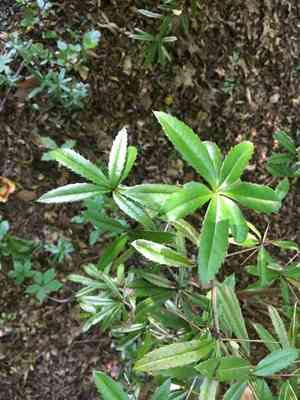
Wintergreen barberry(Berberis julianae)

Wintergreen barberry (Berberis julianae)

Also known as: Julian's berberis

Wintergreen barberry (Berberis julianae) is an evergreen shrub that typically reaches heights of about 1.2 meters and spreads up to 1.8 meters wide. In the spring, it produces clusters of yellow flowers. By fall, the shrub develops blackish-blue berries that attract birds and other wildlife. The foliage is noteworthy for its seasonal color transformation: starting with glossy green leaves in spring and summer, then transitioning to a burgundy hue in winter. For optimal growth, it requires well-drained soil and thrives best in full sun to partial shade.

Attributes of Wintergreen barberry

Lifespan
Perennial
Plant Type
Shrub
Plant Height
3 m
Spread
2.5 m to 4 m
Leaf Color
Green
Flower Size
3 mm
Flower Color
Yellow

ForwardPlant - Identify plants with a snap

Identify and diagnose plants, get toxicity alerts, and explore safety guides for all types of fungi.

Try for Free

Images of Wintergreen barberry

Wintergreen barberry(Berberis julianae)

Quickly Identify Wintergreen barberry

1
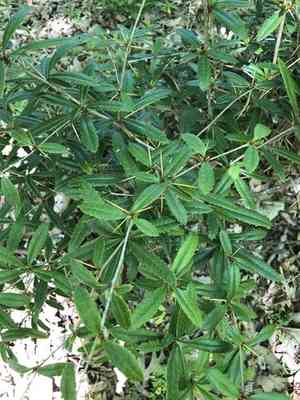
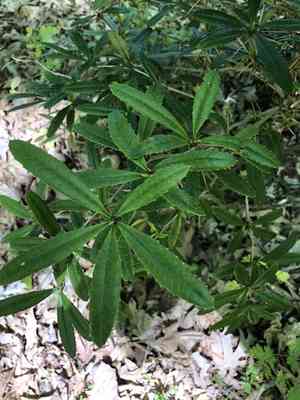
Leaves are leathery, deep green, toothed, clustered at nodes on short spur shoots.
2
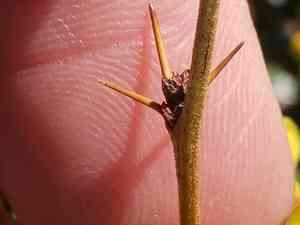
Stem has 3 sharp spines at nodes, yellowish when young, thin branching pattern.
3
Yellow flowers in subumbellate raceme, star-like arrangement of petals.
4
Distinctive bluish-black oval berry, 0.3 inches (7.62 mm) in size, smooth texture.
5
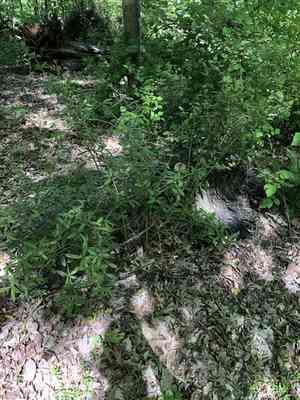
Robust, rounded evergreen shrub, dense form with medium to fine texture.

Scientific Classification of Wintergreen barberry

Phylum
Vascular plants
Class
Dicotyledons
Order
Ranunculales
Family
Barberry
Genus
salmon barberry
Species
Wintergreen barberry

Planting and Growing of Wintergreen barberry

Care Difficulty
Easy
Watering Schedule
Every 2 days
Sunlight Requirements
Partial sun
Sunshine Duration
4-8 hours
Ideal Temperature
60-75℉
Soil Type
Potting Mix, Peat Mix
Soil pH
6.5-7.5
Fertilizer Type
Balanced
Pruning Season
Spring, Summer
Pruning Area
Branches, Leaves
Pruning Frequency
2 times a year
Repotting Season
Spring
Pot Type
Plastic, Ceramic

water icon How to Water Wintergreen barberry?

For Berberis julianae, ensure a thorough soaking process, meaning water should be applied until it drains out of the bottom of the pot. Each watering session should involve around 500 ml, allowing the water to penetrate deeply enough to reach the roots while avoiding waterlogging.
What are the symptoms of an underwatered Wintergreen barberry?
What should I do if my Wintergreen barberry is not getting enough water?
What are the symptoms of an overwatered Wintergreen barberry?
How to save an overwatered Wintergreen barberry?

sunlight icon What Are the Sunlight Requirements for Wintergreen barberry?

Sunlight Requirements: Partial sun
Duration of light: 4-6 hours daily
Berberis julianae favors partial sun for healthy growth and vitality. The ideal light helps maintain its rich foliage color, supports flowering, and ensures robust overall vigor crucial for its ecological contributions.
What kind of sunlight does Berberis julianae prefer?
How can you achieve the ideal light conditions for this plant?
What are the benefits of ideal light exposure for Berberis julianae?
More About Sunlight Requirements Techniques

temperature icon What Is the Ideal Temperature Range for Wintergreen barberry?

Ideal Temperature: 60 ~ 75℉
The ideal temperature range for Berberis julianae is between 60°F and 75°F. Maintaining this range ensures the plant grows healthily, as the moderate temperature supports active photosynthesis and nutrient uptake, leading to vibrant foliage and robust growth.

soil icon What Soil is Best for Wintergreen barberry?

Soil type: Loam, Clay soil, Sandy loam
Soil PH: 6.5 ~ 7.5
Berberis julianae thrives in well-drained soils, which prevent water from pooling around the roots. This is crucial to avoid root rot and ensure the roots get enough oxygen, promoting a healthy root system and vigorous plant growth. This plant requires soil with moderate fertility. High fertility can lead to excessive soft growth, which may be more susceptible to pests, while moderate nutrients ensure balanced growth and robustness. Although drought-tolerant once established, Berberis julianae prefers soil that remains consistently moist. This helps maintain its lush foliage and encourages the best flowering and fruiting performance.

fertilize icon How to Fertilize Wintergreen barberry?

Fertilizer type: Balanced
For Berberis julianae, it’s important to provide a balanced amount of nutrients. When using liquid fertilizers, dilute the solution to half its recommended strength and apply approximately 1 liter per square meter to ensure the plant absorbs adequate nutrients without risk of burning the roots.

prune icon How to Prune Wintergreen barberry?

Pruning Time: Spring, Autumn
Begin pruning your Berberis julianae by removing any dead, damaged, or diseased branches. This plant responds well to selective pruning, which involves cutting back a few of the older stems to the ground level to promote new growth. Focus on cutting above an outward-facing bud at a slight angle to encourage natural growth. Make sure to use sharp and clean pruning shears for the best results.

propagate icon How to Propagate Wintergreen barberry plant?

Propagate Time: Spring, Early spring, Late spring
1
Choose healthy, young stems from the mother plant for cuttings. Cut sections about 10 cm long using sharp shears, and remove the leaves from the bottom half of the cutting.
2
Prepare a seed bed using a mixture of peat and sand, ensuring it's well-draining. Sow seeds lightly on the surface and cover with a thin layer of soil.
3
For division propagation, carefully lift the parent plant from the soil. Gently separate the roots into smaller clumps, each with several stems and roots, then replant them.
More About Propagating Techniques

repot icon How to Repot Wintergreen barberry plant?

Repotting frequency: Every 2-3 years
1
Berberis julianae shows clear signals indicating the need for repotting. Look for roots growing out of the drainage holes and a compacted root ball, which hinders water absorption. Other signs include slow growth and yellowing leaves, both pointing towards a cramped and nutrient-deprived potting environment. Repotting is essential to offer fresh nutrients and space to breathe.
2
Choosing an appropriate pot for Berberis julianae is crucial. Opt for a pot that is only a couple of inches larger in diameter than the current one. It should have proper drainage holes to prevent waterlogging. The material could be terracotta, which offers breathability. A suitable pot ensures better root aeration, supports controlled growth, and prevents root rot, keeping your plant healthy.
3
For Berberis julianae, choose an acidic, well-draining soil mix. Incorporate components like peat moss, perlite, and pine bark. This setup imitates the plant's native environment, promoting healthy growth and preventing common soil-related diseases. A well-chosen soil mix ensures adequate moisture retention while avoiding waterlogging, thereby protecting the roots.

ForwardPlant - Identify plants with a snap

Find the best spots for them to optimize their health, simply using your phone.

Try for Free

Toxicity of Wintergreen barberry

Is Wintergreen barberry toxic to humans?

Wintergreen barberry is characterized by a mild toxicity to humans, chiefly arising from the consumption of its fruit. The fruit is identified as the toxic component of the plant, which can lead to poisoning if eaten. Symptoms associated with wintergreen barberry poisoning are quite specific, with affected individuals possibly encountering gastrointestinal issues such as nausea, vomiting, and diarrhea. Furthermore, there may also be indications of weakness and dizziness. It is crucial for individuals, particularly those who may mistake the fruit for edible berries, to exercise caution and prevent accidental ingestion to avert these unpleasant and potentially dangerous symptoms.

Is Wintergreen barberry toxic to cat?

Wintergreen barberry presents a moderate toxicity threat to cats. If felines inadvertently ingest the plant's berries, they may show indications of distress, which could indicate poisoning. It is vital for cat owners to keep their furry companions away from these parts to prevent such occurrences. Should a cat encounter wintergreen barberry and show signs of illness or unease, it is essential to seek prompt veterinary assistance for the animal's health.

Is Wintergreen barberry toxic to dog?

The botanical species known as wintergreen barberry carries a mild toxicity risk for dogs. Canines may unknowingly ingest various parts of this plant, with the fruit being particularly toxic. If consumed, dogs may display symptoms that suggest poisoning. These symptoms could range from gastrointestinal disturbances, such as vomiting and diarrhea, to more severe reactions depending on the quantity ingested. It is essential for dog owners to vigilantly supervise their pets and limit their access to the fruits of the wintergreen barberry. Should a dog happen to consume any part of this plant, particularly the fruit, it is vital to seek immediate veterinary assistance to guarantee timely and proper care.

Identify toxic plants for your safety

Learn which plants are harmful to you and your pets, and make informed choices for a safer home!

Try for Free
WARNING
The judgment on toxicity and danger is for reference only. We DO NOT GUARANTEE any accuracy of such judgment. Therefore, you SHALL NOT rely on such judgment. It is IMPORTANT TO SEEK PROFESSIONAL ADVICE in advance when necessary.
More About Toxic Techniques