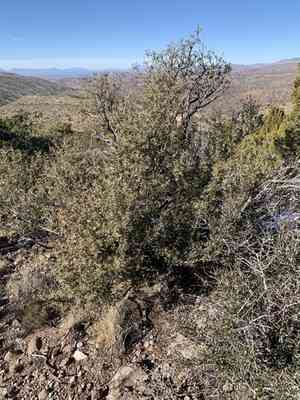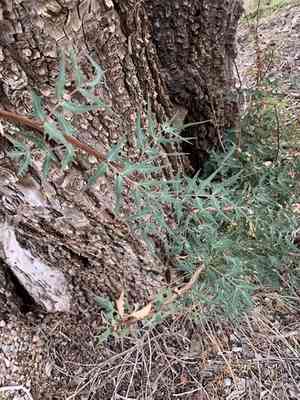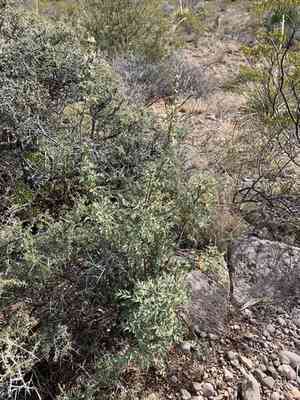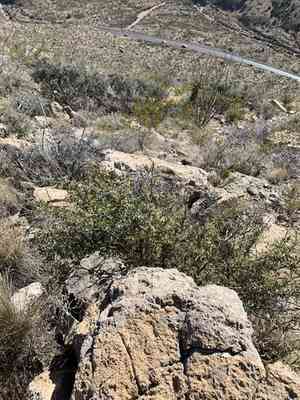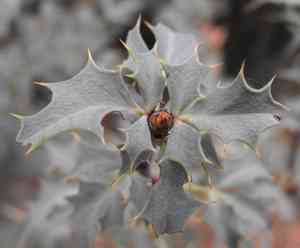
Red barberry(Berberis haematocarpa)

Red barberry (Berberis haematocarpa)

Also known as: Red Barberry, Colorado Barberry, Red Mexican Barberry

Red barberry (Berberis haematocarpa) is a deciduous shrub native to the southwestern United States and Mexico. It typically reaches heights of 3 to 6 feet. The plant features small, gray-green leaves with a spiny texture, resembling those of holly. It produces striking yellow flowers from spring to early summer, followed by bright red berries in late summer to fall.

**Growing Conditions:**
- **Sunlight:** Prefers full sun but can endure partial shade.
- **Soil:** Best in well-drained, sandy, or rocky soils.
- **Water:** Drought-resistant after establishment, requiring minimal watering.
- **Hardiness:** Suitable for USDA zones 5-9.
- **Maintenance:** Requires minimal care; occasional pruning to shape and remove dead branches is beneficial.

Red barberry is well-suited for xeriscaping and erosion control, offering both aesthetic appeal and practical utility in landscaping.

Attributes of Red barberry

Lifespan
Perennial
Plant Type
Shrub
Plant Height
3 m to 4 m
Spread
Approximately 1.5 to 2 meters (4.9 to 6.6 feet)
Leaf Color
Bluish-green
Flower Size
2.5 cm
Flower Color
Yellow

ForwardPlant - Identify plants with a snap

Identify and diagnose plants, get toxicity alerts, and explore safety guides for all types of fungi.

Try for Free

Images of Red barberry

Red barberry(Berberis haematocarpa)

Quickly Identify Red barberry

1
Identify Berberis haematocarpa by its spiny branches, small yellow flowers, and bright red fruit. The leaves are small, oval-shaped, and typically have a bluish-green color.

Scientific Classification of Red barberry

Phylum
Vascular plants
Class
Dicotyledons
Order
Ranunculales
Family
Barberry
Genus
salmon barberry
Species
Red barberry

Planting and Growing of Red barberry

Care Difficulty
Easy
Watering Schedule
Every 2 days
Sunlight Requirements
Full sun
Sunshine Duration
4-6 hours
Ideal Temperature
60-75℉
Soil Type
Potting Mix, Peat Mix
Soil pH
6.5-7.5
Fertilizer Type
Balanced
Pruning Season
Spring, Summer
Pruning Area
Branches, Leaves
Pruning Frequency
2 times a year
Repotting Season
Spring
Pot Type
Plastic, Ceramic

water icon How to Water Red barberry?

When watering Berberis haematocarpa, ensure the soil is thoroughly moist, but not soggy. Use about 500 ml each time, ensuring the water seeps to the deeper roots without waterlogging the upper layers. This approach mimics its natural arid habitat, accustomed to rare but substantial rainfall.
What are the symptoms of an underwatered Red barberry?
What should I do if my Red barberry is not getting enough water?
What are the symptoms of an overwatered Red barberry?
How to save an overwatered Red barberry?

sunlight icon What Are the Sunlight Requirements for Red barberry?

Sunlight Requirements: Full sun, Partial sun
Duration of light: 6-8 hours sunlight
Berberis haematocarpa should ideally receive full sun to partial sun exposure. This balance fosters enhanced photosynthesis, resulting in lush growth and rich fruit development, suitable for landscape beauty and habitat utilization.
Optimal Sunshine Exposure
Solutions to Achieve Ideal Lighting
Effects of Ideal Light on Plant Health
More About Sunlight Requirements Techniques

temperature icon What Is the Ideal Temperature Range for Red barberry?

Ideal Temperature: 60 ~ 75℉
Berberis haematocarpa thrives best between 60°F and 75°F. This range ensures ideal metabolic activity and supports healthy growth and reproduction. Temperatures within this bracket mimic its native environment, facilitating nutrient absorption and root development.

soil icon What Soil is Best for Red barberry?

Soil type: Sandy soil, Loam, Sandy loam
Soil PH: 6.5 ~ 7.5
Berberis haematocarpa thrives in well-drained soil because it prevents root rot, a common ailment for many plants. Well-drained soil ensures that excess water swiftly moves away from the root zone, thus maintaining balanced moisture and allowing the roots to breathe. This ultimately promotes robust growth and vibrant health. While this species is quite adaptable, providing a nutrient-rich substrate will enhance its growth and fruit production. The presence of organic matter in the soil not only improves its fertility but also enhances moisture retention and soil structure, benefiting both the plant and overall soil health. Berberis haematocarpa can tolerate a moderate level of salinity. This tolerance makes it suitable for growing in less-than-ideal areas where salt presence might thwart other species. This feature is beneficial for erosion control and landscaping in challenging conditions.

fertilize icon How to Fertilize Red barberry?

Fertilizer type: Balanced
When fertilizing Berberis haematocarpa, use a balanced fertilizer at half-strength for liquid applications. Apply approximately a quarter cup of granular fertilizer per plant annually, taking care not to over-apply, as this species thrives in lean soil conditions typical of its native habitat.

prune icon How to Prune Red barberry?

Pruning Time: Spring, Summer
Ensure you have sharp and clean pruning shears or loppers. Dull blades can cause ragged cuts that may invite diseases. Use larger loppers for thicker branches and small shears for detailed work. Start by removing any dead or diseased wood. This not only helps in preventing disease spread but also improves air circulation. Proceed to trim for shape, focusing on maintaining a natural form. Perform pruning in spring after flowering to avoid cutting the next season's blooms. Light shaping can be done in the summer, but avoid heavy pruning during autumn and winter to prevent stress. More About Pruning Techniques

propagate icon How to Propagate Red barberry plant?

Propagate Time: Spring,Late spring,Early spring
1
Collect ripe seeds of Berberis haematocarpa in early spring. Ensure that seeds are fully mature and not damaged. This is crucial as immature or damaged seeds may not germinate effectively.
2
Take semi-hardwood cuttings in late spring or early summer. Cuttings should be 4 to 6 inches long with a few leaves at the top. This helps in effective rooting by providing enough energy reserves.
3
Seeds should be sown on the surface of a seed-starting mix and lightly covered. Maintained temperature and moisture are critical parameters for successful seed germination.

repot icon How to Repot Red barberry plant?

Repotting frequency: Once every 3-4 years
1
The Berberis haematocarpa shows it needs repotting when roots start to protrude from the pot drainage holes or the growth significantly slows down despite good care. Spring and Autumn are optimal seasons as they promote recovery with milder temperatures and less stress on the plant. Check for these signs annually to ensure your plant has enough room to grow.
2
When selecting a pot for your Berberis haematocarpa, ensure it's about 2 inches larger in diameter than the current one, providing ample space for root expansion. Opt for pots with good drainage holes to prevent waterlogging. Materials like terracotta are excellent as they allow better airflow to the roots, maintaining healthy growth conditions.
3
Choose a well-draining, sandy loam soil for repotting Berberis haematocarpa. This soil type ensures adequate drainage and prevents root rot, vital for the plant's health. Incorporating organic matter like compost can enhance nutrient supply, supporting vibrant foliage and robust growth.

ForwardPlant - Identify plants with a snap

Find the best spots for them to optimize their health, simply using your phone.

Try for Free

Toxicity

ingestion

Identify toxic plants for your safety

Learn which plants are harmful to you and your pets, and make informed choices for a safer home!

Try for Free
WARNING
The judgment on toxicity and danger is for reference only. We DO NOT GUARANTEE any accuracy of such judgment. Therefore, you SHALL NOT rely on such judgment. It is IMPORTANT TO SEEK PROFESSIONAL ADVICE in advance when necessary.