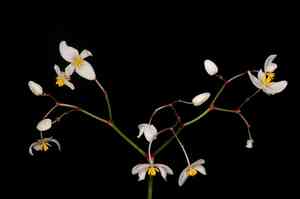
Begonia (Begonia obliqua)
Also known as: Angel Wing Begonia
The name has been misapplied to Begonia grandis by Thunberg, to Begonia minor by L'Héritier, and to Begonia fischeri by Vellozo.
In This Article
Attributes of Begonia
Lifespan
Perennial
Plant Type
Herb
Plant Height
30-60 cm
Spread
30-60 cm
Leaf Color
Green Blue
Flower Size
1-2 cm
Flower Color
White
Images of Begonia
Quickly Identify Begonia
1
Look for asymmetrical, elongated leaves with a distinctive wing shape. The leaves are often dark green with silvery spots and reddish undersides. In addition, observe the pink flowers that bloom in clusters.
Scientific Classification of Begonia
Phylum
Vascular plants
Class
Dicotyledons
Order
Cucurbitales
Family
Begonia
Genus
Begonias
Species
Begonia
Planting and Growing of Begonia
Care Difficulty
Easy
Watering Schedule
Every 2 days
Sunlight Requirements
Partial sun
Sunshine Duration
4-6 hours
Ideal Temperature
65-75℉
Soil Type
Potting Mix, Peat Mix
Soil pH
6.5-7.5
Fertilizer Type
Balanced
Pruning Season
Spring, Summer
Pruning Area
Branches, Leaves
Pruning Frequency
Once a year
Repotting Season
Spring
Pot Type
Plastic, Ceramic
 How to Water Begonia?
When watering Begonia obliqua, aim to provide about 250 milliliters until water begins to subtly drain from the pot’s bottom. This amount ensures the roots are sufficiently hydrated without oversaturating the soil.
What are the symptoms of an underwatered Begonia?
›
What should I do if my Begonia is not getting enough water?
›
What are the symptoms of an overwatered Begonia?
›
How to save an overwatered Begonia?
›
 What Are the Sunlight Requirements for Begonia?
Begonia obliqua thrives in partial sun conditions. Adequate but not excessive light promotes healthy foliage and robust flowering without leaf scorch.
More About Sunlight Requirements Techniques→
What is the ideal lighting environment?
›
How to achieve the ideal lighting?
›
Benefits of ideal lighting?
›
 What Is the Ideal Temperature Range for Begonia?
The ideal temperature range for cultivating Begonia obliqua is between 65°F to 75°F. This range supports optimal growth and flowering, providing sufficient warmth while preventing overheating. Maintaining this temperature ensures the plant does not suffer from stress, which can inhibit its development.
 What Soil is Best for Begonia?
Begonia obliqua thrives in nutrient-rich loamy soil that offers adequate organic matter. This ensures a steady supply of nutrients, promoting robust growth and vibrant foliage. Amending the soil with compost or well-rotted manure boosts soil fertility substantially. Good drainage is paramount for Begonia obliqua to prevent root rot. A well-draining substrate ensures excess water quickly exits, keeping the roots aerated. Combining loam with sand or perlite can significantly enhance drainage capabilities, keeping the plant healthy. While Begonia obliqua dislikes soggy roots, it does require soil that can retain adequate moisture. Peat soil helps retain moisture without waterlogging the roots, providing a consistent supply of hydration, essential during the growing season.
 How to Fertilize Begonia?
For Begonia obliqua, it's crucial to use a balanced fertilizer with an N-P-K ratio of around 10-10-10 or 20-20-20. When using liquid fertilizer, dilute to half the recommended strength to avoid burning the delicate roots. Typically, use roughly 1 tablespoon per gallon of water when applying.
 How to Prune Begonia?
Start by pinpointing branches that look overgrown or have dead or yellowing leaves. Trimming these areas not only tidies up your plant but also stimulates new, healthier growth. Position your scissors at a slight angle and make clean cuts about a quarter inch above a leaf node. This helps the plant maintain structure and encourages a more vigorous bloom. For a denser plant, pinch off the growing tips of young stems. This technique promotes lateral branching and results in a bushier appearance.
More About Pruning Techniques→
 How to Propagate Begonia plant?
1
Choose a healthy and mature mother plant with no signs of disease or damage. A robust plant increases the chances of successful propagation as it provides healthier and stronger cuttings.
2
Cut a section of the stem with three to four leaves. Make a clean cut just below a node. Ensure the cuttings are free of flowers or buds, as resources should focus on root development.
3
Dip the cut end in rooting hormone and plant it in a potting mix that drains well. Place the pot in a warm, bright environment but away from direct sunlight to prevent scorching.
 How to Repot Begonia plant?
1
Look for signs such as roots emerging from the drainage holes, slowed growth, or when the plant becomes root-bound. These are clear indicators that Begonia obliqua needs a new home. Another signal to watch for is if the current soil is compacted and no longer absorbs water efficiently.
2
Choose a pot that is only slightly larger than the current one, as begonias prefer a snug fit. A pot that is too large can retain excess moisture, leading to root rot. Ensure the pot has adequate drainage holes to prevent waterlogging and maintain healthy soil aeration.
3
Opt for a well-draining potting mix rich in organic matter. The ideal soil should retain enough moisture without becoming soggy, providing good aeration for the root system. This fosters healthy root growth while reducing the risk of fungal issues.
Toxicity
Ingestion
WARNING
The judgment on toxicity and danger is for reference only. We DO NOT GUARANTEE any accuracy of such judgment. Therefore, you SHALL NOT rely on such judgment. It is IMPORTANT TO SEEK PROFESSIONAL ADVICE in advance when necessary.
Learn More About Begonia Diseases
Anthracnose
Bacterial Leaf Spot
Bacterial Soft Rot
Black Spot
Chemical Injury
Damping-off
Downy Mildew
Drought Stress
Fusarium Wilt
Gray Mold
Leaf Spot
Mosaic
Nutrient Deficiency
Nutrient Toxicity
Powdery Mildew
Root Rot
Root-knot Nematode
Sooty Mold
Spider Mites
Temperature Stress
Thrips Damage
White Mold



