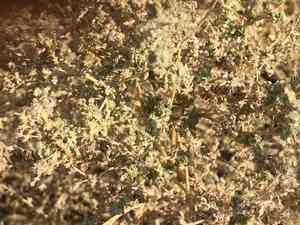
Cattle saltbush (Atriplex polycarpa)
Also known as: Allscale, Cattle saltbush
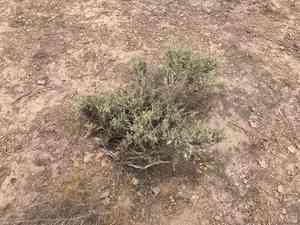
Cattle saltbush is a robust shrub well-suited for arid areas. Its silvery-gray foliage reflects sunlight, helping to conserve water. The plant features tiny, scaly flowers designed for survival in tough, dry conditions. Its remarkable ability to grow in saline soils highlights its excellent salt tolerance. Additionally, its deep and widespread root system plays a crucial role in stabilizing loose, sandy soils.
In This Article
Attributes of Cattle saltbush
Lifespan
Perennial
Plant Type
Shrub
Plant Height
Up to 1.5 meters
Spread
Up to 2 meters
Leaf Color
Gray-green
Flower Size
Small, less than 1 cm
Flower Color
Inconspicuous, greenish
Images of Cattle saltbush
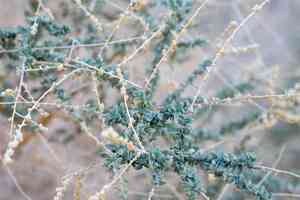
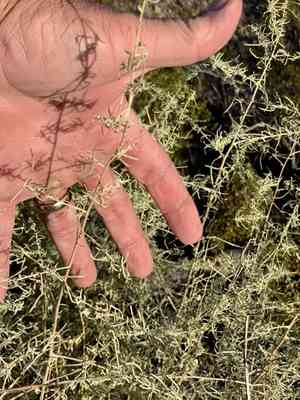
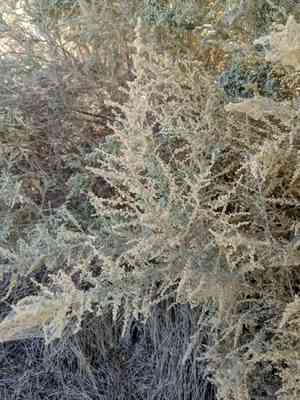
Quickly Identify Cattle saltbush
1
Atriplex polycarpa can be identified by its dense, rounded shape and its gray-green leaves that are often covered with a scaly white coating. The leaves are small and oval to lance-shaped. The plant produces small, inconspicuous flowers and can grow up to 1.5 meters in height.
Scientific Classification of Cattle saltbush
Phylum
Vascular plants
Class
Dicotyledons
Order
Caryophyllales
Family
Amaranth
Genus
Saltbush
Species
Cattle saltbush
Planting and Growing of Cattle saltbush
Care Difficulty
Easy
Watering Schedule
Every 2 days
Sunlight Requirements
Full sun
Sunshine Duration
4-8 hours
Ideal Temperature
60-80℉
Soil Type
Potting Mix, Peat Mix
Soil pH
6.5-8.5
Fertilizer Type
Balanced
Pruning Season
Spring, Summer
Pruning Area
Branches, Leaves
Pruning Frequency
2 times a year
Repotting Season
Spring
Pot Type
Plastic, Ceramic
 How to Water Cattle saltbush?
Atriplex polycarpa, commonly known as allscale saltbush, thrives in arid environments. This plant requires about 500 milliliters of water per session to mimic natural precipitation. The soil should be moist but not waterlogged, allowing for proper drainage to avoid root rot.
What are the symptoms of an underwatered Cattle saltbush?
›
What should I do if my Cattle saltbush is not getting enough water?
›
What are the symptoms of an overwatered Cattle saltbush?
›
How to save an overwatered Cattle saltbush?
›
 What Are the Sunlight Requirements for Cattle saltbush?
Full sun allows Atriplex polycarpa to optimize its desert adaptations, encouraging vigorous growth, optimal leaf color, and structural strength, crucial for its ecological roles and overall health.
How much sun does Atriplex polycarpa need?
›
What are the solutions to achieve ideal lighting for Atriplex polycarpa?
›
What are the benefits of ideal lighting conditions for Atriplex polycarpa?
›
 What Is the Ideal Temperature Range for Cattle saltbush?
The ideal temperature range for Atriplex polycarpa is between 60°F and 80°F. This specific range ensures optimal photosynthesis and growth rate, allowing the plant to thrive. Keeping the temperature within this range mimics the plant’s native climate, thus promoting healthy development.
 What Soil is Best for Cattle saltbush?
Atriplex polycarpa thrives in well-drained soil to prevent root rot. This characteristic is beneficial as it ensures that the plant's roots are not sitting in water, which can lead to fungal diseases and negatively impact growth. This plant is highly tolerant of saline soils, making it an excellent choice for areas with high salt content in the soil. This characteristic is beneficial because it allows the plant to survive and grow in challenging environments where other species may fail. Atriplex polycarpa can thrive in nutrient-poor soils, reducing the need for additional fertilization. This adaptability is beneficial as it allows for lower maintenance and cost-effective cultivation in less fertile areas.
 How to Fertilize Cattle saltbush?
When fertilizing Atriplex polycarpa, ensure that you don’t overdo it. Use about 1/4 to 1/2 teaspoon of balanced fertilizer per gallon of water for liquid feeding. For solid fertilizers, apply a thin layer around the base of the plant.
 How to Prune Cattle saltbush?
Pruning should ideally be performed during the growing seasons of spring, summer, and autumn when the plant is actively growing. Avoid heavy pruning in winter as it can stress the plant. Focus on cutting back about 1/3 of the longest branches to maintain shape. Always cut just above a node or alongside the main trunk to encourage healthy, bushy foliage. Avoid cutting back more than 50% of the growth at any one time. Over-pruning can weaken the saltbush and leave it vulnerable to diseases and pests.
More About Pruning Techniques→
 How to Propagate Cattle saltbush plant?
1
Collect mature seeds from the parent plant. Clean them to remove debris and allow them to dry for a few days before sowing to improve germination rates.
2
Select a healthy parent plant and use pruning shears to take cuttings of around 4-6 inches in length. Make cuts at a 45-degree angle for optimal rooting potential.
3
Place seeds or cuttings into seed trays or pots filled with well-draining soil. Cover seeds lightly with soil, and place cuttings with the cut side down, ensuring stability.
 How to Repot Cattle saltbush plant?
1
Atriplex polycarpa shows signs it needs repotting when it becomes root-bound, meaning its roots are circling the pot, or when its growth has significantly slowed down despite optimal conditions. Typically, this occurs every two to three years.
2
Select a pot that's 1 to 2 inches larger in diameter than the current one. Opt for containers with drainage holes to prevent waterlogging, ensuring healthy root growth and preventing root rot, which these desert plants are highly sensitive to.
3
Use a well-drained sandy mix, ideal for mimicking its natural desert environment. A gritty, low-nutrient soil with good aeration prevents water retention, reduces root rot risks, and supports healthy growth, tailor-made for resilient desert plants like Atriplex polycarpa.
Toxicity
Ingestion
WARNING
The judgment on toxicity and danger is for reference only. We DO NOT GUARANTEE any accuracy of such judgment. Therefore, you SHALL NOT rely on such judgment. It is IMPORTANT TO SEEK PROFESSIONAL ADVICE in advance when necessary.



