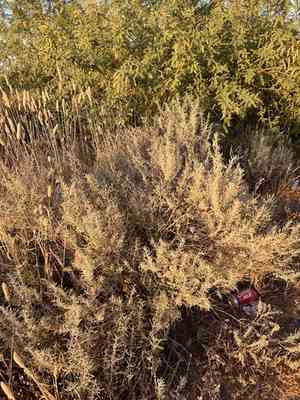
Slenderleaf saltbush (Atriplex linearis)
Also known as: Narrow-leaf Orache
Slenderleaf saltbush is a resilient shrub that excels in both arid and coastal habitats. Known for its salt tolerance, it features narrow, elongated leaves and sturdy stems. This plant adapts well to harsh environments, often forming extensive root systems to optimize water and nutrient absorption. Its ability to thrive in saline soils makes it a unique and important part of its natural surroundings.
In This Article
Attributes of Slenderleaf saltbush
Lifespan
Perennial
Plant Type
Shrub
Plant Height
30 - 60 cm
Spread
20 - 40 cm
Leaf Color
Grayish-green, Silvery
Flower Size
No prominent flowers, seeds are more noticeable
Flower Color
Greenish
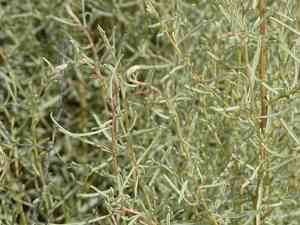
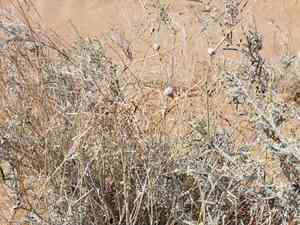
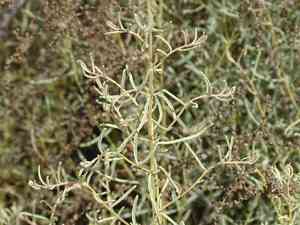
Images of Slenderleaf saltbush
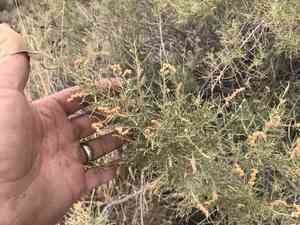
Quickly Identify Slenderleaf saltbush
1
This plant can be identified by its narrow, elongated leaves and its ability to grow in saline or alkaline environments. It often has silvery or grayish-green foliage due to the presence of salt-excreting glands.
Scientific Classification of Slenderleaf saltbush
Phylum
Vascular plants
Class
Dicotyledons
Order
Caryophyllales
Family
Amaranth
Genus
Saltbush
Species
Slenderleaf saltbush
Planting and Growing of Slenderleaf saltbush
Care Difficulty
Easy
Watering Schedule
Every 2 days
Sunlight Requirements
Full sun
Sunshine Duration
4-6 hours
Ideal Temperature
50-80℉
Soil Type
Potting Mix, Peat Mix
Soil pH
6.5-7.5
Fertilizer Type
Balanced
Pruning Season
Spring, Summer
Pruning Area
Branches, Leaves
Pruning Frequency
2 times a year
Repotting Season
Spring
Pot Type
Plastic, Ceramic
 How to Water Slenderleaf saltbush?
Atriplex linearis requires moderate watering. Aim to provide about 500 ml of water each time. Water until the soil is moist but not soggy to avoid waterlogging and its attendant root rot. Ensure water penetrates deep into the soil without pooling on the surface.
What are the symptoms of an underwatered Slenderleaf saltbush?
›
What should I do if my Slenderleaf saltbush is not getting enough water?
›
What are the symptoms of an overwatered Slenderleaf saltbush?
›
How to save an overwatered Slenderleaf saltbush?
›
 What Are the Sunlight Requirements for Slenderleaf saltbush?
Atriplex linearis prefers full sun to partial sun exposure. This ideal lighting range allows the plant to fully harness solar energy for optimal growth, leading to strengthened health and resilience.
What is the plant's ideal sunlight exposure?
›
How can I ensure it receives ideal sunlight indoors?
›
What are the benefits of providing ideal light?
›
 What Is the Ideal Temperature Range for Slenderleaf saltbush?
The ideal temperature range ensures optimal physiological processes in Atriplex linearis, including photosynthesis and nutrient uptake. This range of 50-80°F provides the best environment for growth and development, minimizing stress.
 What Soil is Best for Slenderleaf saltbush?
Atriplex linearis thrives in soil that offers excellent drainage. This is because overly wet soil can lead to root rot and other diseases. Well-drained soil ensures that water does not persist and encourages healthy root development. While Atriplex linearis does not demand highly fertile soil, it benefits from moderate nutrients. The presence of organic matter supports its growth by providing necessary nutrients without overwhelming the plant. Soil with good aeration is crucial for Atriplex linearis as it allows roots to access oxygen easily, promoting robust root health and preventing suffocation in compacted soils.
 How to Fertilize Slenderleaf saltbush?
Atriplex linearis prefers a gentle touch when it comes to fertilization. Use a balanced liquid fertilizer diluted to half strength, applying approximately 100 ml per plant. For solid fertilizers, opt for a slow-release product, using around 30 grams per plant per application.
 How to Prune Slenderleaf saltbush?
Begin by inspecting the plant for dead or diseased branches and remove them using sanitized shears. Follow by trimming back any excessively long or unruly branches to maintain a balanced and attractive shape. Focus on promoting an open structure to allow sunlight and air penetration. Perform pruning in the growing seasons of spring or summer when the plant is actively growing. Make cuts just above a node or bud to encourage new shoots. Always cut at a slight angle to prevent water accumulation and potential rot.
More About Pruning Techniques→
 How to Propagate Slenderleaf saltbush plant?
1
Fill the seed trays with sterile potting mix, ensuring even coverage. Sow Atriplex linearis seeds on the soil surface, lightly pressing them to ensure good contact. Water gently to moisten the soil without displacing the seeds.
2
Place the seed trays in a warm area with indirect sunlight. Maintain a temperature between 65-75°F (18-24°C). Using a clear plastic cover can help maintain humidity and enhance germination rates.
3
Once the seedlings have developed their second set of true leaves, they are ready to be transplanted. Carefully transfer them to bigger pots or directly into the garden, ensuring adequate spacing for growth.
 How to Repot Slenderleaf saltbush plant?
1
Atriplex linearis should be repotted when you observe roots growing out of the drainage holes, or the plant appears top-heavy despite regular watering. Ideally, repotting should be done during its active growth phases in either spring or autumn, allowing the plant enough time to establish in its new environment.
2
Choose a pot that is one to two inches larger in diameter than the current one. It should have adequate drainage holes to prevent waterlogging, which can be detrimental to Atriplex linearis. Using a slightly larger pot also helps accommodate root growth and prevents the plant from becoming root-bound, ensuring healthier growth.
3
Select a well-draining sandy soil mix to mimic the plant's natural habitat. This type of soil prevents excess moisture retention, thus reducing the risk of root rot and promoting healthy root development. A good mixture can include a combination of sand, perlite, and some organic matter to ensure adequate nutrition and structure.
Learn More About Slenderleaf saltbush Diseases
Bacterial Leaf Spot
Bacterial Wilt
Chemical Injury
Cyst Nematode
Damping-off
Downy Mildew
Drought Stress
Fusarium Wilt
Gray Mold
Leaf Spot
Mosaic
Nutrient Deficiency
Nutrient Toxicity
Powdery Mildew
Root Rot
Root-knot Nematode
Rusts
Sooty Mold
Spider Mites
Temperature Stress
Thrips Damage
White Mold



