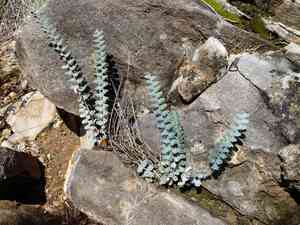
Windham's scaly cloakfern (Astrolepis windhamii)
Also known as: Windham's cloak fern
Windham's scaly cloakfern thrives in rocky, arid environments thanks to several specialized features. Its narrow fronds are densely covered with protective silvery-white scales, shielding it from harsh sunlight. The fern's leaflets, or 'pinnae,' are uniquely curled and overlap like roof shingles, which helps to conserve moisture. These adaptations allow the fern to survive in dry conditions while maintaining its distinctive appearance.
In This Article
Attributes of Windham's scaly cloakfern
Lifespan
Perennial
Plant Height
15-30 cm
Spread
20-40 cm
Leaf Color
Green with whitish or brownish scales
Flower Size
N/A
Flower Color
N/A
Images of Windham's scaly cloakfern
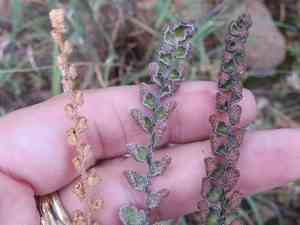
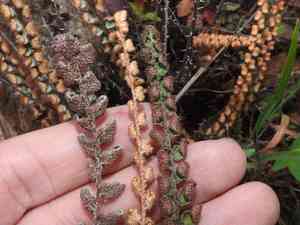
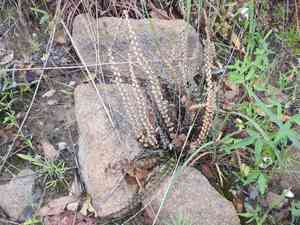
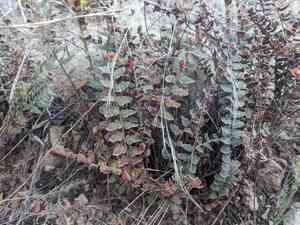
Quickly Identify Windham's scaly cloakfern
1
Identify Astrolepis windhamii by its thick, leathery fronds which are often covered with scales and grow in a rosette pattern. The fronds are typically green on the surface and covered in a whitish or brownish scales underneath.
Scientific Classification of Windham's scaly cloakfern
Phylum
Vascular plants
Class
Ferns
Order
Polypodiales
Family
Brake
Genus
Star-scaled cloak fern
Species
Windham's scaly cloakfern
Planting and Growing of Windham's scaly cloakfern
Care Difficulty
Hard
Watering Schedule
Every day
Sunlight Requirements
Partial sun
Sunshine Duration
4-6 hours
Ideal Temperature
70-85℉
Soil Type
Potting Mix, Peat Mix
Soil pH
6.5-7.5
Fertilizer Type
Balanced
Pruning Season
Spring, Summer
Pruning Area
Branches, Leaves
Pruning Frequency
2 times a year
Repotting Season
Spring
Pot Type
Plastic, Ceramic
 How to Water Windham's scaly cloakfern?
Astrolepis windhamii prefers a modest watering schedule. Allow the soil to dry out between waterings. When watering, 250 mL is typically sufficient, ensuring the soil is evenly moist but not waterlogged.
What are the symptoms of an underwatered Windham's scaly cloakfern?
›
What should I do if my Windham's scaly cloakfern is not getting enough water?
›
What are the symptoms of an overwatered Windham's scaly cloakfern?
›
How to save an overwatered Windham's scaly cloakfern?
›
 What Are the Sunlight Requirements for Windham's scaly cloakfern?
Astrolepis windhamii should ideally receive partial to full sun exposure for optimal health. Adequate light encourages vigorous photosynthesis, enhancing growth and the plant's overall resilience.
How much light is ideal for Astrolepis windhamii?
›
Solutions for achieving optimal lighting
›
Benefits of ideal light conditions
›
 What Is the Ideal Temperature Range for Windham's scaly cloakfern?
Astrolepis windhamii thrives best in temperatures ranging from 70°F to 85°F. This range supports healthy photosynthesis and respiration processes, ensuring robust growth and foliage production.
 What Soil is Best for Windham's scaly cloakfern?
Astrolepis windhamii thrives in well-drained soil, as it prevents water from accumulating around the roots, reducing the risk of root rot and other fungal diseases. A well-drained environment replicates its natural rocky habitat, providing the necessary conditions for healthy growth. This plant benefits from soil rich in organic matter, which provides essential nutrients. A nutrient-rich soil promotes robust growth and enhances the aesthetic appeal of the plant's fronds, making it an attractive addition to any garden or landscape. While Astrolepis windhamii prefers well-drained conditions, retaining some moisture is important. Soil that holds moderate moisture supports the plant during dry spells, ensuring it remains healthy and vibrant without becoming waterlogged.
 How to Fertilize Windham's scaly cloakfern?
Astrolepis windhamii prefers a modest amount of fertilizer. For liquid fertilizers, use a half-strength solution to avoid over-fertilization. When opting for slow-release granules, apply according to package instructions, typically a teaspoon around the base for container plants.
 How to Prune Windham's scaly cloakfern?
While regular pruning is beneficial, excessive removal of fronds can stress the plant. Maintain a balance and avoid over-pruning, especially during its active growth periods in spring and summer. Take care not to prune new or emerging fronds, as these are essential for the plant's future growth and vigor. New growth should be nurtured to ensure the plant's continuous health and development. Prune in early spring before new growth starts or in late summer after peak growth has occurred. This timing ensures the plant isn't overly stressed and allows for a full growing season to recover.
More About Pruning Techniques→
 How to Propagate Windham's scaly cloakfern plant?
1
Begin by thoroughly watering Astrolepis windhamii to make division easier. Gently dig up the plant, ensuring not to damage the roots. Shaking off excess soil will help you clearly see the divisions.
2
Carefully divide the plant into smaller sections by separating clumps at natural divisions. Ensure each section has both roots and foliage. Use a sanitized knife or shears for clean cuts.
3
Replant each division in well-drained soil, ensuring the original planting depth is maintained. Water the newly planted divisions to help them settle into their new environment.
 How to Repot Windham's scaly cloakfern plant?
1
Astrolepis windhamii usually signals its need for repotting when it becomes root-bound, with roots emerging from the drainage holes or circling inside the pot. Another signal is when water seems to take too long to permeate the soil. Besides, if the plant appears stressed despite regular care, it might be time to repot. The best seasons for repotting are summer and autumn, as the plant's growth is active and it can quickly establish in the new soil.
2
When selecting a pot for Astrolepis windhamii, ensure it's slightly larger than the current one to accommodate future growth. A pot with good drainage is crucial, as it prevents waterlogging, which can lead to root rot. A clay or ceramic pot is preferable due to its breathability, helping to manage moisture levels. The right pot won't just hold the plant but also enhances its growing conditions, contributing to healthier foliage and root development.
3
Astrolepis windhamii thrives in well-drained sandy soil, which mimics its natural rocky habitats. The ideal soil mix should contain components like sand, perlite, and a bit of organic matter. This composition ensures that excess water drains away quickly, minimizing the risk of root rot, while promoting healthy root growth by providing necessary aeration. Such a mix also aids in nutrient retention, supporting the plant's overall health and vibrancy.
Learn More About Windham's scaly cloakfern Diseases
Anthracnose
Bacterial Leaf Spot
Bacterial Soft Rot
Bacterial Wilt
Black Spot
Chemical Injury
Damping-off
Downy Mildew
Drought Stress
Fusarium Wilt
Gray Mold
Leaf Curl
Leaf Spot
Mosaic
Nutrient Deficiency
Nutrient Toxicity
Powdery Mildew
Root Rot
Root-knot Nematode
Rusts
Sooty Mold
Spider Mites
Temperature Stress
Thrips Damage
White Mold



