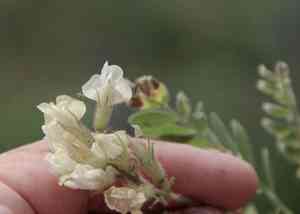
Parry's milkvetch (Astragalus parryi)
Also known as: Parry's milkvetch
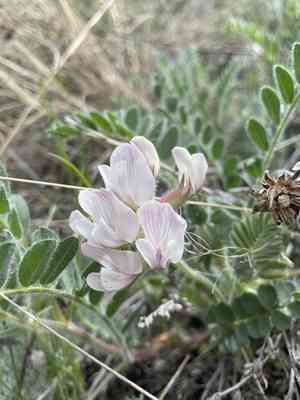
Parry's milkvetch is a perennial herb notable for its vibrant purple flowers that bloom on short, upright stems. Its compound leaves, consisting of several small leaflets, are well-suited to the arid and rocky environments where it typically grows. As a member of the legume family, this plant contributes to soil enrichment by fixing atmospheric nitrogen through a symbiotic relationship with root-dwelling bacteria, thereby enhancing soil fertility.
In This Article
Attributes of Parry's milkvetch
Lifespan
Perennial
Plant Type
Herb
Plant Height
20-60 cm
Spread
Spreading habit but specific diameter not commonly documented
Leaf Color
Green
Flower Size
Up to 2 cm
Flower Color
Purple
Images of Parry's milkvetch
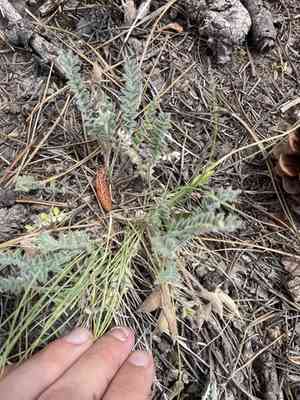
Quickly Identify Parry's milkvetch
1
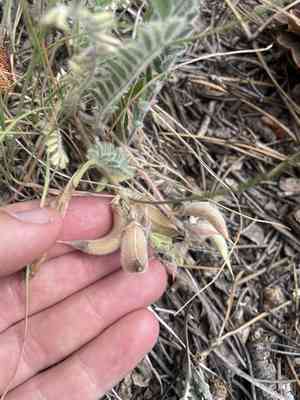
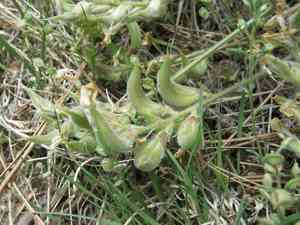
Astragalus parryi can be identified by its pinnately compound leaves and clusters of pea-like flowers which are typically purple in color. The plant also produces small, hairy pods that contain its seeds.
Scientific Classification of Parry's milkvetch
Phylum
Vascular plants
Class
Dicotyledons
Order
Fabales
Family
Legume
Genus
Milkvetch
Species
Parry's milkvetch
Planting and Growing of Parry's milkvetch
Care Difficulty
Hard
Watering Schedule
Every 2 days
Sunlight Requirements
Full sun
Sunshine Duration
6-10 hours
Ideal Temperature
60-75℉
Soil Type
Potting Mix, Peat Mix
Soil pH
6.5-7.5
Fertilizer Type
Balanced
Pruning Season
Spring, Summer
Pruning Area
Branches, Leaves
Pruning Frequency
2 times a year
Repotting Season
Spring
Pot Type
Plastic, Ceramic
 How to Water Parry's milkvetch?
When watering Astragalus parryi, the principle is to provide enough moisture to thoroughly penetrate the root system without leaving the soil waterlogged. Water until the soil is moist to a depth of about 25 cm, effectively soaking the roots. This mimics natural rain patterns, helping the plant thrive in its native environment.
What are the symptoms of an underwatered Parry's milkvetch?
›
What should I do if my Parry's milkvetch is not getting enough water?
›
What are the symptoms of an overwatered Parry's milkvetch?
›
How to save an overwatered Parry's milkvetch?
›
 What Are the Sunlight Requirements for Parry's milkvetch?
Astragalus parryi benefits most from a combination of full and partial sun exposure, where it receives a consistent amount of sunlight daily, leading to robust growth and flowering.
Optimal Exposure Duration
›
Achieving Ideal Conditions
›
Benefits of Ideal Lighting
›
 What Is the Ideal Temperature Range for Parry's milkvetch?
The ideal temperature range for cultivating Astragalus parryi is between 60°F and 75°F. Within this range, the plant can perform photosynthesis efficiently, support healthy growth, and maximize nutrient uptake. Providing consistent temperatures in this range is crucial for optimal health and growth. Fluctuations outside these temperatures may slow growth or stress the plant.
 What Soil is Best for Parry's milkvetch?
Astragalus parryi thrives in soil that offers excellent drainage. Proper drainage ensures that the roots do not sit in water, reducing the risk of root rot. Well-drained soil allows this plant to access water efficiently while also ensuring any excess quickly drains away, mimicking its natural, arid habitat. This plant prefers soils that are naturally low in nutrients. High nutrient soils can lead to excessive foliage growth, compromising the plant’s natural structure and resilience. Mimicking a nutrient-light soil environment allows Astragalus parryi to develop robustly while retaining its native characteristics. While Astragalus parryi can survive in a range of pH levels, it shows a preference for slightly alkaline soils. This pH level helps maintain nutrient availability and supports microbial activity that can benefit the plant. Achieving this balance improves overall plant vitality.
 How to Fertilize Parry's milkvetch?
For Astragalus parryi, use a balanced 10-10-10 liquid fertilizer, applying 200 mL per plant per application. Use half the recommended amount for young or newly-transplanted plants to avoid over-fertilization. This helps maintain its specific nutrient requirements.
 How to Prune Parry's milkvetch?
Start by gathering sharp pruning shears and wearing gloves for protection. Clean tools with alcohol to prevent disease transmission before and after pruning. Look for dead, diseased, or crossing branches that require removal. Cutting these encourages better shape and airflow within the plant, essential for healthy growth. When pruning, make cuts at a 45-degree angle above a node or outward-facing bud. This method supports natural healing and directs new growth outward, maintaining the plant's natural form.
More About Pruning Techniques→
 How to Propagate Parry's milkvetch plant?
1
Scarify Astragalus parryi seeds by gently rubbing them with sandpaper. This process helps break the seed coat and enhances germination by allowing moisture to penetrate.
2
Select healthy stems and cut them below a node during the early summer. Ensure each cutting is about 4-6 inches long with at least two sets of leaves.
3
In spring, carefully divide the root clumps of Astragalus parryi using a sterilized knife. Each division should have roots and a few stems for successful replanting.
 How to Repot Parry's milkvetch plant?
1
Understanding the signals for repotting Astragalus parryi is crucial. Look for signs such as roots growing out of drainage holes or soil that dries out quickly after watering. These indicate it's time to consider a new pot.
2
Selecting an appropriate pot is essential for Astragalus parryi. Opt for a pot slightly larger than the current one with drainage holes to allow excess water to escape. This prevents root rot and helps maintain the plant's health.
3
Astragalus parryi thrives in a well-draining sandy mix. Choose soil that mimics its natural habitat, ensuring it doesn't hold too much moisture. A soil mix with good aeration prevents root diseases and supports healthy growth.
Toxicity
Ingestion
WARNING
The judgment on toxicity and danger is for reference only. We DO NOT GUARANTEE any accuracy of such judgment. Therefore, you SHALL NOT rely on such judgment. It is IMPORTANT TO SEEK PROFESSIONAL ADVICE in advance when necessary.
Learn More About Parry's milkvetch Diseases
Anthracnose
Bacterial Leaf Spot
Bacterial Wilt
Crown Gall
Cyst Nematode
Damping-off
Downy Mildew
Drought Stress
Fusarium Wilt
Gray Mold
Leaf Curl
Leaf Spot
Mosaic
Nutrient Deficiency
Nutrient Toxicity
Powdery Mildew
Root Rot
Root-knot Nematode
Rusts
Sooty Mold
Spider Mites
Temperature Stress
Thrips Damage
White Mold



