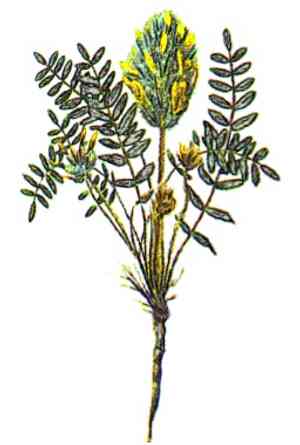
Widow's milkvetch (Astragalus layneae)
Also known as: Layne's Milkvetch
Widow's milkvetch is a notable plant native to the Mojave Desert, where it thrives exclusively. Its name stems from the toxic substances it contains, which have historically led to fatalities in both humans and livestock, thereby leaving behind widows.
In This Article
Attributes of Widow's milkvetch
Lifespan
Perennial
Plant Type
Herb
Plant Height
30-60 cm
Spread
30-60 cm
Leaf Color
Silvery-green
Flower Size
1-2 cm
Flower Color
Purple
Images of Widow's milkvetch
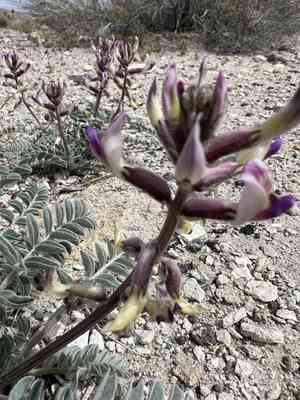
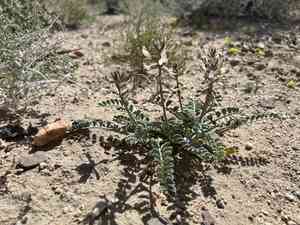
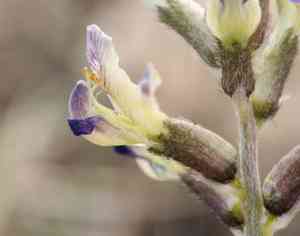
Quickly Identify Widow's milkvetch
1
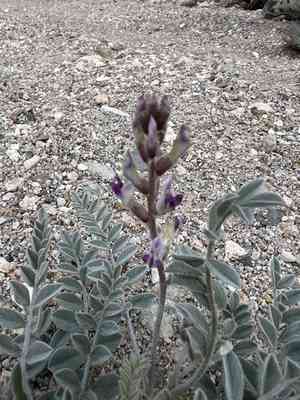
Layne\'s Milkvetch can be identified by its silvery-green, pinnate leaves, and its small purple flowers arranged in dense clusters. The plant often has a somewhat sprawling habit with hairy stems.
Scientific Classification of Widow's milkvetch
Phylum
Vascular plants
Class
Dicotyledons
Order
Fabales
Family
Legume
Genus
Milkvetch
Species
Widow's milkvetch
Planting and Growing of Widow's milkvetch
Care Difficulty
Moderate
Watering Schedule
Every 2 days
Sunlight Requirements
Full sun
Sunshine Duration
6-8 hours
Ideal Temperature
65-75℉
Soil Type
Potting Mix, Peat Mix
Soil pH
6.5-7.5
Fertilizer Type
Balanced
Pruning Season
Spring, Summer
Pruning Area
Branches, Leaves
Pruning Frequency
2 times a year
Repotting Season
Spring
Pot Type
Plastic, Ceramic
 How to Water Widow's milkvetch?
Astragalus layneae thrives with a moderate watering amount of about 500 ml per session. This amount should sufficiently soak the root zone without saturating the plant. It's important to water until the soil feels moist but not soggy, adhering to a principle of 'moist, not wet' to prevent root rot.
What are the symptoms of an underwatered Widow's milkvetch?
›
What should I do if my Widow's milkvetch is not getting enough water?
›
What are the symptoms of an overwatered Widow's milkvetch?
›
How to save an overwatered Widow's milkvetch?
›
 What Are the Sunlight Requirements for Widow's milkvetch?
Astragalus layneae thrives with a combination of full and partial sun, ideally receiving 6–8 hours of sunlight daily. This range promotes healthy growth, ensuring robust and vibrant foliage.
What type of light is ideal?
›
How to achieve the ideal lighting?
›
Benefits of ideal lighting?
›
 What Is the Ideal Temperature Range for Widow's milkvetch?
Astragalus layneae thrives best in environments where temperatures are maintained between 65°F to 75°F. This range provides optimal conditions for metabolic processes, promoting healthy growth and development. Maintaining consistent temperatures within this range mimics its native habitat, ensuring the plant receives the best conditions for growth.
 What Soil is Best for Widow's milkvetch?
Astragalus layneae thrives in soil rich in nutrients, which supports its robust growth and flowering. Providing compost or well-rotted manure can enhance the soil's fertility, improving the plant's overall health. Ensuring well-drained soil is crucial for Astragalus layneae. Excess moisture can lead to root rot, so sandy or loamy soils that permit adequate drainage are ideal. This helps maintain optimal root conditions. While good drainage is essential, retaining sufficient moisture is equally important. Loam soil, with its balance of sand, silt, and clay, retains moisture well without becoming waterlogged.
 How to Fertilize Widow's milkvetch?
Astragalus layneae benefits from a balanced nutrient supply. When applying liquid fertilizer, use a half-strength solution to prevent root burn and ensure proper nutrient absorption. For slow-release fertilizers, follow the instructions on the package but typically use 1 teaspoon per gallon of soil.
 How to Prune Widow's milkvetch?
Before beginning, inspect the plant for any dead or diseased wood. Use sharp, sterilized pruners to remove these sections, cutting just above a healthy node or bud. This practice not only promotes airflow and sunlight penetration but also reduces the risk of disease. Trim back overgrown branches to maintain the plant's desired shape and size. Cut branches at a 45-degree angle to prevent water from accumulating on the cut surface, which can lead to rot. Focus on creating an open structure to enhance light penetration and airflow.
More About Pruning Techniques→
 How to Propagate Widow's milkvetch plant?
1
Collect seeds from mature Astragalus layneae plants. Ensure the seeds are fully developed and dry them thoroughly before sowing to prevent mold.
2
Sow seeds evenly in a seed tray filled with sterilized potting mix. Lightly cover with a thin layer of soil or vermiculite to maintain moisture while allowing light penetration.
3
Mist the seeds gently to avoid dislodging them. Maintain consistent moisture in the soil, but ensure proper drainage to prevent seedling rot.
 How to Repot Widow's milkvetch plant?
1
Keep an eye on the plant to understand its repotting signals. If the roots have started to circle the pot's interior or protrude through the drainage holes, it's time to prepare for repotting. Additionally, if the soil dries out much faster than before, it suggests the roots are crowded, and they need more space to flourish.
2
Choose a pot that is about one size larger than the current one to give the roots room to grow. The pot should have adequate drainage holes to ensure water does not stagnate, which can lead to root rot. A well-chosen pot supports healthy root development and maintains optimal temperature and humidity for the plant.
3
Select a well-draining sandy mix, which is crucial for Astragalus layneae, as it needs good airflow around the roots. Sandy soil mimics its natural habitat and prevents waterlogged conditions, encouraging strong root growth and disease prevention.
Toxicity
ingestion
WARNING
The judgment on toxicity and danger is for reference only. We DO NOT GUARANTEE any accuracy of such judgment. Therefore, you SHALL NOT rely on such judgment. It is IMPORTANT TO SEEK PROFESSIONAL ADVICE in advance when necessary.
Learn More About Widow's milkvetch Diseases
Anthracnose
Bacterial Leaf Spot
Bacterial Wilt
Crown Gall
Cyst Nematode
Damping-off
Downy Mildew
Drought Stress
Fusarium Wilt
Gray Mold
Leaf Spot
Mosaic
Nutrient Deficiency
Nutrient Toxicity
Powdery Mildew
Root Rot
Root-knot Nematode
Rusts
Sooty Mold
Spider Mites
Temperature Stress
Thrips Damage
White Mold



