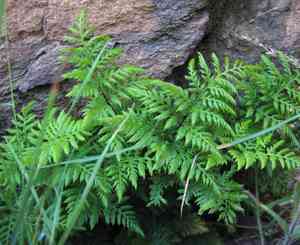
California lace fern (Aspidotis californica)
Also known as: California Lacefern, Lacy Fern
The California lace fern is a perennial plant that thrives in its native rocky, shaded Californian environments. This fern features elegantly arching fronds with finely lobed segments, giving it a delicate look. It flourishes in the crevices of limestone formations, exemplifying its ability to adapt and survive in challenging conditions.
In This Article
Attributes of California lace fern
Lifespan
Perennial
Plant Type
Fern
Plant Height
15 to 30 cm
Spread
Not applicable (ferns do not form a crown)
Leaf Color
Green
Flower Size
Not applicable (ferns do not produce flowers)
Flower Color
Not applicable (ferns do not produce flowers)
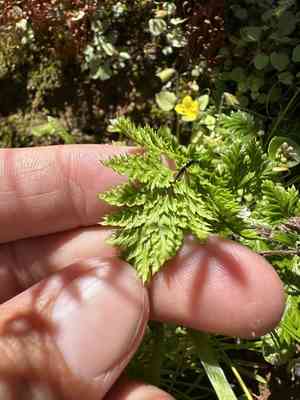
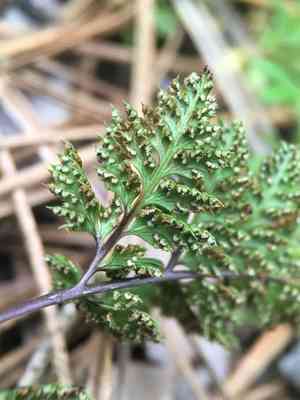
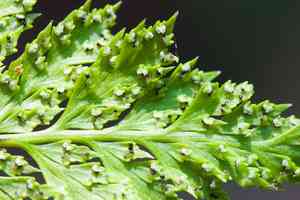
Images of California lace fern
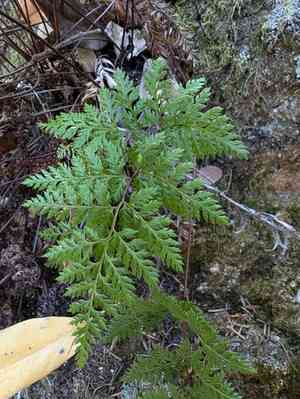
Quickly Identify California lace fern
1
To identify Aspidotis californica, look for its finely divided, lace-like fronds. It has a distinctive appearance with small leaflets that give it a feathery look. The sori (spore-producing structures) are usually found on the underside of the leaflets, arranged in a linear pattern.
Scientific Classification of California lace fern
Phylum
Vascular plants
Class
Ferns
Order
Polypodiales
Family
Brake
Genus
Laceferns
Species
California lace fern
Planting and Growing of California lace fern
Care Difficulty
Moderate
Watering Schedule
Every 2 days
Sunlight Requirements
Partial sun
Sunshine Duration
6-8 hours
Ideal Temperature
60-75℉
Soil Type
Potting Mix, Peat Mix
Soil pH
6.5-7.5
Fertilizer Type
Balanced
Pruning Season
Spring, Summer
Pruning Area
Branches, Leaves
Pruning Frequency
2 times a year
Repotting Season
Spring
Pot Type
Plastic, Ceramic
 How to Water California lace fern?
For Aspidotis californica, ensure the soil is consistently damp but not waterlogged. Water approximately 200 ml per session, making sure it permeates through the topsoil and reaches the root zone, encouraging deep root growth.
What are the symptoms of an underwatered California lace fern?
›
What should I do if my California lace fern is not getting enough water?
›
What are the symptoms of an overwatered California lace fern?
›
How to save an overwatered California lace fern?
›
 What Are the Sunlight Requirements for California lace fern?
Aspidotis californica flourishes best in conditions that offer partial sun or full shade. Ideal lighting promotes vibrant growth, maintaining a robust and healthy plant while avoiding the adverse effects of light intensity variations.
How much light does Aspidotis californica need?
›
What should be done during peak sunlight hours?
›
Why is correct lighting essential for Aspidotis californica?
›
 What Is the Ideal Temperature Range for California lace fern?
Aspidotis californica thrives in a temperature range of 60 to 75°F, which mimics its native habitat. The moderate temperatures allow this fern to optimize its physiological processes, leading to healthy growth and development. In this range, the plant can efficiently photosynthesize, maintain adequate moisture levels, and support cellular activities.
 What Soil is Best for California lace fern?
Aspidotis californica thrives in soils that are rich in organic matter. Using compost or well-decomposed leaf matter can enhance soil fertility, providing the ferns with essential nutrients for vibrant growth. This plant requires soil with excellent drainage to prevent root rot. A well-drained loam, possibly enriched with sand, can ensure excess water flows away from the roots, preventing the harmful effects of waterlogging. While drainage is essential, the soil must also retain some moisture. Sandy loam ensures water availability during dry spells, helping Aspidotis californica maintain lush, green foliage even in warmer climates.
 How to Fertilize California lace fern?
When fertilizing Aspidotis californica, it is crucial to use a balanced fertilizer with an equal ratio of nitrogen, phosphorus, and potassium. For liquid fertilizers, use a solution diluted to half strength, approximately 1 tablespoon per gallon of water. Solid, slow-release fertilizers should be applied sparingly, no more than 2 grams per plant, as excessive nutrients can harm this delicate fern.
 How to Prune California lace fern?
To prune Aspidotis californica, start by examining the plant to identify dead or damaged fronds. Use a pair of sharp, clean pruning shears to cut these fronds at the base, near where they emerge from the roots. Ensure your cuts are clean to minimize the risk of infection. It's best to avoid cutting healthy fronds unless they are overcrowded or pose a risk of disease spread. After pruning, dispose of the removed fronds to prevent any potential pest infestation.
More About Pruning Techniques→
 How to Propagate California lace fern plant?
1
For seed propagation, gather mature seeds from the plant after it has flowered. Ensure the seeds are fully developed and dry them out before storing them until planting. Proper seed collection ensures higher germination rates.
2
Use a well-draining soil mix to fill your propagation trays or pots. Aspidotis californica prefers a gritty, sandy composition that mimics its natural rocky habitats. This helps prevent waterlogging and root rot.
3
Carefully remove the plant from its pot, and gently separate the roots to divide the plant. Make sure each division has a portion of root system and foliage. This method is useful for established plants that have grown too large for their location.
 How to Repot California lace fern plant?
1
You'll notice Aspidotis californica needs repotting when roots begin to peek through its drainage holes. Another signal is slower growth despite optimal conditions. Spring is the prime time as it combines new growth spurts with recovery potential from the stress of repotting.
2
Opt for a pot that's just one size larger than the current one. It's crucial to ensure it has good drainage holes. The slightly larger size prevents water from accumulating and causing root rot, while providing enough room for growth without water retention issues.
3
Select a well-draining potting mix. This type of soil not only provides adequate aeration for the roots but also ensures that water doesn’t linger, which can cause root rot. A mix with perlite or sand is ideal for maintaining the right balance of moisture and drainage.



