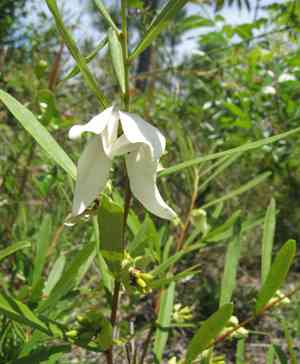
Slimleaf pawpaw (Asimina longifolia)
Also known as: Pawpaw
The small bush in question typically stands between 61 to 91 cm tall. It is characterized by long, narrow leaves measuring 10 to 0.6 cm and produces white flowers. A notable feature is that its pollen is released in permanent tetrads.
In This Article
Attributes of Slimleaf pawpaw
Lifespan
Perennial
Plant Type
Shrub
Plant Height
1-3 meters
Spread
1-2 meters
Leaf Color
Green
Flower Size
5-7 cm
Flower Color
Maroon to dark purple
Images of Slimleaf pawpaw
Quickly Identify Slimleaf pawpaw
1
To identify Asimina longifolia, look for its long, narrow leaves that resemble those of the longleaf pine. It also has large, maroon or dark purple flowers. The fruit is a distinctive green to yellow, typically elongated.
Scientific Classification of Slimleaf pawpaw
Phylum
Vascular plants
Class
Dicotyledons
Order
Magnoliales
Family
Custard apple
Genus
Pawpaws
Species
Slimleaf pawpaw
Planting and Growing of Slimleaf pawpaw
Care Difficulty
Easy
Watering Schedule
Every 2 days
Sunlight Requirements
Full sun
Sunshine Duration
4-8 hours
Ideal Temperature
68-77℉
Soil Type
Potting Mix, Peat Mix
Soil pH
6.5-7.5
Fertilizer Type
Balanced
Pruning Season
Spring, Summer
Pruning Area
Branches, Leaves
Pruning Frequency
2 times a year
Repotting Season
Spring
Pot Type
Plastic, Ceramic
 How to Water Slimleaf pawpaw?
For Asimina longifolia, the watering should be thorough but not excessive. A general guideline is to provide about 500 milliliters each session to ensure the soil is sufficiently moist but not waterlogged. Water until the soil feels evenly damp, and drainage begins from the bottom.
What are the symptoms of an underwatered Slimleaf pawpaw?
›
What should I do if my Slimleaf pawpaw is not getting enough water?
›
What are the symptoms of an overwatered Slimleaf pawpaw?
›
How to save an overwatered Slimleaf pawpaw?
›
 What Are the Sunlight Requirements for Slimleaf pawpaw?
A balanced light regime of full to partial sun exposure benefits Asimina longifolia, encouraging sturdy growth and vitality. Ideal light enhances photosynthesis, which translates into lush leaf development and better flowering characteristics.
Preferred Sunlight Exposure
›
Solutions for Optimal Lighting
›
Benefits of Ideal Light Conditions
›
 What Is the Ideal Temperature Range for Slimleaf pawpaw?
The ideal temperature range for cultivating Asimina longifolia is between 68 and 77 degrees Fahrenheit. Within this range, the plant can effectively photosynthesize and grow, promoting healthy foliage and flowering. Maintaining this temperature ensures optimal metabolic processes and helps in achieving the ideal growth rate for this species.
 What Soil is Best for Slimleaf pawpaw?
Asimina longifolia thrives in soils with excellent drainage. This prevents water from pooling around the roots, reduces the risk of root rot, and promotes healthy growth. The plant benefits from a nutrient-rich soil that supplies essential minerals and nutrients, which facilitate vigorous foliage and robust flowering. While not overly demanding, Asimina longifolia appreciates soil with moderate organic matter that aids in water retention and increases microbial activity beneficial for root health.
 How to Fertilize Slimleaf pawpaw?
For Asimina longifolia, it's vital to use a balanced fertilizer with equal parts of nitrogen, phosphorus, and potassium. Typically, a 10-10-10 NPK fertilizer is suitable. For every gallon of water, dissolve approximately one tablespoon of liquid fertilizer to ensure a gentle yet effective nourishment.
 How to Prune Slimleaf pawpaw?
Begin with identifying dead or damaged branches and remove them. Trim crossing branches to prevent crowding and improve air circulation. Always cut just above a node to promote new shoots and maintain an appealing shape. Collect all cut branches and leaves promptly to prevent decay or disease spread. Consider composting the organic matter to contribute to a sustainable gardening practice.
 How to Propagate Slimleaf pawpaw plant?
1
First, gather mature Asimina longifolia fruits in the fall. Extract the seeds from the fruit, ensuring that they are clean and free of pulp. Allow the seeds to dry for several days before storage or planting.
2
Select a healthy branch from the parent plant. Using pruning shears, cut a 4-6 inch segment just below a leaf node. Remove the leaves from the bottom half of the cutting to facilitate rooting.
3
In early spring, plant the seeds in a seed tray filled with a well-draining soil mix. Cover them lightly with soil, ensuring adequate moisture. Keep in a warm, bright area, but out of direct sunlight.
 How to Repot Slimleaf pawpaw plant?
1
Repotting Asimina longifolia is best done when you observe slow growth or roots protruding through drainage holes. These signs indicate that your plant is becoming root-bound and could benefit from additional space and nutrients offered by fresh soil.
2
Select a pot that is 2 inches larger in diameter than the current one, ensuring proper drainage through multiple holes at the bottom. This size upgrade helps accommodate future growth while preventing waterlogging, a common cause of root rot.
3
Choose a well-draining, sandy soil to replicate Asimina longifolia's natural habitat. Sandy soil promotes good aeration and minimizes the risk of root rot by allowing excess water to drain quickly.
Learn More About Slimleaf pawpaw Diseases
Anthracnose
Bacterial Leaf Spot
Bacterial Soft Rot
Bacterial Wilt
Black Spot
Chemical Injury
Crown Gall
Damping-off
Drought Stress
Fusarium Wilt
Gray Mold
Leaf Curl
Leaf Spot
Mosaic
Nutrient Deficiency
Nutrient Toxicity
Powdery Mildew
Root Rot
Root-knot Nematode
Sooty Mold
Spider Mites
Temperature Stress
Thrips Damage
White Mold



