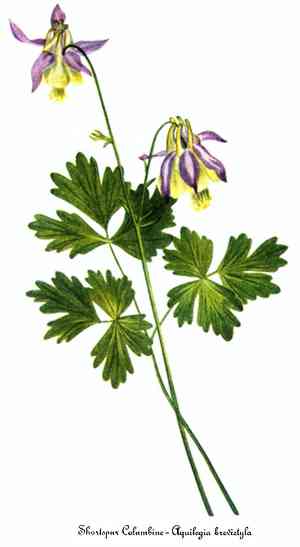
Small-flower columbine (Aquilegia brevistyla)
Also known as: Blue Columbine
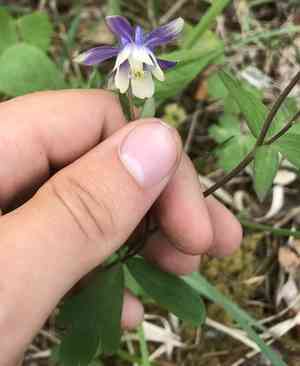
Small-flower columbine, a delightful perennial, displays nodding blue to violet flowers with short spurs and striking yellow stamens. It flourishes in cool, moist, and shaded woodland areas, indicating its preference for damp, well-drained soil. This native wildflower's rounded, lobed leaves enhance its decorative charm, while its nectar-rich blooms, appearing from late spring to early summer, attract various pollinators.
In This Article
Attributes of Small-flower columbine
Lifespan
Perennial
Plant Type
Herb
Plant Height
0 mm to 91 cm
Spread
20 to 40 cm
Leaf Color
Green
Flower Size
3 to 5 cm
Flower Color
Blue, sometimes bluish-purple
Images of Small-flower columbine
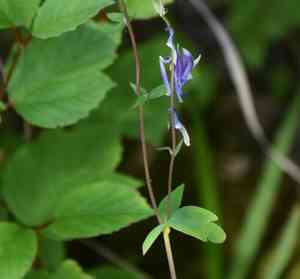
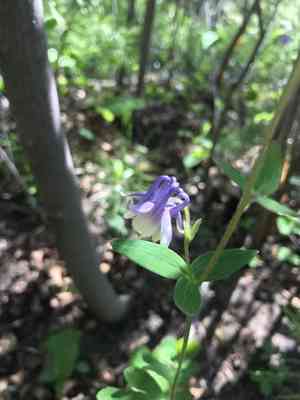
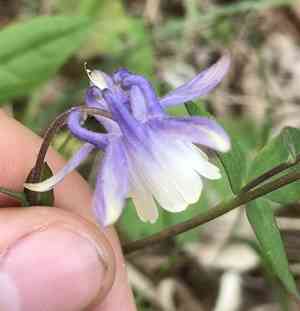
Quickly Identify Small-flower columbine
1
Look for its distinctive five-petaled, spurred flowers which are typically blue or bluish-purple. The leaves are divided into three lobed leaflets, and the plant usually grows in shaded, moist areas.
Scientific Classification of Small-flower columbine
Phylum
Vascular plants
Class
Dicotyledons
Order
Ranunculales
Family
Buttercup
Genus
Columbine
Species
Small-flower columbine
Planting and Growing of Small-flower columbine
Care Difficulty
Moderate
Watering Schedule
Every 4 days
Sunlight Requirements
Partial sun
Sunshine Duration
6-10 hours
Ideal Temperature
60-75℉
Soil Type
Potting Mix, Peat Mix
Soil pH
6.5-7.5
Fertilizer Type
Balanced
Pruning Season
Spring, Summer
Pruning Area
Branches, Leaves
Pruning Frequency
2 times a year
Repotting Season
Spring
Pot Type
Plastic, Ceramic
 How to Water Small-flower columbine?
Aquilegia brevistyla prefers a moderate watering approach. Ensure the soil is moist but not waterlogged. Watering should be done to about 250 ml per session, just enough to wet the root zone thoroughly. Let the top inch of soil dry out before rewatering.
What are the symptoms of an underwatered Small-flower columbine?
›
What should I do if my Small-flower columbine is not getting enough water?
›
What are the symptoms of an overwatered Small-flower columbine?
›
How to save an overwatered Small-flower columbine?
›
 What Are the Sunlight Requirements for Small-flower columbine?
Partial sun to full shade is ideal for Aquilegia brevistyla, letting it thrive under dappled light conditions. This ensures proper growth and blooming while avoiding the stress from extreme light conditions.
What is the best lighting condition for Aquilegia brevistyla?
›
How can I achieve ideal lighting for Aquilegia brevistyla?
›
What are the benefits of ideal lighting for Aquilegia brevistyla?
›
 What Is the Ideal Temperature Range for Small-flower columbine?
The ideal temperature range for growing Aquilegia brevistyla is between 60°F and 75°F. This temperature range allows the plant to perform its physiological processes efficiently, ensuring optimal growth and flower production. Adequate warmth supports the metabolic activities, while a slightly cooler environment prevents the plant from excessive transpiration and water loss.
 What Soil is Best for Small-flower columbine?
Aquilegia brevistyla thrives in well-draining soils that prevent waterlogging. This prevents root rot and ensures that the roots have access to oxygen, promoting healthy plant growth and vibrant blooms. The plant prefers soils rich in organic matter, which provide essential nutrients for optimal growth. Nutrient-rich soils support strong stems and abundant flowering, enhancing the plant’s overall vigor. Maintaining a soil pH between 6.5 to 7.5 allows for the best nutrient uptake and prevents nutrient lockout. This pH range ensures that vital nutrients are available for the plant, leading to robust health and color.
 How to Fertilize Small-flower columbine?
Aquilegia brevistyla should be fertilized with a balanced 10-10-10 liquid fertilizer. Each application should not exceed 1 tablespoon per gallon of water. Applying the right amount ensures the plant receives adequate nutrients without being overwhelmed.
 How to Prune Small-flower columbine?
Make sure your pruning tools are sharp and clean. Dull tools can cause jagged cuts that may encourage disease, while dirty tools can transfer pathogens from one plant to another. It's advisable to disinfect tools after handling each plant. Avoid pruning during periods of extreme heat or cold, as this can stress the plant. Aim for a cooler part of the day during spring or early summer to minimize stress. Timely pruning allows Aquilegia brevistyla to focus on regenerative growth.
More About Pruning Techniques→
 How to Propagate Small-flower columbine plant?
1
Fill a seed tray with moist, well-drained potting mix. Scatter the Aquilegia brevistyla seeds over the surface and lightly cover with a thin layer of soil. Ensure the seeds have good contact with the soil to germinate effectively. Place the tray in a bright, warm location away from direct sunlight.
2
Keep the soil consistently moist but not waterlogged to prevent seed rot. Mist the surface with water if it starts to dry out, maintaining it at the ideal moisture level. Avoid using a heavy stream of water, which can dislodge the seeds or compact the soil.
3
For division propagation, dig up a mature Aquilegia brevistyla plant in early spring when it is just emerging from dormancy. Use a sharp knife or spade to carefully separate the root clumps into smaller sections, each with at least one growth point. Replant immediately at the same depth they previously grew.
 How to Repot Small-flower columbine plant?
1
Aquilegia brevistyla should be repotted when you notice roots appearing at the drainage holes or circling inside the pot. Additionally, if the plant's growth rate significantly slows down or it seems thirsty even with regular watering, it may need a larger pot. Repotting during the growing seasons of spring or autumn helps the plant recover quickly.
2
Select a pot that is one size larger than the current one, providing enough room for root expansion. Ensure it has adequate drainage holes to prevent waterlogging, a crucial factor in maintaining root health and preventing root rot. The pot's material can be plastic or terracotta, depending on the climate and your watering habits, as terracotta allows the soil to dry out faster.
3
A well-draining potting mix, preferably containing a blend of peat, vermiculite, and perlite, is ideal for Aquilegia brevistyla. This type of soil ensures that water drains efficiently to prevent root rot, while also retaining sufficient moisture and nutrients necessary for healthy plant growth. Avoid garden soil as it's often too dense for container plants.
Toxicity
Ingestion
WARNING
The judgment on toxicity and danger is for reference only. We DO NOT GUARANTEE any accuracy of such judgment. Therefore, you SHALL NOT rely on such judgment. It is IMPORTANT TO SEEK PROFESSIONAL ADVICE in advance when necessary.
Learn More About Small-flower columbine Diseases
Anthracnose
Bacterial Leaf Spot
Bacterial Soft Rot
Bacterial Wilt
Black Spot
Chemical Injury
Crown Gall
Cyst Nematode
Damping-off
Downy Mildew
Drought Stress
Fusarium Wilt
Gray Mold
Leaf Curl
Leaf Spot
Mosaic
Nutrient Deficiency
Nutrient Toxicity
Powdery Mildew
Root Rot
Root-knot Nematode
Rusts
Sooty Mold
Spider Mites
Temperature Stress
Thrips Damage
White Mold



