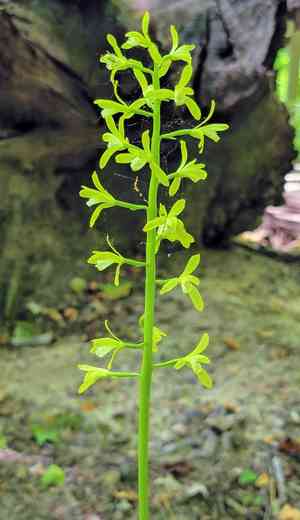
Putty root orchid (Aplectrum hyemale)
Also known as: Putty root
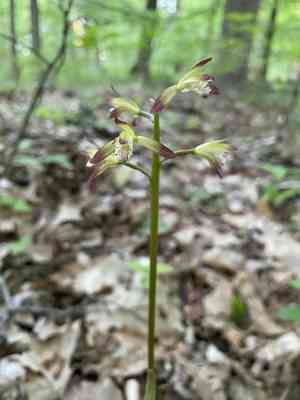
The putty root orchid is commonly found in the deciduous forests of eastern North America. Remarkably, its leaves emerge in the fall and remain throughout the winter, taking advantage of increased sunlight after the forest canopy has shed its leaves. These leaves then wither away in the spring before the plant blooms. The flowers of the putty root orchid are understated compared to other orchids, making them easy to overlook during hikes.
In This Article
Attributes of Putty root orchid
Lifespan
Perennial
Plant Type
Herb
Plant Height
30 cm to 61 cm
Spread
20 cm to 30 cm
Leaf Color
Green Blue White Bronze
Flower Size
2.5 cm
Flower Color
White Yellow Green Purple Lavender Gold
Images of Putty root orchid
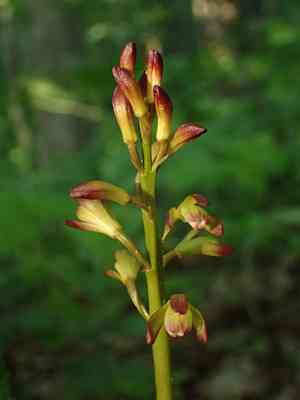
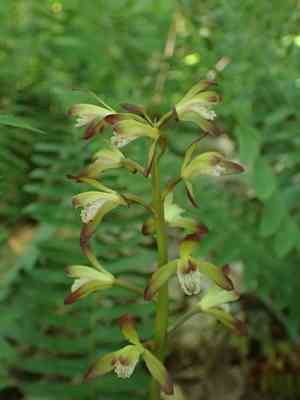
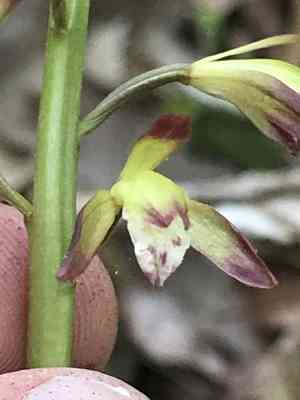
Quickly Identify Putty root orchid
1
Singular green leaf up to 10 inches (25 cm) long persists through winter.
2
Bilaterally symmetrical orchid-like blooms on slender 1-2 feet (30-60 cm) flower stalks.
3
Distinctive 1 inch (2.54 cm) tan capsule fruit with cone-like shape and leathery texture.
4
Basal oval leaves, 4-6 inches (10-15 cm) long with silvery-white and green stripes.
5
Tall green stalk, 2 feet (60 cm) high, lacks branching and supports unique bilaterally symmetrical flowers.
Scientific Classification of Putty root orchid
Phylum
Vascular plants
Class
Monocotyledons
Order
Asparagales
Family
Orchid
Genus
Aplectrum
Species
Putty root orchid
Planting and Growing of Putty root orchid
Care Difficulty
Hard
Watering Schedule
Every day
Sunlight Requirements
Partial sun
Sunshine Duration
4-8 hours
Ideal Temperature
60-75℉
Soil Type
Potting Mix, Peat Mix
Soil pH
6.5-7.5
Fertilizer Type
Balanced
Pruning Season
Spring, Summer
Pruning Area
Branches, Leaves
Pruning Frequency
2 times a year
Repotting Season
Spring
Pot Type
Terracotta, Plastic
 How to Water Putty root orchid?
When watering Aplectrum hyemale, aim to provide about 150 milliliters per session. It is essential that the soil remains barely moist, resembling a slightly squeezed sponge just beyond wringing out excess water. Avoid water pooling as this can lead to root rot, which is detrimental to the plant's health.
What are the symptoms of an underwatered Putty root orchid?
›
What should I do if my Putty root orchid is not getting enough water?
›
What are the symptoms of an overwatered Putty root orchid?
›
How to save an overwatered Putty root orchid?
›
 What Are the Sunlight Requirements for Putty root orchid?
Aplectrum hyemale prefers partial sun to full shade, which replicates its natural forest floor conditions. Optimal lighting promotes balanced growth, encourages flowering, and maintains the plant's resilience against environmental stressors.
More About Sunlight Requirements Techniques→
What is the best light environment for Aplectrum hyemale?
›
How can you ensure Aplectrum hyemale receives the ideal amount of light?
›
What benefits does Aplectrum hyemale gain from receiving ideal lighting conditions?
›
 What Is the Ideal Temperature Range for Putty root orchid?
Aplectrum hyemale thrives best in temperature ranges between 60°F to 75°F. This range mimics the plant’s natural woodland habitat, providing an optimal balance of warmth and humidity, which promotes healthy growth and flowering.
 What Soil is Best for Putty root orchid?
Aplectrum hyemale thrives in soil that has the capability to retain adequate moisture, yet drains well to avoid waterlogging. This ensures the plant remains hydrated without drowning its roots, promoting healthy growth and development. Preferring nutrient-rich soil, this plant benefits from the organic matter typically found in loamy soils. Adequate nutrients support robust foliage and resilient root systems, crucial for its survival and reproductive success. A soil structure that allows for good aeration ensures that oxygen is available to the roots. This promotes healthy root growth and function, playing a vital role in the plant’s overall vitality and longevity.
 How to Fertilize Putty root orchid?
When considering how much to fertilize Aplectrum hyemale, a balanced approach is key. A light application of a water-soluble balanced fertilizer, such as a 20-20-20, diluted to half the recommended strength is ideal. For slow-release fertilizers, use a teaspoon per plant in early spring to get optimal results.
 How to Prune Putty root orchid?
Start by identifying and removing any dead or decaying foliage. This helps in redirecting nutrients to the healthier parts of the plant, promoting new growth and maintaining its overall well-being. Aplectrum hyemale does not require heavy pruning. Instead, focus on cleaning up the plant’s appearance by removing any spent leaves while taking care not to disrupt the emerging shoots. Avoid altering the natural structure of the plant. Pruning should aim to encourage its graceful form, allowing the plant to thrive in its natural habitat while enhancing its visual appeal.
More About Pruning Techniques→
 How to Propagate Putty root orchid plant?
1
Start by filling the seed tray with a well-draining potting mix. Level the surface and ensure it is moist but not waterlogged. This sets up the right conditions for seed germination.
2
Scatter Aplectrum hyemale seeds over the surface of the potting mix. Lightly cover them with a thin layer of the mix or sand to ensure adequate light and air exposure for germination.
3
To propagate by division, carefully dig up a mature Aplectrum hyemale plant and separate the rhizomes using a spade. Ensure each division has roots attached for successful replanting.
 How to Repot Putty root orchid plant?
1
Aplectrum hyemale needs repotting when its roots outgrow the current pot or the plant appears stressed, indicated by wilting leaves or lack of growth. The ideal time is during the early warming days of spring or before winter sets in to avoid disturbing the plant during its growing or dormancy phase.
2
Choose a pot that is only slightly larger than the current one, with adequate drainage holes. This helps prevent root rot by ensuring excess water can escape easily, and allows the plant to expand without unnecessary stress from oversized containers.
3
Opt for a well-draining orchid mix, which mimics the plant's natural woodland habitat. This type of soil mix allows air circulation to the roots and prevents waterlogging, essential for ensuring healthy root development and plant vitality.
Learn More About Putty root orchid Diseases
Anthracnose
Bacterial Leaf Spot
Bacterial Soft Rot
Bacterial Wilt
Black Spot
Chemical Injury
Crown Gall
Cyst Nematode
Damping-off
Downy Mildew
Drought Stress
Fusarium Wilt
Gray Mold
Leaf Curl
Leaf Spot
Mosaic
Nutrient Deficiency
Nutrient Toxicity
Powdery Mildew
Root Rot
Root-knot Nematode
Rusts
Sooty Mold
Spider Mites
Temperature Stress
Thrips Damage
White Mold



