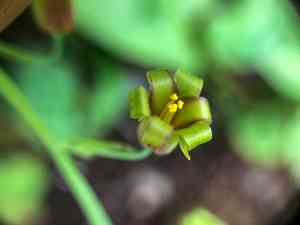
Bronze bells(Anticlea occidentalis)

Bronze bells (Anticlea occidentalis)

Also known as: Western featherbells

Bronze bells (Adenophora spp.) are resilient perennials celebrated for their attractive bell-shaped flowers, typically in shades of blue or purple, blooming in mid to late summer. Key features include:

- **Growth Habit**: Forms clumps with sturdy, upright stems.
- **Height**: Ranges from 1 to 3 feet tall.
- **Foliage**: Lance-shaped, green leaves that often turn bronze in fall.
- **Flowers**: Characteristic bell-shaped blossoms.

Ideal growing conditions:

- **Light**: Thrives in full sun to partial shade.
- **Soil**: Prefers well-drained, fertile soils with good moisture retention.
- **Water**: Requires regular watering, particularly during dry periods.
- **Hardiness**: Suitable for USDA zones 3-8, tolerating cold climates well.
- **Maintenance**: Low-maintenance; deadheading can encourage further blooming, and it should be cut back in late fall or early spring.

These perennials are excellent choices for borders, rock gardens, and cottage gardens, providing a burst of color and charm.

Attributes of Bronze bells

Lifespan
Perennial
Plant Type
Herb
Plant Height
30 cm to 61 cm
Spread
N/A
Leaf Color
Green
Flower Size
1-2 cm
Flower Color
White to light pink

ForwardPlant - Identify plants with a snap

Identify and diagnose plants, get toxicity alerts, and explore safety guides for all types of fungi.

Try for Free

Images of Bronze bells

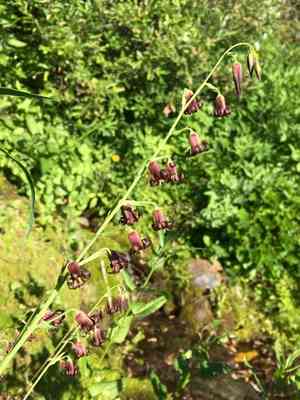
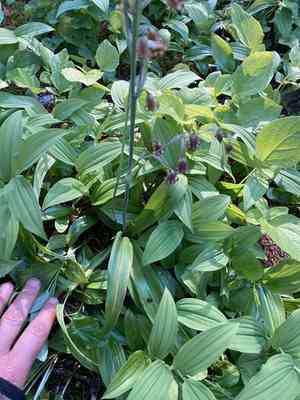
Bronze bells(Anticlea occidentalis)

Quickly Identify Bronze bells

1
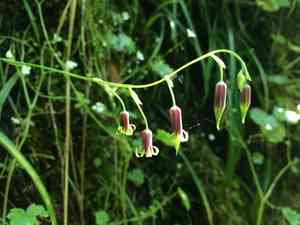
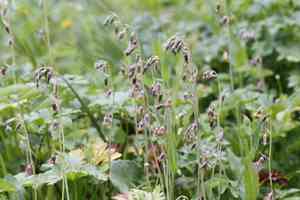
This plant can be identified by its lance-shaped leaves and its racemes of small, star-shaped flowers. It grows from a bulb and typically appears in meadows and open woodland areas.

Scientific Classification of Bronze bells

Phylum
Vascular plants
Class
Monocotyledons
Order
Liliales
Family
Bunchflower
Genus
Death camas
Species
Bronze bells

Planting and Growing of Bronze bells

Care Difficulty
Easy
Watering Schedule
Every 2 days
Sunlight Requirements
Full sun
Sunshine Duration
6-10 hours
Ideal Temperature
60-75℉
Soil Type
Potting Mix, Peat Mix
Soil pH
6.5-7.5
Fertilizer Type
Balanced
Pruning Season
Spring, Summer
Pruning Area
Branches, Leaves
Pruning Frequency
Once a year
Repotting Season
Spring
Pot Type
Plastic, Ceramic

water icon How to Water Bronze bells?

Anticlea occidentalis prefers its soil to be kept consistently moist but not waterlogged, aiming to soak the top 1-2 inches of the soil during each watering. Ensure you water until it begins to drain through, signaling that the soil beneath has been adequately penetrated.
What are the symptoms of an underwatered Bronze bells?
What should I do if my Bronze bells is not getting enough water?
What are the symptoms of an overwatered Bronze bells?
How to save an overwatered Bronze bells?

sunlight icon What Are the Sunlight Requirements for Bronze bells?

Sunlight Requirements: Full sun, Partial sun
Duration of light: 6 to 8 hours
Anticlea occidentalis ideally thrives in environments offering full sun to partial sun. Such conditions promote robust growth, enhanced flowering, and improved resilience against pests and diseases.
Optimal Sunlight Exposure
Dealing with Overexposure
Ensuring Adequate Coverage

temperature icon What Is the Ideal Temperature Range for Bronze bells?

Ideal Temperature: 60 ~ 75℉
Anticlea occidentalis thrives in a temperature range of 60°F to 75°F. This range allows for optimal growth and development, ensuring the plant can photosynthesize efficiently and maintain its metabolic functions without stress.

soil icon What Soil is Best for Bronze bells?

Soil type: Loam, Sandy loam
Soil PH: 6.5 ~ 7.5
Anticlea occidentalis thrives best in soil that offers excellent drainage. This prevents root rot by allowing excess water to escape quickly while retaining enough moisture for the plant's needs. Good drainage promotes healthy root growth and vibrant foliage. The plant requires soil with moderate nutrient levels, as excessively rich soil can lead to overly lush foliage at the expense of flowers. Balanced nutrients support steady growth and abundant blooming, essential for the plant's life cycle. While drainage is crucial, the soil should also retain some moisture to keep the roots hydrated during dry spells. This balance helps the plant survive and thrive in its native habitats, ensuring resilience against varying weather conditions.

fertilize icon How to Fertilize Bronze bells?

Fertilizer type: Balanced
When fertilizing Anticlea occidentalis, it is crucial to apply the right amount to support its growth without causing harm. For liquid fertilizers, mix at a ratio of 1:3 (fertilizer to water) and apply around 200 ml per plant monthly. For slow-release fertilizers, apply about 10 grams per plant in early spring and late summer to ensure a steady nutrient supply throughout the growing season.

prune icon How to Prune Bronze bells?

Pruning Time: Spring, Summer
To prune Anticlea occidentalis effectively, begin by identifying the plant's natural shape. Use clean, sharp shears to cut back any dead or damaged stems at a 45-degree angle. Focus on thinning out overcrowded areas to improve air circulation and sunlight penetration. This will encourage healthy blooms and prevent the spread of disease throughout the plant. More About Pruning Techniques

propagate icon How to Propagate Bronze bells plant?

Propagate Time: Spring, Early spring
1
Collect mature seeds from the Anticlea occidentalis plant in late summer and clean them of any debris. Store the seeds in a cool, dry place until planting in early spring.
2
Fill seed trays with a well-draining potting mix. Sow the seeds lightly in the soil, covering them with a thin layer of compost. Water lightly, ensuring not to displace the seeds.
3
In the spring, when the plant is dormant, carefully dig up the plant and gently separate it into smaller sections. Each section should have a healthy root system and new growth.
More About Propagating Techniques

repot icon How to Repot Bronze bells plant?

Repotting frequency: Every 2-3 years
1
Repot Anticlea occidentalis when you notice roots protruding from the drainage holes or circling the pot. This typically occurs when the plant is root-bound. Another signal is if it's been 2-3 years since its last repotting, ensuring optimal growth and health.
2
Choose a pot that's 1-2 inches wider in diameter than the current pot to give roots space to grow. Ensure it has excellent drainage to prevent root rot. The right pot promotes healthy root development and adequate airflow, crucial for the plant’s vitality.
3
Opt for well-draining sandy loam to mimic its natural habitat. This type of soil retains necessary moisture while allowing excess water to drain, preventing root rot and fostering robust growth. Ideal soil ensures a balance of nutrients and aeration for healthier plants.

ForwardPlant - Identify plants with a snap

Find the best spots for them to optimize their health, simply using your phone.

Try for Free

Toxicity

Ingestion

Identify toxic plants for your safety

Learn which plants are harmful to you and your pets, and make informed choices for a safer home!

Try for Free
WARNING
The judgment on toxicity and danger is for reference only. We DO NOT GUARANTEE any accuracy of such judgment. Therefore, you SHALL NOT rely on such judgment. It is IMPORTANT TO SEEK PROFESSIONAL ADVICE in advance when necessary.