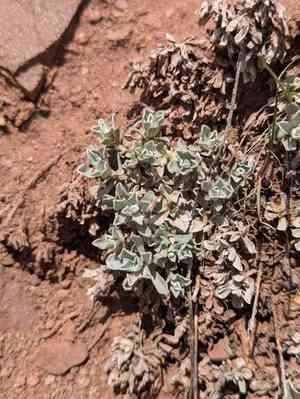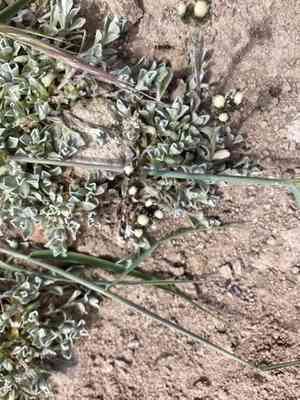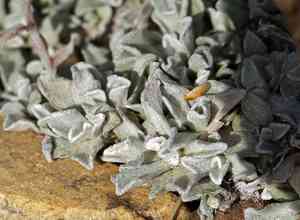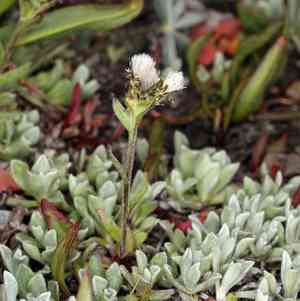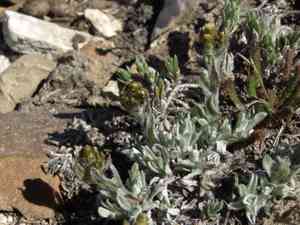
Rocky mountain pussytoes(Antennaria media)

Rocky mountain pussytoes (Antennaria media)

Also known as: Rocky Mountain Pussytoes

Rocky Mountain Pussytoes (Antennaria parvifolia) are a resilient perennial known for their soft, silvery-gray leaves and small, white to pinkish flower clusters that look like tiny cat's paws. This plant is well-suited for rocky or alpine conditions and forms dense mats, making it an ideal ground cover. Here are some notable traits and advantages:

**Characteristics:**
- **Appearance:** Features silvery-gray foliage with small, paw-like flower clusters.
- **Growth Habit:** Low-growing and forms dense mats.
- **Height:** Generally reaches 2-6 inches.
- **Bloom Period:** Flowers from late spring to early summer.

**Benefits:**
- **Drought Resilience:** Needs minimal watering once established, perfect for xeriscaping.
- **Low Care Requirements:** Thrives in poor, well-drained soils with little maintenance.
- **Pollinator Friendly:** Attracts bees and butterflies.
- **Erosion Prevention:** Dense mats help stabilize soil.
- **Deer Resistant:** Less likely to be eaten by deer.

Ideal for rock gardens, borders, and areas with challenging soil conditions, Rocky Mountain Pussytoes offer both beauty and functionality in the garden.

Attributes of Rocky mountain pussytoes

Lifespan
Perennial
Plant Type
Herb
Plant Height
5 cm to 13 cm
Spread
Spreads to form a mat up to several feet across
Leaf Color
Greyish-green
Flower Size
0.2-0.4 inches (0.5-1 cm)
Flower Color
White or pink

ForwardPlant - Identify plants with a snap

Identify and diagnose plants, get toxicity alerts, and explore safety guides for all types of fungi.

Try for Free

Images of Rocky mountain pussytoes

Rocky mountain pussytoes(Antennaria media)

Quickly Identify Rocky mountain pussytoes

1
To identify Antennaria media, look for its rosettes of spoon-shaped, woolly leaves and its small, clustered flower heads that resemble cat\'s paws. The plant typically grows in alpine and subalpine meadows.

Scientific Classification of Rocky mountain pussytoes

Phylum
Vascular plants
Class
Dicotyledons
Order
Asterales
Family
Daisy
Genus
Everlasting
Species
Rocky mountain pussytoes

Planting and Growing of Rocky mountain pussytoes

Care Difficulty
Easy
Watering Schedule
Every 2 days
Sunlight Requirements
Full sun
Sunshine Duration
4-8 hours
Ideal Temperature
60-70℉
Soil Type
Potting Mix, Peat Mix
Soil pH
6.5-7.5
Fertilizer Type
Balanced
Pruning Season
Spring, Summer
Pruning Area
Branches, Leaves
Pruning Frequency
2 times a year
Repotting Season
Spring
Pot Type
Plastic, Ceramic

water icon How to Water Rocky mountain pussytoes?

Antennaria media thrives with minimal water. The key is to simulate the dry, open habitats where it naturally occurs. Water must be enough to moisten the soil around the roots without leaving it soggy. Ensure the soil is dry between watering to avoid root rot.
What are the symptoms of an underwatered Rocky mountain pussytoes?
What should I do if my Rocky mountain pussytoes is not getting enough water?
What are the symptoms of an overwatered Rocky mountain pussytoes?
How to save an overwatered Rocky mountain pussytoes?

sunlight icon What Are the Sunlight Requirements for Rocky mountain pussytoes?

Sunlight Requirements: Full sun, Partial sun
Duration of light: 6 to 8 hours
Ideally, Antennaria media enjoys full sun to partial sun conditions. The consistent exposure to direct sunlight supports vigorous growth, defending against pests and diseases by maintaining high energy levels through consistent photosynthesis.
What is the ideal light environment for Antennaria media?
How can I achieve ideal lighting conditions for Antennaria media?
What are the benefits of providing ideal lighting conditions to Antennaria media?

temperature icon What Is the Ideal Temperature Range for Rocky mountain pussytoes?

Ideal Temperature: 60 ~ 70℉
The ideal temperature range for Antennaria media is between 60°F and 70°F, as these conditions are optimal for its physiological processes. Within this range, the plant can effectively photosynthesize, respire, and absorb nutrients, ensuring robust growth and development.

soil icon What Soil is Best for Rocky mountain pussytoes?

Soil type: Loam, Sandy loam, Calcareous soil
Soil PH: 6.5 ~ 7.5
Antennaria media thrives best in well-draining soil to prevent root rot. This means that water should not stagnate around the root zone, allowing the roots to breathe and absorb nutrients efficiently. While not demanding in terms of fertility, Antennaria media benefits from soil with moderate nutrient content, providing enough resources for healthy foliage and flowers without the risk of nutrient burn. This plant prefers soil that is neutral to slightly alkaline, which helps in optimal nutrient uptake. A pH level around 6.5 to 7.5 ensures proper biological activity and nutrient availability.

fertilize icon How to Fertilize Rocky mountain pussytoes?

Fertilizer type: Balanced
For Antennaria media, use a balanced fertilizer diluted to half strength. Apply approximately 50 milliliters per plant when using liquid fertilization to ensure the roots receive adequate nutrients without overcrowding the soil with excess salts.

prune icon How to Prune Rocky mountain pussytoes?

Pruning Time: Spring, Summer
Start by cutting away any dead or diseased leaves and stems. This clears the path for new growth and reduces the risk of disease spreading throughout the plant. Trim the plant to maintain a compact, attractive shape. Focus on removing leggy stems to encourage a more bushy growth. Be cautious not to remove more than one-third of the plant's volume at a time. More About Pruning Techniques

propagate icon How to Propagate Rocky mountain pussytoes plant?

Propagate Time: Early spring, Late spring
1
Scatter Antennaria media seeds evenly across a seed tray filled with well-draining potting mix. Lightly cover with a thin layer of soil and keep consistently moist but not waterlogged.
2
Gather and examine the parent plant carefully. Decide on the sections to divide, ensuring that each section has healthy roots and shoots for successful propagation.
3
Plant divisions into new pots or directly into the ground, making sure the crown is level with the soil. Water immediately to encourage root establishment.
More About Propagating Techniques

repot icon How to Repot Rocky mountain pussytoes plant?

Repotting frequency: Every 2-3 years
1
Antennaria media should be repotted when it shows signs of being root-bound or when growth appears stunted. These indicators suggest that the roots need more room to spread and absorb nutrients. Typically, repotting is best done every 2-3 years during spring or summer.
2
Select a pot that's about one to two inches larger in diameter than the current one. Ensure it has drainage holes to prevent waterlogging, which can lead to root rot. The right-sized pot allows the roots to expand without drowning the plant, promoting healthy growth.
3
Opt for a well-draining, gritty soil mix to mimic its natural habitat. A mix of sand, perlite, and potting soil works well. This composition ensures good aeration and prevents excess moisture, reducing the risk of root diseases while supporting the plant's health.

ForwardPlant - Identify plants with a snap

Find the best spots for them to optimize their health, simply using your phone.

Try for Free