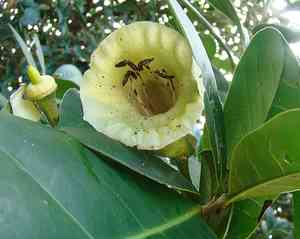
Black calabash (Amphitecna latifolia)
Also known as: Bush Soldier, Galan de Noche
Black calabash is an evergreen perennial tree known for its soft, workable, and rot-resistant wood, often used to craft musical instruments. It typically grows in Central America, thriving in tropical hammocks as an understory plant. The tree flourishes in coastal environments, where the conditions are warm and humid.
In This Article
Attributes of Black calabash
Lifespan
Perennial
Plant Type
Tree
Plant Height
8 m to 9 m
Spread
4.5 m to 8 m
Leaf Color
Dark Green
Flower Size
5-7 cm
Flower Color
White
Images of Black calabash

Quickly Identify Black calabash
1
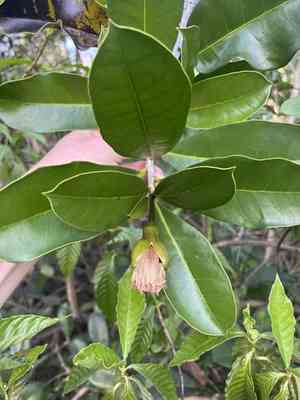
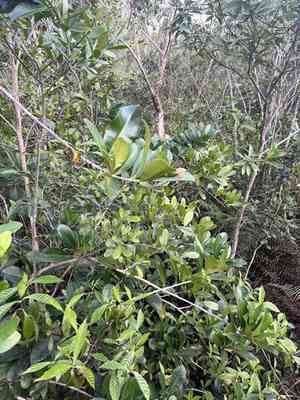
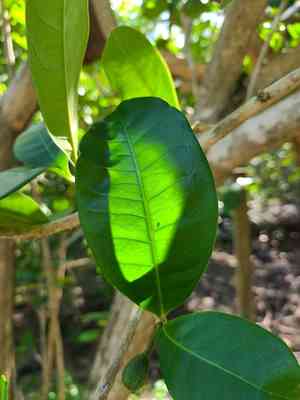
Identify Amphitecna latifolia by its large, leathery leaves which are glossy on top and lighter underneath. Its flowers are tubular and white, opening at night and releasing a sweet scent. The fruit is a large, woody capsule.
Scientific Classification of Black calabash
Phylum
Vascular plants
Class
Dicotyledons
Order
Lamiales
Family
Bignonia
Genus
Amphitecna
Species
Black calabash
Planting and Growing of Black calabash
Care Difficulty
Moderate
Watering Schedule
Every 4 days
Sunlight Requirements
Full sun
Sunshine Duration
8-12 hours
Ideal Temperature
68-79℉
Soil Type
Potting Mix, Peat Mix
Soil pH
6.5-7.5
Fertilizer Type
Balanced
Pruning Season
Spring, Summer
Pruning Area
Branches, Leaves
Pruning Frequency
2 times a year
Repotting Season
Spring
Pot Type
Plastic, Terracotta
 How to Water Black calabash?
When watering Amphitecna latifolia, ensure that the soil is thoroughly moistened but not waterlogged. Watering should be done to saturate the soil about 500ml for a medium-sized pot, allowing water to seep into the root zone without flooding the pot. It's important to let the soil dry out slightly between watering sessions to prevent root rot.
What are the symptoms of an underwatered Black calabash?
›
What should I do if my Black calabash is not getting enough water?
›
What are the symptoms of an overwatered Black calabash?
›
How to save an overwatered Black calabash?
›
 What Are the Sunlight Requirements for Black calabash?
Amphitecna latifolia thrives in conditions ranging from full sun to partial sun. This balance enhances its natural growth habits and fosters a healthy flowering and foliage structure.
What is the best lighting condition for Amphitecna latifolia?
›
How to ensure 5-7 hours of sunlight for Amphitecna latifolia?
›
What are the benefits of ideal lighting conditions for Amphitecna latifolia?
›
 What Is the Ideal Temperature Range for Black calabash?
Maintaining an ideal temperature range of 68-79°F is crucial for Amphitecna latifolia as it ensures optimal growth and physiological functions. This range supports proper metabolic activities and enhances nutrient uptake, contributing to the healthy development of the plant.
 What Soil is Best for Black calabash?
Amphitecna latifolia thrives in well-drained soils, which prevent waterlogging that can cause root rot. Proper drainage allows for air circulation around the roots, fostering healthy growth and reducing disease risk. This plant benefits from nutrient-rich soil that supplies essential minerals and nutrients. Such soil supports lush foliage and robust flowering, enhancing the plant's aesthetic appeal and overall health. Soils that retain moderate moisture levels without being soggy help Amphitecna latifolia maintain hydration. This balance ensures the plant receives sufficient water while preventing excess, which could lead to complications.
 How to Fertilize Black calabash?
Amphitecna latifolia typically benefits from balanced nutrient supply. Apply a diluted liquid fertilizer, using a 10-10-10 or 20-20-20 formulation, at half strength. Avoid excessive dosages to prevent root damage.
 How to Prune Black calabash?
Begin by inspecting the plant for any branches that appear dead or damaged. These are typically darker and may snap easily. Carefully prune them close to their base to encourage new growth. Once dead wood is removed, focus on shaping the plant. Make diagonal cuts just above leaf nodes, ensuring a clean cut to facilitate healing. This helps maintain a pleasing aesthetic and even growth. Check for densely packed branches, which can cause poor airflow and increase the risk of disease. Selectively remove some branches to allow light penetration and air circulation.
 How to Propagate Black calabash plant?
1
Gather seeds from ripe Amphitecna latifolia fruits. Ensure the seeds are fully matured before collection for optimal germination rates.
2
Select a healthy stem approximately 8 inches long. Use pruning scissors to make a clean cut just below a leaf node for better root development.
3
Plant seeds or cuttings in a well-draining potting mix. Water them thoroughly, ensuring the medium remains moist but not overly saturated.
 How to Repot Black calabash plant?
1
Repot Amphitecna latifolia when you notice roots growing out of the drainage holes or when the plant shows signs of stunted growth. This typically occurs every 2-3 years, usually in spring or summer when the plant is actively growing, providing an optimal environment for recovery from repotting stress.
2
Select a pot that's one size larger than the current one, ideally with good drainage. A slightly larger pot will give the roots room to grow without overwhelming the plant's ability to take up water and nutrients efficiently. This helps prevent root rot and promotes healthy growth.
3
Opt for a soil mix that retains moisture yet drains well, such as an organic-rich mix with components like perlite or coarse sand. This provides essential nutrients while preventing water from pooling at the roots, creating an ideal environment for Amphitecna latifolia to thrive.
Learn More About Black calabash Diseases
Anthracnose
Bacterial Leaf Spot
Bacterial Soft Rot
Bacterial Wilt
Black Spot
Chemical Injury
Crown Gall
Cyst Nematode
Damping-off
Downy Mildew
Drought Stress
Fusarium Wilt
Gray Mold
Leaf Curl
Leaf Spot
Mosaic
Nutrient Deficiency
Nutrient Toxicity
Powdery Mildew
Root Rot
Root-knot Nematode
Rusts
Sooty Mold
Spider Mites
Temperature Stress
Thrips Damage
White Mold



