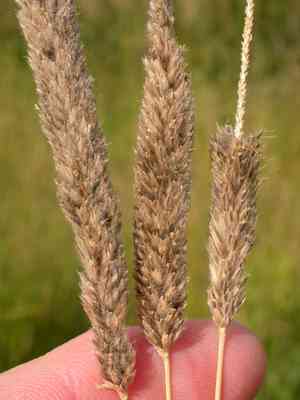
Creeping meadow foxtail (Alopecurus arundinaceus)
Also known as: Creeping foxtail
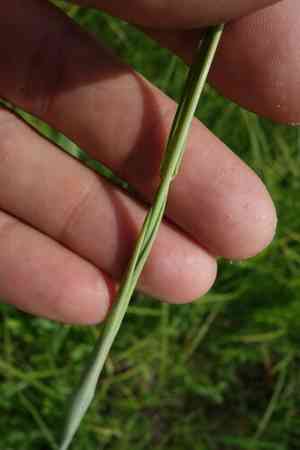
These plants form loose tufts and feature stolons extending up to 6 cm. Their stems reach heights of 30 to 91 cm and are encased at the base by fibrous, sometimes bulb-like sheaths. Both stems and leaves are smooth and hairless. The leaves include a ligule of 2 to 5 mm and a blade (limbus) ranging from 5 to 25 cm in length and 3 to 11 mm in width. Upper leaves are characterized by slightly inflated sheaths.
In This Article
Attributes of Creeping meadow foxtail
Lifespan
Perennial
Plant Type
Grass
Plant Height
30 cm to 1.07 m
Spread
1 cm
Leaf Color
Green Blue
Flower Size
2.5 cm to 7 cm
Flower Color
Yellow Green Red Brown
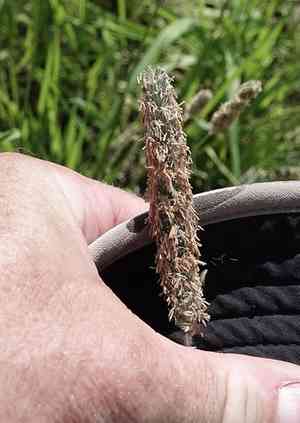
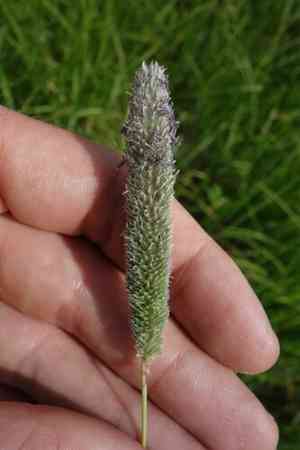
Images of Creeping meadow foxtail
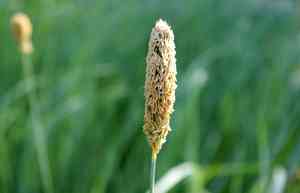
Quickly Identify Creeping meadow foxtail
1
Look for the dense, cylindrical flower spikes and clumped growth habit. The leaves are long and slender with a rough texture, and the plant often forms dense tufts.
Scientific Classification of Creeping meadow foxtail
Phylum
Vascular plants
Class
Monocotyledons
Order
Poales
Family
Grass
Genus
foxtail grass
Species
Creeping meadow foxtail
Planting and Growing of Creeping meadow foxtail
Care Difficulty
Easy
Watering Schedule
Every 4 days
Sunlight Requirements
Partial sun
Sunshine Duration
4-8 hours
Ideal Temperature
60-75℉
Soil Type
Potting Mix, Peat Mix
Soil pH
6.5-7.5
Fertilizer Type
Balanced
Pruning Season
Spring, Summer
Pruning Area
Branches, Leaves
Pruning Frequency
2 times a year
Repotting Season
Spring
Pot Type
Plastic, Ceramic
 How to Water Creeping meadow foxtail?
When watering Alopecurus arundinaceus, ensure that you provide about 500 ml each time. This amount is enough to moisten the soil thoroughly but not drown it. Always check that excess water can drain properly to avoid root rot. Your goal is to achieve a balance where the soil remains consistently moist but not waterlogged.
What are the symptoms of an underwatered Creeping meadow foxtail?
›
What should I do if my Creeping meadow foxtail is not getting enough water?
›
What are the symptoms of an overwatered Creeping meadow foxtail?
›
How to save an overwatered Creeping meadow foxtail?
›
 What Are the Sunlight Requirements for Creeping meadow foxtail?
Alopecurus arundinaceus performs excellently under partial sun exposure, ideally getting 4 to 6 hours of soft sunlight. This balances energy capture and protects against stress, promoting lush and full development.
More About Sunlight Requirements Techniques→
What is the ideal location for planting?
›
How can I achieve best light conditions indoors?
›
What happens if my plant gets the right light?
›
 What Is the Ideal Temperature Range for Creeping meadow foxtail?
For the optimal growth of Alopecurus arundinaceus, maintaining a temperature range between 60°F and 75°F is recommended. This range allows the plant to perform photosynthesis efficiently, promoting healthy foliage and robust root development. Additionally, it helps in keeping humidity levels balanced, which is crucial for the plant's overall health.
 What Soil is Best for Creeping meadow foxtail?
Alopecurus arundinaceus thrives in soil that is rich in organic matter. This helps in providing the plant with essential nutrients promoting robust growth and enhancing its resilience against environmental stress. Well-drained soil is crucial for Alopecurus arundinaceus, as it prevents root rot and ensures the plant’s roots have access to adequate oxygen. This results in healthier plant development and a more vibrant appearance. Although Alopecurus arundinaceus prefers moist conditions, the soil should have moderate moisture retention to maintain a balance, preventing both dehydration and waterlogging, ultimately supporting its overall health.
 How to Fertilize Creeping meadow foxtail?
Alopecurus arundinaceus thrives with a balanced nutrient intake. Use a water-soluble fertilizer diluted to half strength, around 100ml per plant, when applying liquid fertilizer. Solid fertilizers should be applied at the rate of 5 grams per square meter. This ensures adequate nutrients without overwhelming the plant.
 How to Prune Creeping meadow foxtail?
Start by inspecting your Alopecurus arundinaceus for any dead or wilted leaves. Using your sharp, clean tools, cut these sections at their base. Next, scout for any overgrown or misshapen areas and trim back to maintain a uniform height. Finally, clear any debris around the plant to ensure good air circulation and nutrient absorption. In spring, focus on shaping, as new growth thrives. Summer pruning can control excess growth, while autumn is ideal for preparing the plant for winter dormancy. Each season demands a slightly different approach to optimize health and aesthetics.
More About Pruning Techniques→
 How to Propagate Creeping meadow foxtail plant?
1
Ensure the soil is well-draining and nutrient-rich. Loosen it with a garden fork and mix in organic compost to provide an optimal growing environment for new divisions or seedlings of Alopecurus arundinaceus.
2
Scatter the Alopecurus arundinaceus seeds evenly on the seed tray filled with well-prepared soil. Cover them lightly with soil, ensuring not to bury them too deep, to allow adequate sunlight for germination.
3
Using the shovel, divide large clumps of Alopecurus arundinaceus into smaller sections. Ensure each division has substantial roots and shoots before replanting them to encourage swift establishment.
 How to Repot Creeping meadow foxtail plant?
1
Alopecurus arundinaceus benefits from repotting when you notice it's root-bound—roots visibly circling the pot's edges or peeking out from drainage holes. This is a telltale sign that the plant's growth is being constricted, impacting overall health. Additionally, if water is not draining efficiently and pooling on the surface, the soil may be compacted, hindering growth. It's best to repot during the growing seasons, spring and summer, when the plant is actively growing and can recover quickly from the disturbance.
2
Selecting the correct pot for Alopecurus arundinaceus involves ensuring it has adequate drainage holes to prevent waterlogging, which can lead to root rot. Select a pot that is about 2 inches larger in diameter than the current one. This provides enough space for root expansion without overwhelming the plant. Resist the temptation to over-pot as too much soil can retain excess moisture. Using a breathable material like terracotta can help in regulating moisture levels and provide a robust environment for growth.
3
Opt for a loamy, well-draining mix that allows easy passage of water while holding just enough moisture. This type of soil ensures that Alopecurus arundinaceus has access to the nutrients it needs while preventing root rot due to over-saturation. You can also enhance the soil with perlite or sand to improve aeration and drainage. Such a mix not only supports healthy root development but also provides stability for the grass, allowing it to grow dynamically in its new environment.



