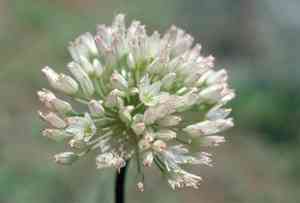
Howell's onion (Allium howellii)
Also known as: Howell's Onion
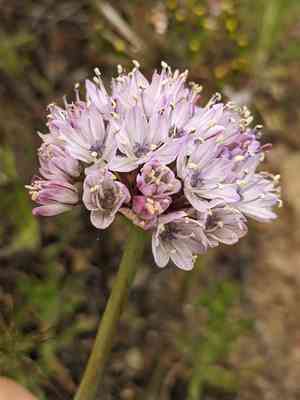
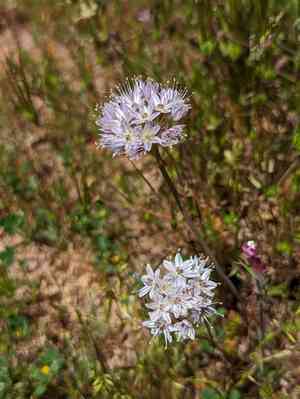
Howell's onion is a wild onion species notable for its slender stems and clusters of soft pink to purple flowers. It flourishes in the dry, open regions of California, particularly in rocky or sandy soils. The plant's bulbous roots efficiently store water, allowing it to withstand the area's seasonal dryness. Its narrow, green leaves often intermingle with surrounding grasses, offering natural camouflage from herbivores, while its strong aroma helps repel pests.
In This Article
Attributes of Howell's onion
Lifespan
Perennial
Plant Type
Herb
Plant Height
0 mm to 30 cm
Spread
10-15 cm
Leaf Color
Green
Flower Size
1-2 cm
Flower Color
Pink to white
Images of Howell's onion
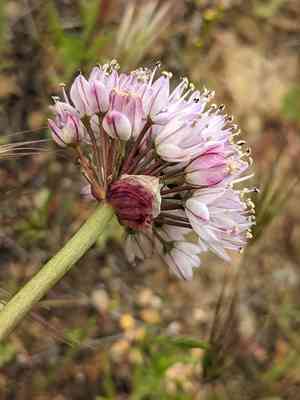
Quickly Identify Howell's onion
1
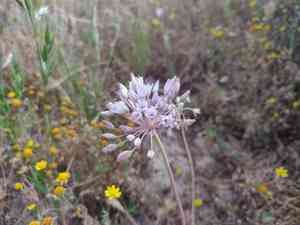
To identify Allium howellii, look for its distinctive small, clustered, pink to white flowers with a strong onion scent. Its basal leaves are narrow and grass-like, typically with a smooth texture.
Scientific Classification of Howell's onion
Phylum
Vascular plants
Class
Monocotyledons
Order
Asparagales
Family
Amaryllis
Genus
Onions
Species
Howell's onion
Planting and Growing of Howell's onion
Care Difficulty
Moderate
Watering Schedule
Every 2 days
Sunlight Requirements
Full sun
Sunshine Duration
6-12 hours
Ideal Temperature
60-75℉
Soil Type
Potting Mix, Peat Mix
Soil pH
6.5-7.5
Fertilizer Type
Balanced
Pruning Season
Spring, Summer
Pruning Area
Branches, Leaves
Pruning Frequency
2 times a year
Repotting Season
Spring
Pot Type
Plastic, Ceramic
 How to Water Howell's onion?
When watering Allium howellii, it's important to aim for moderate moisture. The soil should be damp but not waterlogged. Typically, 250 milliliters per cycle should suffice, ensuring the water reaches the root zone without pooling at the surface.
What are the symptoms of an underwatered Howell's onion?
›
What should I do if my Howell's onion is not getting enough water?
›
What are the symptoms of an overwatered Howell's onion?
›
How to save an overwatered Howell's onion?
›
 What Are the Sunlight Requirements for Howell's onion?
Allium howellii prospers in full sun, with partial shade. Ideal light exposure ensures vibrant flower development and prevents etiolation, keeping the plant healthy and aesthetically pleasing.
What is the most suitable lighting condition?
›
How to ensure ideal light exposure?
›
Benefits of getting ideal sunlight?
›
 What Is the Ideal Temperature Range for Howell's onion?
The ideal temperature range for Allium howellii is between 60°F and 75°F. These temperatures are optimal for ensuring robust growth and healthy bloom. Within this range, the plant can efficiently perform photosynthesis and other metabolic activities crucial for its development.
 What Soil is Best for Howell's onion?
Allium howellii thrives in loose soil texture, which allows for better root penetration and air circulation. It prevents waterlogging, ensuring the roots receive adequate oxygen for healthy growth. A nutrient-rich soil is critical for Allium howellii, as it provides essential minerals and organic matter. This promotes robust growth, vibrant foliage, and increases its resilience to pests and diseases. Well-draining soil is vital to prevent root rot in Allium howellii. It ensures that water does not stagnate around the roots, thereby reducing the risk of fungal infections and promoting healthier plants.
 How to Fertilize Howell's onion?
For Allium howellii, a moderate approach to fertilization is ideal. Liquid fertilizers should be applied in a diluted form, about 1/3 of the recommended dose on the packaging. This ensures that the soil nutrients are not overwhelming for the plant roots. When using slow-release fertilizers, about a tablespoon per plant during the growing season is sufficient. This provides an optimal balance between nutrition and growth without risking nutrient burn.
 How to Prune Howell's onion?
Begin by examining the Allium howellii for any withered or yellowing leaves. These are prime targets for pruning as they can hinder the plant's growth. Using sharp, sanitized shears, gently snip these leaves close to the base to avoid infecting the healthy parts of the plant. Allium howellii naturally boasts a unique, spherical bloom structure. To maintain its ideal shape, prune any stems that extend awkwardly beyond others. This will not only keep the plant looking neat but will also enable better light penetration to the inner leaves.
More About Pruning Techniques→
 How to Propagate Howell's onion plant?
1
Gather seeds from mature Allium howellii pods once they are dried on the plant. Make sure the seeds are fully ripe before collecting. Clean and dry the seeds to prevent mold or fungal growth.
2
Fill a seed tray or pot with a mix of perlite and sand for good drainage. Sow the seeds evenly on the surface and lightly cover them with a layer of the mixture. Water gently to ensure the seeds settle properly.
3
Carefully dig out the plant clumps during the early spring, ensuring as much root mass is preserved. Gently separate the bulbs or rhizomes by hand or using a small gardening knife, and immediately replant in another prepared bed.
 How to Repot Howell's onion plant?
1
Watch for signs such as slower growth, roots growing through drainage holes, and compacted soil as indicators that it's time to repot Allium howellii. These signals suggest the plant needs more room for root expansion and fresh nutrients.
2
Select a pot that's one size larger with ample drainage holes. A pot that's too large can retain excess moisture, leading to root rot. The new pot should allow room for root growth while preventing water from stagnating at the base.
3
Opt for a well-draining potting mix with sand or perlite. Such a mix ensures proper air circulation and prevents waterlogging, providing a healthy root environment for Allium howellii to flourish.



