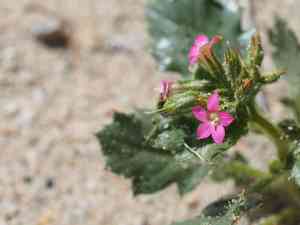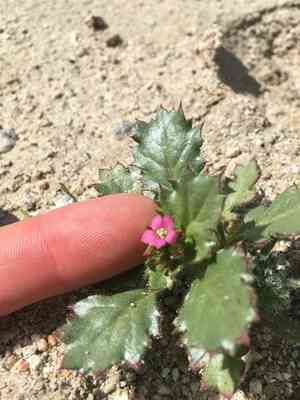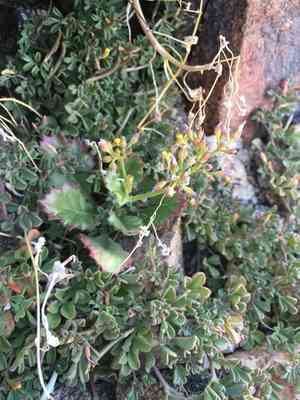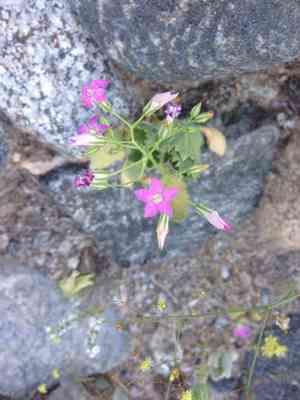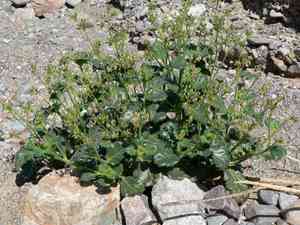
Broad-leaved gilia(Aliciella latifolia)

Broad-leaved gilia (Aliciella latifolia)

Also known as: Broadleaf gilias

The plant stands at a height of 10 to 30 cm and is an annual. Its leaves are simple, leathery, and range from ovate to round with toothed edges, sometimes displaying hints of pink or red. The flowers feature five sepals and five petals that merge into a narrow, funnel-shaped corolla tube. Inside, five stamens are arranged alternately with the corolla lobes. Flower clusters are found at the stem tips, with the corolla's exterior being pale pink to tan and the interior ranging from pink to bright red. The stamens, which are of varying lengths, barely extend beyond the corolla. The plant produces three-compartment capsules, each filled with numerous reddish-brown seeds.

Attributes of Broad-leaved gilia

Lifespan
Annual
Plant Type
Herb
Plant Height
4 to 12 inches
Spread
2 to 6 inches
Leaf Color
Green
Flower Size
Less than 1 inch
Flower Color
Pink Purple

ForwardPlant - Identify plants with a snap

Identify and diagnose plants, get toxicity alerts, and explore safety guides for all types of fungi.

Try for Free

Images of Broad-leaved gilia

Broad-leaved gilia(Aliciella latifolia)

Quickly Identify Broad-leaved gilia

1
To identify Aliciella latifolia, look for a small, annual herb with a rosette of basal leaves. The leaves are broad and oval-shaped with a smooth edge. Its flowering stems are slender and can be branched. The flowers are tubular, usually pink to purple, with five lobes.

Scientific Classification of Broad-leaved gilia

Phylum
Vascular plants
Class
Dicotyledons
Order
Solanales
Family
Phlox
Genus
Aliciella
Species
Broad-leaved gilia

Planting and Growing of Broad-leaved gilia

Care Difficulty
Easy
Watering Schedule
Every day
Sunlight Requirements
Full sun
Sunshine Duration
4-8 hours
Ideal Temperature
60-75℉
Soil Type
Potting Mix, Peat Mix
Soil pH
6.5-7.5
Fertilizer Type
Balanced
Pruning Season
Spring, Summer
Pruning Area
Branches, Leaves
Pruning Frequency
2 times a year
Repotting Season
Spring
Pot Type
Plastic, Ceramic

water icon How to Water Broad-leaved gilia?

Aliciella latifolia requires a thoughtful watering approach. Ideally, aim for around 250 ml per session. The key is to mimic its native environment, ensuring the soil retains slight dryness between watering sessions to avoid waterlogging, which can lead to root rot.
What are the symptoms of an underwatered Broad-leaved gilia?
What should I do if my Broad-leaved gilia is not getting enough water?
What are the symptoms of an overwatered Broad-leaved gilia?
How to save an overwatered Broad-leaved gilia?

sunlight icon What Are the Sunlight Requirements for Broad-leaved gilia?

Sunlight Requirements: Full sun
Duration of light: 6 to 8 hours
Full sunlight is ideal for Aliciella latifolia, supporting its natural adaptation to arid environments. Full sunlight ensures robust blooms and maintains the plant’s natural form and color vibrancy.
What is the primary light requirement for Aliciella latifolia?
How can I ensure Aliciella latifolia receives its ideal lighting?
What are the benefits of providing optimal sunlight to Aliciella latifolia?

temperature icon What Is the Ideal Temperature Range for Broad-leaved gilia?

Ideal Temperature: 60 ~ 75℉
Aliciella latifolia thrives in a temperature range of 60-75°F. This range ensures optimal growth and flowering, providing the plant with the warmth it needs while avoiding the stress of extreme temperatures. Within this range, metabolic processes function efficiently, and the plant can carry out photosynthesis effectively.

soil icon What Soil is Best for Broad-leaved gilia?

Soil type: Sandy soil, Loam, Calcareous soil
Soil PH: 6.5 ~ 7.5
Aliciella latifolia thrives in well-drained soil. This is crucial to prevent waterlogged conditions that can lead to root rot. Well-drained soil also ensures that the roots receive adequate oxygen, promoting healthy growth and robust flowering. This plant prefers soil with moderate fertility. Excessively rich soil can encourage foliage growth at the expense of flowers. Well-balanced nutrients lead to better flowering, ensuring the plant expends energy appropriately. A gravelly soil texture is beneficial as it mimics the plant's natural desert habitat. This type of soil improves drainage and provides a stable anchor for the roots, reducing susceptibility to adverse weather conditions.

fertilize icon How to Fertilize Broad-leaved gilia?

Fertilizer type: Balanced
For Aliciella latifolia, the appropriate amount of fertilizer should be modest since it is native to desert regions and accustomed to nutrient-poor soils. Use a diluted liquid fertilizer at half the recommended strength to avoid over-fertilization. Solid fertilizers should be applied sparingly, focusing on nutrient content that supports blooming and resilience.

prune icon How to Prune Broad-leaved gilia?

Pruning Time: Spring, Summer
Begin by inspecting your Aliciella latifolia thoroughly. Identify dead, damaged, or diseased branches that need removal. Also, plan to trim back any overgrown areas to maintain an attractive shape. Carefully cut away any dead or dying branches first. These do not contribute to the plant's overall health and can harbor diseases or pests, which may spread to healthy parts of the plant. Trim back any excessively long branches to maintain the plant's shape, ensuring it's balanced. Also, cut back any stems that cross each other to promote better air circulation and reduce disease risk. More About Pruning Techniques

propagate icon How to Propagate Broad-leaved gilia plant?

Propagate Time: Spring, Early summer
1
Collect seeds from matured Aliciella latifolia plants during late summer or early autumn when they are fully developed. Ensure seeds are completely dry before storing to prevent mold formation.
2
Use a well-draining soil mix for sowing seeds. This typically includes a combination of sand, perlite, and peat moss to promote aeration and avoid waterlogging, which can harm seedling growth.
3
Select healthy stems that are at least 5-6 inches long. Cut just below a node using a sterile knife. Remove the lower leaves, leaving a few at the top, to reduce moisture loss and encourage root development.

repot icon How to Repot Broad-leaved gilia plant?

Repotting frequency: Every 2-3 years
1
Aliciella latifolia often shows signs when it's time for repotting. Look for roots protruding from the drainage holes or circling the top of the soil. Diminished growth and water retention problems are also indicators that your plant needs a roomier pot.
2
Select a pot that is one size larger than the current with good drainage holes. A terracotta pot can be beneficial because it allows better air circulation to the roots, preventing overwatering issues, which is vital for Aliciella latifolia's health.
3
Opt for a well-draining, gritty mix. Incorporating sand or a cactus-specific mix ensures effective drainage, mimicking this plant's natural arid habitat. This prevents root rot, maintaining a healthy growth environment.

ForwardPlant - Identify plants with a snap

Find the best spots for them to optimize their health, simply using your phone.

Try for Free