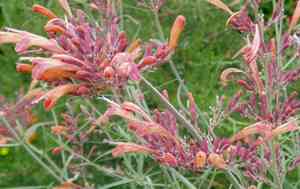
Threadleaf giant hyssop (Agastache rupestris)
Also known as: Threadleaf Giant Hyssop, Licorice Mint
Threadleaf giant hyssop (Agastache rupestris) is notable for its tall, slender appearance and fragrant, needle-like leaves. It produces striking tubular flowers in shades of orange to salmon, which attract pollinators like hummingbirds and bees. This plant excels in full sun and well-drained soil, showcasing excellent drought tolerance. Its natural habitat includes rocky, dry areas, making it well-suited for arid conditions.
In This Article
Attributes of Threadleaf giant hyssop
Lifespan
Perennial
Plant Type
Herb, Shrub
Plant Height
46 cm to 61 cm
Spread
30 cm to 45 cm
Leaf Color
Green Gray Silver
Flower Size
2.5 cm
Flower Color
Orange Pink
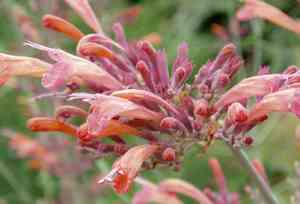
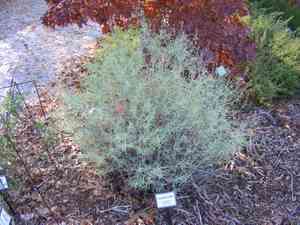
Images of Threadleaf giant hyssop
Quickly Identify Threadleaf giant hyssop
1
Narrow gray-green leaves, 2 inches (5 cm) long, with a licorice scent.
2
Burnt orange tubular flowers with two lips clustered on 10-12 inch (25-30 cm) spikes.
3
Square-shaped green stem, 0.2-0.4 inches (5-10 mm) thick, with opposite branching.
4
Aromatic foliage forming a bushy clump 1-1.5 feet (30-45 cm) wide.
5
Small dry capsules with four brownish nutlets, around 1/8 inch (3 mm) in size.
Scientific Classification of Threadleaf giant hyssop
Phylum
Vascular plants
Class
Dicotyledons
Order
Lamiales
Family
Mint
Genus
Giant hyssops
Species
Threadleaf giant hyssop
Planting and Growing of Threadleaf giant hyssop
Care Difficulty
Moderate
Watering Schedule
Every 2 days
Sunlight Requirements
Full sun
Sunshine Duration
6-10 hours
Ideal Temperature
65-75℉
Soil Type
Potting Mix, Peat Mix
Soil pH
6.5-7.5
Fertilizer Type
Balanced
Pruning Season
Spring, Summer
Pruning Area
Branches, Leaves
Pruning Frequency
2 times a year
Repotting Season
Spring
Pot Type
Plastic, Ceramic
 How to Water Threadleaf giant hyssop?
When watering Agastache rupestris, ensure the soil is thoroughly moist but not waterlogged. It thrives when given about 250 ml each session, letting the water drain completely through to ensure water reaches the root zone without causing over-saturation.
What are the symptoms of an underwatered Threadleaf giant hyssop?
›
What should I do if my Threadleaf giant hyssop is not getting enough water?
›
What are the symptoms of an overwatered Threadleaf giant hyssop?
›
How to save an overwatered Threadleaf giant hyssop?
›
 What Are the Sunlight Requirements for Threadleaf giant hyssop?
Agastache rupestris flourishes under conditions of full sun exposure. Ensuring six to eight hours of direct sunlight daily results in vibrant blooms and healthy foliage, enhancing its ornamental value and ecological role in attracting pollinators.
Best Time for Sun Exposure
›
Natural Environment Simulation
›
Seasonal Sunlight Adjustments
›
 What Is the Ideal Temperature Range for Threadleaf giant hyssop?
Agastache rupestris prefers a temperature range of 65-75°F for optimal growth. This range supports photosynthesis, respiration, and transpiration, all vital for its health. Proper climate control helps this plant to flourish indoors or outdoors.
 What Soil is Best for Threadleaf giant hyssop?
Agastache rupestris thrives in well-draining soil that prevents water from pooling around its roots, thus avoiding root rot. This ensures the roots receive ample air circulation, contributing to healthy plant growth and vibrant foliage. This plant benefits from soil enriched with organic matter, providing the necessary nutrients for its development. Adding compost or well-rotted manure can enhance soil fertility, encouraging robust growth and prolific blooming. While Agastache rupestris tolerates a range of soil pH, it prefers slightly alkaline conditions. This alkalinity supports nutrient availability and overall plant health, ensuring vibrant blooms and resilience against pests.
 How to Fertilize Threadleaf giant hyssop?
For Agastache rupestris, it's essential to strike a balance in fertilization. Use a diluted liquid fertilizer at half the recommended strength, about 1 teaspoon per gallon of water. This ensures the plant receives nutrients without risking fertilizer burn.
 How to Prune Threadleaf giant hyssop?
Begin your pruning by removing any dead, damaged, or diseased stems. Cutting these down to the base helps prevent any infections while removing unsightly parts. To maintain a pleasing shape, cut back leggy or overgrown stems. Trim these branches to just above a leaf node or a bud to encourage compact and full growth. Regularly deadhead spent flowers throughout blooming seasons, particularly in spring and autumn. This encourages continued blooming and prevents seed spread.
More About Pruning Techniques→
 How to Propagate Threadleaf giant hyssop plant?
1
Sow seeds on the surface of a well-drained seed starting mix, lightly cover with soil, and maintain consistent moisture until germination occurs in 14-21 days.
2
Select 3-5 inch cuttings from healthy plants, remove lower leaves, dip in rooting hormone, and plant in a perlite and peat moss mix. Keep under indirect light.
3
Gently lift mature plants, separate root clumps ensuring each has shoots and roots, and transplant immediately into prepared soil for optimal re-establishment.
 How to Repot Threadleaf giant hyssop plant?
1
Agastache rupestris should be repotted when its roots begin to outgrow the current pot. Signs include roots growing through drainage holes, or if the plant appears stunted or water-logged. Early spring or early autumn are ideal times, allowing the plant to establish before summer heat or winter chill.
2
Select a pot that is 1-2 inches larger in diameter than the current one. It should have ample drainage holes to enable excess water to escape, preventing root rot. A terracotta pot can be beneficial, as it helps wick away moisture and mimics the natural dry environment this plant thrives in.
3
Use a well-draining cactus mix, ideally with added perlite or sand to ensure aeration. This soil choice aids in preventing water retention, mimicking the plant's natural arid environment, promoting healthier root growth and reducing the risk of fungal infections.
Learn More About Threadleaf giant hyssop Diseases
Anthracnose
Bacterial Leaf Spot
Bacterial Soft Rot
Bacterial Wilt
Crown Gall
Cyst Nematode
Damping-off
Downy Mildew
Drought Stress
Fusarium Wilt
Gray Mold
Leaf Curl
Leaf Spot
Mosaic
Nutrient Deficiency
Nutrient Toxicity
Powdery Mildew
Root Rot
Root-knot Nematode
Rusts
Sooty Mold
Spider Mites
Temperature Stress
Thrips Damage
White Mold



