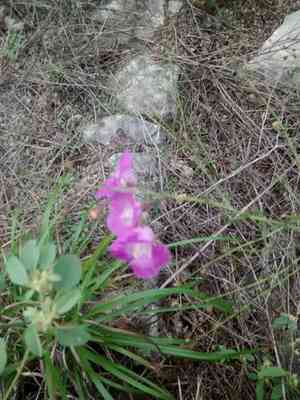
Stiffleaf false foxglove (Agalinis strictifolia)
Also known as: Strict-leaf False Foxglove
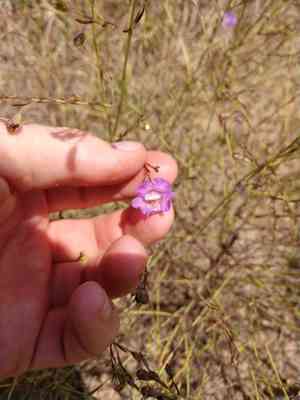
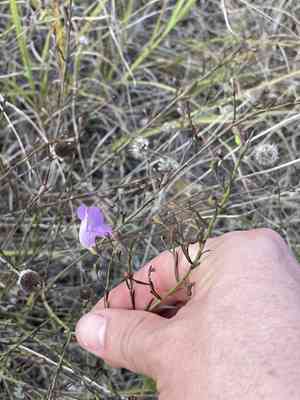
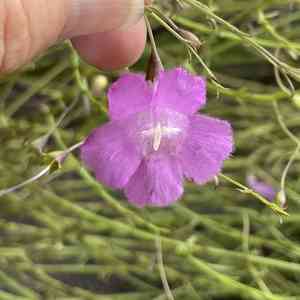
Stiffleaf false foxglove (Agalinis tenuifolia) is a graceful wildflower recognized by its thin, willow-like leaves and clusters of delicate, tubular flowers ranging in color from pink to purple. It flourishes in sunny, open habitats, such as prairies, meadows, and along roadsides, where it benefits from well-drained, sandy or rocky soils. Blooming predominantly from August to October, this plant's striking flowers attract a variety of pollinators. The plant's tall, upright stems make it a notable feature in grassy landscapes.
In This Article
Attributes of Stiffleaf false foxglove
Lifespan
Annual
Plant Type
Herb
Plant Height
0.3 to 0.9 meters
Spread
Not applicable as it is an annual herb.
Leaf Color
Green
Flower Size
1 to 2 cm
Flower Color
Pink
Images of Stiffleaf false foxglove
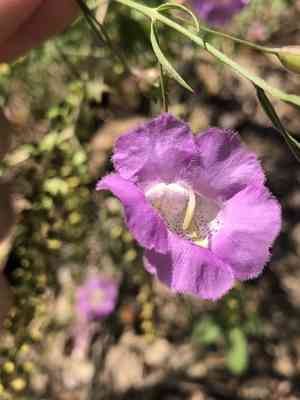
Quickly Identify Stiffleaf false foxglove
1
Look for its narrow, linear leaves that are sharply pointed. The flowers are tubular and pink in color, typically blooming late summer to early fall.
Scientific Classification of Stiffleaf false foxglove
Phylum
Vascular plants
Class
Dicotyledons
Order
Lamiales
Family
Broomrape
Genus
False foxgloves
Species
Stiffleaf false foxglove
Planting and Growing of Stiffleaf false foxglove
Care Difficulty
Hard
Watering Schedule
Every 2 days
Sunlight Requirements
Full sun
Sunshine Duration
4-8 hours
Ideal Temperature
60-75℉
Soil Type
Potting Mix, Peat Mix
Soil pH
6.5-7.5
Fertilizer Type
Balanced
Pruning Season
Spring, Summer
Pruning Area
Branches, Leaves
Pruning Frequency
2 times a year
Repotting Season
Spring
Pot Type
Plastic, Ceramic
 How to Water Stiffleaf false foxglove?
Agalinis strictifolia needs careful watering to mimic its natural habitat. Water until the soil is evenly moist but not soggy. Use around 200 ml every time, ensuring the soil has good drainage to avoid waterlogging.
What are the symptoms of an underwatered Stiffleaf false foxglove?
›
What should I do if my Stiffleaf false foxglove is not getting enough water?
›
What are the symptoms of an overwatered Stiffleaf false foxglove?
›
How to save an overwatered Stiffleaf false foxglove?
›
 What Are the Sunlight Requirements for Stiffleaf false foxglove?
Agalinis strictifolia prefers a full sun to partial sun environment for optimal growth. Ideal lighting ensures vibrant foliage, abundant flowering, and robust health, crucial for its natural habitat adaptation.
What are the best lighting conditions for Agalinis strictifolia?
›
How can you ensure these lighting conditions?
›
What benefits does Agalinis strictifolia gain from ideal lighting?
›
 What Is the Ideal Temperature Range for Stiffleaf false foxglove?
The ideal temperature range for cultivating Agalinis strictifolia lies between 60°F and 75°F. This range supports robust growth and flowering. Within this temperature band, plants are able to carry out photosynthesis effectively and maintain balanced growth patterns. Proper temperature regulation within this ideal range ensures that the plant's physiological processes function optimally, contributing to healthy development.
 What Soil is Best for Stiffleaf false foxglove?
Agalinis strictifolia thrives in well-draining soils, which prevent root rot and ensure the plant gets adequate oxygen. This type of soil facilitates proper water management, crucial for its survival in different weather conditions. The plant benefits from nutrient-rich soil, which supports its growth and flowering potential. Availability of essential nutrients like nitrogen and phosphorus enhances its overall health and resilience. Agalinis strictifolia favors soil that has moderate moisture retention, ensuring the plant remains hydrated without becoming waterlogged. This balance is vital for maintaining the plant's vigor and preventing stress.
 How to Fertilize Stiffleaf false foxglove?
For Agalinis strictifolia, it's important to use a balanced fertilizer at a quarter strength of the recommended dosage for general purpose plants. This ensures that the plant gets sufficient nutrients without overwhelming its delicate root system. Apply approximately 1 teaspoon of liquid fertilizer diluted in 1 gallon of water, distributed evenly across the soil around the root zone.
 How to Prune Stiffleaf false foxglove?
Begin by inspecting the plant for any dead or damaged stems and leaves, removing them carefully with sterilized pruning shears. Next, identify branches that are overgrown or crossing each other; these should be trimmed back to improve air circulation. Focus on shaping the plant by removing excess growth that disrupts its natural form. Make your cuts just above a leaf node to stimulate new growth, and remove no more than a third of the plant's total volume in one session.
More About Pruning Techniques→
 How to Propagate Stiffleaf false foxglove plant?
1
To propagate from seed, first collect mature seeds from an established Agalinis strictifolia plant. Ensure the seeds are dry and show no signs of damage or disease, which could impact germination.
2
Select a healthy stem and make a clean cut from the plant using pruning shears. Ensure the cutting is around 4-6 inches in length and has at least a few leaves to support initial growth processes.
3
Fill the seed tray with a well-draining soil mix and plant the seeds at a shallow depth, not more than twice their size. Keep the soil moist but not waterlogged to encourage germination.
 How to Repot Stiffleaf false foxglove plant?
1
Agalinis strictifolia requires repotting when you notice roots protruding from drainage holes or the plant seems stunted. The ideal time to repot is during early spring or autumn when the plant is not in active bloom, minimizing shock.
2
Select a pot only slightly larger than the current one, ensuring it has adequate drainage holes. This prevents waterlogging, which could lead to root rot. A proper-sized pot encourages healthy root growth without isolating the roots in a large mass of soil.
3
Opt for a well-draining potting mix with a mix of organic matter. This type of soil allows roots to breathe and provides the necessary nutrients, while also preventing water retention that might hamper plant health.
Toxicity
Not applicable
WARNING
The judgment on toxicity and danger is for reference only. We DO NOT GUARANTEE any accuracy of such judgment. Therefore, you SHALL NOT rely on such judgment. It is IMPORTANT TO SEEK PROFESSIONAL ADVICE in advance when necessary.



