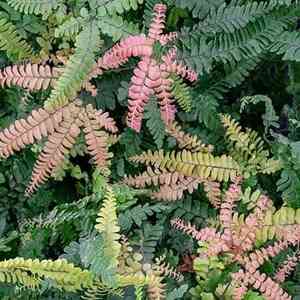
Rough maidenhair fern (Adiantum hispidulum)
Also known as: Five-finger maidenhair, Five-fingered jack, Common maidenhair
The Rough maidenhair fern (Adiantum hispidulum) is widely favored as an ornamental garden plant. The term "hispidulum" comes from the Latin word "hispis," which means "minutely hairy." Another common name for this fern is "Five-fingered Jack," although the plant can sometimes have more than five fronds.
In This Article
Attributes of Rough maidenhair fern
Lifespan
Perennial
Plant Type
Fern
Plant Height
40 cm
Spread
30 cm to 90 cm
Leaf Color
Green Bronze
Flower Size
N/A
Flower Color
N/A
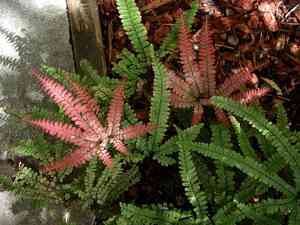
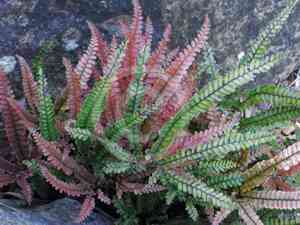
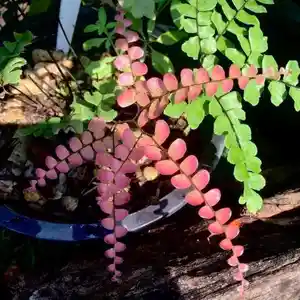
Images of Rough maidenhair fern
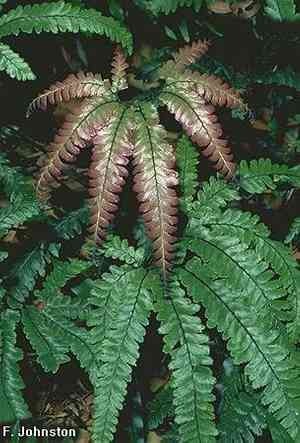
Quickly Identify Rough maidenhair fern
1
To identify Adiantum hispidulum, look for fronds that are roughly textured with hair-like structures. The leaflets are often arranged in a palmate fashion and have a dark central stalk. The new growth can have a distinct pink to reddish tinge.
Scientific Classification of Rough maidenhair fern
Phylum
Vascular plants
Class
Ferns
Order
Polypodiales
Family
Brake
Genus
Maidenhair ferns
Species
Rough maidenhair fern
Planting and Growing of Rough maidenhair fern
Care Difficulty
Hard
Watering Schedule
Every 3 days
Sunlight Requirements
Partial sun
Sunshine Duration
6-10 hours
Ideal Temperature
60-75℉
Soil Type
Potting Mix, Peat Mix
Soil pH
5.5-7
Fertilizer Type
Balanced
Pruning Season
Spring, Summer
Pruning Area
Branches, Leaves
Pruning Frequency
2 times a year
Repotting Season
Spring
Pot Type
Ceramic, Plastic
 How to Water Rough maidenhair fern?
For Adiantum hispidulum, it is essential to keep the soil consistently moist without making it soggy. Typically, watering around 200 milliliters each time is a good amount to ensure moisture penetrates the roots effectively. Avoid letting the soil dry out completely.
What are the symptoms of an underwatered Rough maidenhair fern?
›
What should I do if my Rough maidenhair fern is not getting enough water?
›
What are the symptoms of an overwatered Rough maidenhair fern?
›
How to save an overwatered Rough maidenhair fern?
›
 What Are the Sunlight Requirements for Rough maidenhair fern?
Partial sun to full shade is ideal, promoting robust growth and maintaining health. Proper lighting ensures resilience in Adiantum hispidulum, fostering lush greenery and minimizing stress-induced issues.
More About Sunlight Requirements Techniques→
How much light does Adiantum hispidulum need?
›
What are ways to achieve ideal lighting?
›
What benefits arise from ideal lighting?
›
 What Is the Ideal Temperature Range for Rough maidenhair fern?
For optimal growth, Adiantum hispidulum thrives in temperatures ranging from 60°F to 75°F. This range facilitates the best physiological functions, ensuring healthy frond growth and robust structural development.
 What Soil is Best for Rough maidenhair fern?
Adiantum hispidulum thrives in well-draining soil that allows excess moisture to escape easily. This is essential to prevent root rot, a common problem in overly wet conditions. Loamy soil with excellent drainage helps maintain the right moisture balance. The plant prefers a slightly acidic to neutral pH, ideally between 5.5 and 7.0. This range aids in optimal nutrient absorption, crucial for vibrant frond growth and overall plant health. Incorporating organic matter such as leaf mold or compost into the soil enhances its fertility. This amendment provides necessary nutrients and maintains adequate humidity levels, fostering lush foliage development.
 How to Fertilize Rough maidenhair fern?
For Adiantum hispidulum, apply a balanced liquid fertilizer at half the recommended strength once every two weeks during the growing season, generally spring through late summer.
 How to Prune Rough maidenhair fern?
Prune your Adiantum hispidulum during its growth seasons, namely spring, summer, and early autumn. Avoid pruning in the winter when the plant might be dormant, as this can lead to shock or reduced growth in the following season. Pay close attention to the health of your fern prior to pruning. Check for signs of pest infestation or disease, such as discoloration or spots on the fronds. It's important to address any health issues before pruning to prevent spreading pests or diseases to other parts of the plant. Adiantum hispidulum is a delicate plant, so handle it gently. While removing fronds, ensure not to disrupt or damage nearby leaves or stems. Minimizing disturbance helps the plant recover quickly from pruning and continue thriving.
More About Pruning Techniques→
 How to Propagate Rough maidenhair fern plant?
1
Begin by thoroughly watering the Adiantum hispidulum a day before division to reduce transplant shock. This also helps in loosening the soil around the roots for easier division.
2
Carefully remove the plant from its pot and gently shake off excess soil to expose the root system. Using a sharp knife, divide the root ball into smaller sections, ensuring each section has a healthy frond and sufficient root system.
3
Place the divided sections into individual pots filled with slightly moistened potting soil. Firm the soil around the roots and water lightly to settle the soil around the root system.
 How to Repot Rough maidenhair fern plant?
1
Adiantum hispidulum typically requires repotting when its roots begin to outgrow the current pot, peeking through the drainage holes, or when the growth rate reduces noticeably. Early spring is ideal, before the onset of new growth.
2
Select a pot that's just one size larger than the current one to avoid excessive moisture retention. Ensure it has drainage holes to prevent waterlogging, which could harm the sensitive roots of the Adiantum.
3
Opt for a well-draining, loamy soil mix enriched with organic matter. This type of soil provides the necessary nutrients while ensuring adequate drainage, keeping the roots healthy and preventing root rot.



