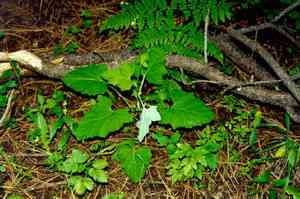
American trail plant (Adenocaulon bicolor)
Also known as: Pathfinder
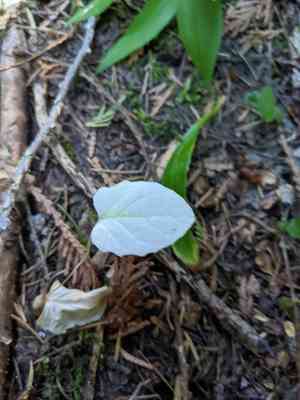
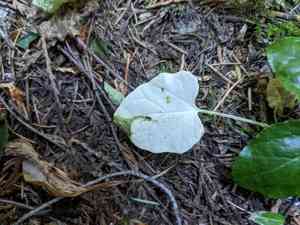
The American trail plant has green leaves on top and silvery-gray undersides. This characteristic made it valuable for trackers of convicts or lost individuals in the past. When the leaves were disturbed, their silvery undersides became visible, helping to reveal a person's path and thus earning the plant its name.
In This Article
Attributes of American trail plant
Lifespan
Perennial
Plant Type
Herb
Plant Height
8 cm to 1.02 m
Spread
N/A
Leaf Color
Green (upper side) and white (under side)
Flower Size
2.5 cm
Flower Color
White
Images of American trail plant
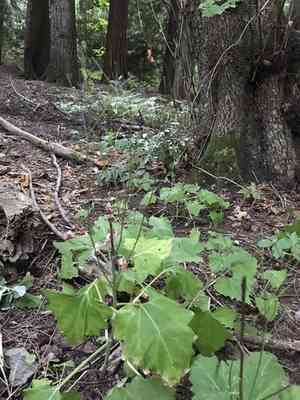
Quickly Identify American trail plant
1
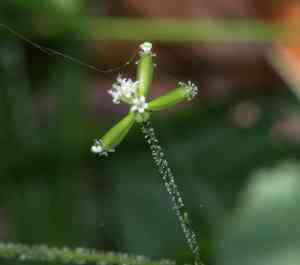
Look for a plant with bi-colored leaves: green on the upper side and white on the underside. The stems are usually hairy and the flowers are tiny and white, grouped in small clusters.
Scientific Classification of American trail plant
Phylum
Vascular plants
Class
Dicotyledons
Order
Asterales
Family
Daisy
Genus
Trailplants
Species
American trail plant
Planting and Growing of American trail plant
Care Difficulty
Easy
Watering Schedule
Every 2 days
Sunlight Requirements
Partial sun
Sunshine Duration
4-8 hours
Ideal Temperature
60-75℉
Soil Type
Potting Mix, Peat Mix
Soil pH
6.5-7.5
Fertilizer Type
Balanced
Pruning Season
Spring, Summer
Pruning Area
Branches, Leaves
Pruning Frequency
2 times a year
Repotting Season
Spring
Pot Type
Plastic, Ceramic
 How to Water American trail plant?
Adenocaulon bicolor requires moderate watering. Ensure the soil is moist but not waterlogged. Aim to pour approximately 250 ml of water each time, allowing the excess to drain out of the pot's bottom. Water deeply enough to penetrate the root zone, which encourages healthy root growth while ensuring excess water is excluded.
What are the symptoms of an underwatered American trail plant?
›
What should I do if my American trail plant is not getting enough water?
›
What are the symptoms of an overwatered American trail plant?
›
How to save an overwatered American trail plant?
›
 What Are the Sunlight Requirements for American trail plant?
Partial sun to full shade is ideal, aiding in the prevention of stress-related issues and promoting a balanced growth environment for Adenocaulon bicolor.
More About Sunlight Requirements Techniques→
What is the ideal lighting setup for Adenocaulon bicolor?
›
How can I ensure Adenocaulon bicolor gets its ideal light?
›
What are the benefits of ideal lighting for Adenocaulon bicolor?
›
 What Is the Ideal Temperature Range for American trail plant?
Adenocaulon bicolor thrives best when maintained within a temperature range of 60 to 75°F. This range provides the plant with optimal conditions for growth and health, as it mimics the mild climates typical of its native habitat. Consistent temperatures within this range can also help to ensure robust flowering and seed production. Outside of this ideal range, the plant may experience stress, influencing its overall vigor and vitality.
 What Soil is Best for American trail plant?
Adenocaulon bicolor requires well-draining soil to prevent waterlogging that could harm its roots. Proper drainage ensures healthy root growth and reduces the risk of root rot. Soils with moderate nutrient levels are ideal for Adenocaulon bicolor, as they support steady growth without excessive fertilizer. This balance helps maintain the plant’s natural vigor. The plant thrives in soils that retain consistent moisture without getting too dry or soggy. This moisture balance supports the plant's overall health by preventing drought stress.
 How to Fertilize American trail plant?
For Adenocaulon bicolor, a balanced approach with fertilizer is crucial. Utilize a diluted liquid fertilizer, mixing it to half the recommended strength. This ensures that nutrients are delivered without overwhelming the plant's root system. Overfertilization can lead to salt build-up in the soil, which is detrimental.
 How to Prune American trail plant?
Begin by identifying and removing any dead or diseased stems. This helps direct the plant's energy to healthier parts and prevents the spread of disease. Prune the plant to maintain its desired shape and size. Make cuts just above a leaf node to encourage new growth. Pay attention to airflow and sunlight penetration.
More About Pruning Techniques→
 How to Propagate American trail plant plant?
1
Start by collecting seeds from mature Adenocaulon bicolor plants. Clean and dry the seeds before sowing them in a pre-filled seed tray with a suitable substrate.
2
Sow the prepared seeds on the surface of the substrate in the seed tray. Cover them lightly with soil and provide sufficient moisture to ensure germination.
3
During spring, carefully dig up a mature Adenocaulon bicolor plant. Use a sharp knife to divide the plant into sections, ensuring each section has healthy roots.
 How to Repot American trail plant plant?
1
Adenocaulon bicolor should be repotted when you notice its growth has slowed, roots emerging from drainage holes, or soil drying too quickly. These signals indicate it's time to provide extra room and fresh nutrients, crucial for its health.
2
Select a pot that's 1-2 inches larger in diameter than the current one. The pot should offer good drainage, with holes at the bottom to prevent root rot while ensuring the plant has ample space to grow, promoting robust root development.
3
Opt for a well-draining loamy soil mixture. This soil type retains necessary moisture while preventing waterlogging, offering a balance that's ideal for Adenocaulon bicolor's root health, thus promoting optimal growth conditions.
Learn More About American trail plant Diseases
Anthracnose
Bacterial Leaf Spot
Bacterial Soft Rot
Bacterial Wilt
Black Spot
Chemical Injury
Crown Gall
Cyst Nematode
Damping-off
Downy Mildew
Drought Stress
Fusarium Wilt
Gray Mold
Leaf Curl
Leaf Spot
Mosaic
Nutrient Deficiency
Nutrient Toxicity
Powdery Mildew
Root Rot
Root-knot Nematode
Rusts
Sooty Mold
Spider Mites
Temperature Stress
Thrips Damage
White Mold



