
Everglades palm (Acoelorrhaphe wrightii)
Also known as: Paurotis palm
The Everglades palm, often used in decorative landscaping, is scientifically named Acoelorrhaphe wrightii in honor of American botanist Charles Wright. While it was once widespread, commercial exploitation significantly reduced its numbers. However, ongoing conservation efforts in Florida are helping to restore its population.
In This Article
Attributes of Everglades palm
Lifespan
Perennial
Plant Type
Tree, Shrub
Plant Height
9 m
Spread
5 cm to 8 cm
Leaf Color
Green
Flower Size
2.5 cm
Flower Color
White Yellow Green Cream Gray
Images of Everglades palm
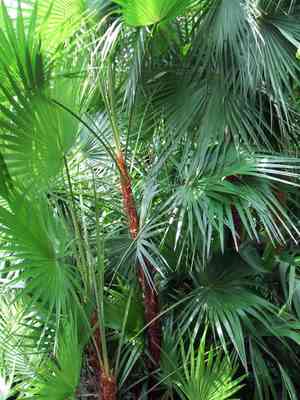
Quickly Identify Everglades palm
1
Identify Acoelorrhaphe wrightii by its multiple, slender, grey trunks and its fan-shaped, green leaves with white undersides. Look for its clusters of small, creamy-white flowers and orange to black fruit.
Scientific Classification of Everglades palm
Phylum
Vascular plants
Class
Monocotyledons
Order
Arecales
Family
Palm
Genus
Acoelorrhaphe
Species
Everglades palm
Planting and Growing of Everglades palm
Care Difficulty
Easy
Watering Schedule
Every 6 days
Sunlight Requirements
Full sun
Sunshine Duration
6-10 hours
Ideal Temperature
65-85℉
Soil Type
Potting Mix, Peat Mix
Soil pH
6.5-7.5
Fertilizer Type
Balanced
Pruning Season
Spring, Summer
Pruning Area
Branches, Leaves
Pruning Frequency
2 times a year
Repotting Season
Spring
Pot Type
Plastic, Ceramic
 How to Water Everglades palm?
Acoelorrhaphe wrightii, also known as Paurotis palm, loves moisture. Each watering session should aim to thoroughly soak the soil until water drains out of the bottom of the pot. This ensures the deep roots receive enough moisture to thrive.
What are the symptoms of an underwatered Everglades palm?
›
What should I do if my Everglades palm is not getting enough water?
›
What are the symptoms of an overwatered Everglades palm?
›
How to save an overwatered Everglades palm?
›
 What Are the Sunlight Requirements for Everglades palm?
This plant prefers full to partial sun, meaning it needs about 4 to 6 hours of direct or indirect sunlight. Ideal lighting enhances photosynthesis, ensuring vitality and robust growth for Acoelorrhaphe wrightii.
More About Sunlight Requirements Techniques→
What is the ideal light condition for Acoelorrhaphe wrightii?
›
How to achieve ideal lighting for Acoelorrhaphe wrightii?
›
What are the benefits of providing ideal lighting for Acoelorrhaphe wrightii?
›
 What Is the Ideal Temperature Range for Everglades palm?
Acoelorrhaphe wrightii ideally thrives in temperatures ranging from 65°F to 85°F. This range supports its photosynthesis process and overall growth by simulating its natural habitat in subtropical and tropical regions. For best results, maintaining a consistent temperature within this range is recommended.
 What Soil is Best for Everglades palm?
Acoelorrhaphe wrightii thrives in well-draining soil. Good drainage prevents waterlogging, which can lead to root rot, ensuring the plant receives adequate oxygen and nutrients. The soil should be rich in organic matter. This ensures the palm receives necessary nutrients for robust growth and maintains good foliage color, enhancing overall plant health. While drainage is key, the soil should also be capable of retaining necessary moisture. This balance supports consistent hydration without drowning the plant, important for tropical palms.
 How to Fertilize Everglades palm?
When fertilizing Acoelorrhaphe wrightii, use a balanced fertilizer with a ratio of 10-10-10 or 20-20-20. For potted plants, apply about 1 teaspoon per gallon of soil during the growing season. In-ground plants can benefit from a similar proportion, adjusting based on soil test results.
 How to Prune Everglades palm?
Begin by inspecting the palm for brown, withered fronds, which indicate dead foliage. These are typically found on the lower sections of the plant. By identifying and removing these, you help prevent disease spread and open up the palm for new growth. Use a sharp pair of pruning shears or loppers suited for the size of the frond. Ensure the tools are clean and sterile to prevent disease transmission. It's crucial to make clean cuts to avoid damaging the plant's trunk and other live fronds. Position your shears at an angle where the frond meets the trunk, just above the base. Make sure to cut as close to the trunk as possible without injuring it. Avoid cutting too many green fronds, as they are vital for photosynthesis and the overall health of the palm.
More About Pruning Techniques→
 How to Propagate Everglades palm plant?
1
Begin by filling seed trays with well-draining soil. Sow the seeds about half an inch deep, spacing them adequately. Water the seeds gently and cover them with a plastic dome to create a humid environment for germination.
2
Carefully remove the parent plant from its pot or ground. Use a knife or spade to divide the root ball into sections. Each section should have a healthy root system and a few stems. Replant them promptly to reduce stress on the plants.
3
Make sure that both seed trays and pots for division have excellent drainage. This prevents water from accumulating at the bottom and causing root rot, which can be detrimental to young plants.
 How to Repot Everglades palm plant?
1
Repot your Acoelorrhaphe wrightii when you notice roots emerging from the drainage holes or when the growth noticeably slows down. Another indicator is when the plant visibly struggles to retain water, showing signs like wilting or yellowing leaves. These signals suggest that the plant is outgrowing its current pot, and repotting will provide it with more space and fresh nutrients.
2
Select a pot that is 1-2 inches larger in diameter than the current one. This increment allows for gradual growth, preventing waterlogging while still giving the roots room to expand. Ensure the pot has adequate drainage holes to avoid water stagnation, which can lead to root rot. Using a slightly larger pot helps stabilize the plant and encourages optimal root health, promoting lush growth.
3
Opt for a well-draining sandy soil mix, as it mimics the plant's native environment. This type of soil provides excellent drainage, preventing water accumulation and root rot. A good mix typically includes a combination of sand, perlite, and peat moss. Using the right soil not only meets the palm's moisture needs but also supports its growth by allowing roots to breathe and absorb nutrients efficiently.



