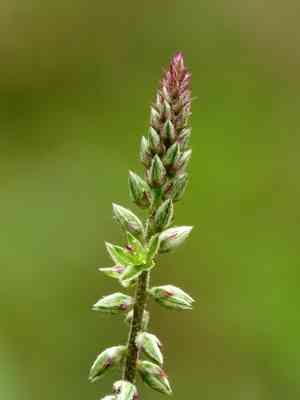
Prickly chaff flower (Achyranthes aspera)
Also known as: Man Better Man, Rough Chaff-Flower, Devil's horsewhip, Rough chaff herb
The prickly chaff flower, which commonly grows in wasteland areas globally, is valued in India for its seeds and leaves in religious rituals. According to the Samaranga Sutradhara, a Sanskrit text on art and architecture, this plant is also highly regarded as a superior ingredient for wall plaster.
In This Article
Attributes of Prickly chaff flower
Lifespan
Perennial, Annual
Plant Type
Herb
Plant Height
20 cm to 1.2 m
Spread
Approximately 0.5 meters
Leaf Color
Green
Flower Size
2 mm to 3 mm
Flower Color
Yellow Green Purple
Images of Prickly chaff flower
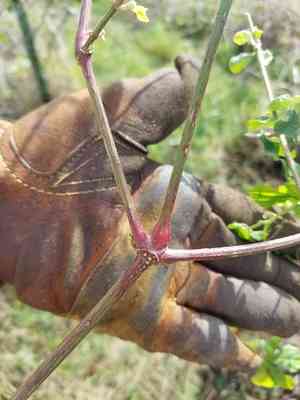
Quickly Identify Prickly chaff flower
1
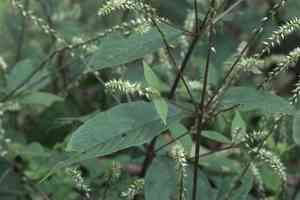
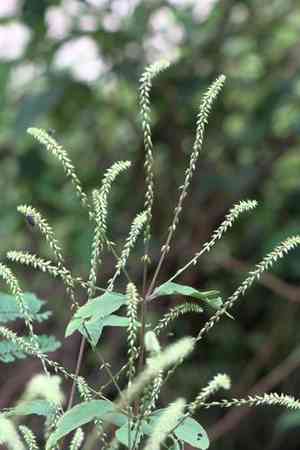
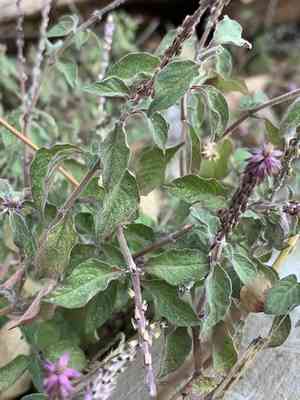
Achyranthes aspera can be identified by its erect, woody, and branched stem with a rough texture. The leaves are opposite, simple, and have a long petiole. The flowers are small, greenish-white, and arranged in spikes. The plant also features sharp thorns at the base of the flowers.
Scientific Classification of Prickly chaff flower
Phylum
Vascular plants
Class
Dicotyledons
Order
Caryophyllales
Family
Amaranth
Genus
Chaff flowers
Species
Prickly chaff flower
Planting and Growing of Prickly chaff flower
Care Difficulty
Moderate
Watering Schedule
Every 2 days
Sunlight Requirements
Full sun
Sunshine Duration
6-10 hours
Ideal Temperature
68-86℉
Soil Type
Potting Mix, Peat Mix
Soil pH
6.5-7.5
Fertilizer Type
Balanced
Pruning Season
Spring, Summer
Pruning Area
Branches, Leaves
Pruning Frequency
2 times a year
Repotting Season
Spring
Pot Type
Plastic, Ceramic
 How to Water Prickly chaff flower?
Achyranthes aspera requires watering such that the soil remains evenly moist, ensuring that the water reaches a depth of at least 5-7 cm. This ensures the roots receive the necessary moisture without becoming waterlogged.
What are the symptoms of an underwatered Prickly chaff flower?
›
What should I do if my Prickly chaff flower is not getting enough water?
›
What are the symptoms of an overwatered Prickly chaff flower?
›
How to save an overwatered Prickly chaff flower?
›
 What Are the Sunlight Requirements for Prickly chaff flower?
Achyranthes aspera thrives best in full sun to partial sun conditions. Consistent, adequate light helps in achieving vigorous growth, robust foliage, and better flowering prospects.
More About Sunlight Requirements Techniques→
What is the ideal sunlight for Achyranthes aspera?
›
How can I provide ideal lighting for this plant?
›
What benefits does ideal lighting provide?
›
 What Is the Ideal Temperature Range for Prickly chaff flower?
Achyranthes aspera thrives ideally between 68°F and 86°F. Within this range, the plant's metabolic processes, including photosynthesis and nutrient uptake, are optimized, leading to robust growth and resilience against diseases.
 What Soil is Best for Prickly chaff flower?
Achyranthes aspera thrives in well-drained soil. This is crucial as it prevents waterlogging, which can lead to root rot. By ensuring good drainage, roots can access both water and air, helping the plant to grow robustly. This plant prefers soil with moderate fertility. Overly rich soil can result in excessive foliage at the expense of flower and seed production, crucial for its reproduction and survival strategies. Achyranthes aspera can tolerate a neutral to slightly alkaline pH, which helps it absorb nutrients effectively. This range also supports beneficial soil microorganisms that contribute to plant health.
 How to Fertilize Prickly chaff flower?
The Achyranthes aspera thrives on a balanced supply of nutrients, requiring moderate fertilization to support its growth and vibrancy. Recommended liquid fertilizers should be diluted to half of the strength advised on the product label. Solid slow-release fertilizers need to be applied at a rate of 1 tablespoon per square foot, ensuring even distribution around the plant's base.
 How to Prune Prickly chaff flower?
Start by identifying older, woody stems and any damaged or diseased foliage. These should be the first to be removed to rejuvenate the plant and redirect its energy towards new growth. Perform cuts just above a node or a leaf set to encourage lateral growth. This technique helps fill in any gaps in the plant, making it look fuller.
 How to Propagate Prickly chaff flower plant?
1
Fill your seed tray with the potting mix, leaving a small gap at the top. Gently pat down the soil, then evenly spread the Achyranthes aspera seeds across the surface. Cover lightly with a thin layer of soil, approximately the thickness of the seed.
2
After sowing the seeds, gently water the soil using a fine mist spray to avoid washing the seeds away or burying them too deeply. Ensure that the soil remains consistently moist but not waterlogged throughout the germination period.
3
Place the tray in a warm environment with temperatures around 20-25°C (68-77°F). Using a heat mat can accelerate germination if you are sowing in cooler months. Monitor daily to ensure warmth and humidity levels are maintained.
 How to Repot Prickly chaff flower plant?
1
Repot Achyranthes aspera when you notice the roots are peeking through the drainage holes, or the growth has visibly slowed down, suggesting it needs more space for expansion.
2
Select a pot that's 1-2 inches larger in diameter than the current one. Ensure it has adequate drainage holes to prevent waterlogging, which promotes root rot.
3
Opt for a well-draining sandy soil mix that mimics the plant's natural habitat. This type of soil prevents root rot and supports optimal growth and health.
Toxicity
Ingestion, Skin Contact
WARNING
The judgment on toxicity and danger is for reference only. We DO NOT GUARANTEE any accuracy of such judgment. Therefore, you SHALL NOT rely on such judgment. It is IMPORTANT TO SEEK PROFESSIONAL ADVICE in advance when necessary.
Learn More About Prickly chaff flower Diseases
Anthracnose
Bacterial Leaf Spot
Bacterial Soft Rot
Bacterial Wilt
Black Spot
Chemical Injury
Cyst Nematode
Damping-off
Downy Mildew
Drought Stress
Fusarium Wilt
Gray Mold
Leaf Curl
Leaf Spot
Mosaic
Nutrient Deficiency
Nutrient Toxicity
Powdery Mildew
Root Rot
Root-knot Nematode
Rusts
Sooty Mold
Spider Mites
Temperature Stress
Thrips Damage
White Mold



