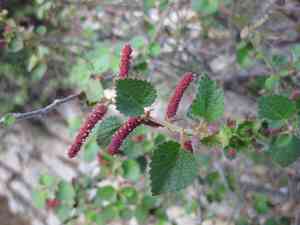
California copperleaf (Acalypha californica)
Also known as: California copperleaf
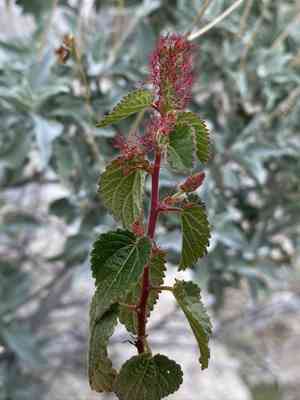
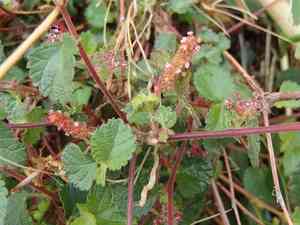
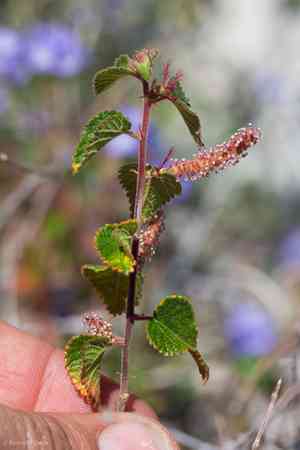
The California copperleaf (Acalypha californica) is a resilient perennial shrub well-suited to arid environments. It is native to the chaparral and desert areas of the southwestern United States, particularly California. This plant is distinguished by its slender, reddish stems and oval to lance-shaped leaves with serrated edges and a characteristic coppery hue. It features small, greenish flowers that form in clusters along the stems. Typically, the California copperleaf grows low to the ground, creating dense clusters that serve as cover for local wildlife.
In This Article
Attributes of California copperleaf
Lifespan
Perennial
Plant Type
Shrub
Plant Height
30 cm to 91 cm
Spread
20-40 cm
Leaf Color
Green with red tinges
Flower Size
Less than 1 cm
Flower Color
Red to pink
Images of California copperleaf
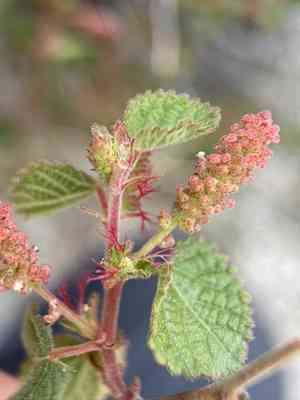
Quickly Identify California copperleaf
1
The plant can be identified by its red-tinged leaves, small clustered flowers, and its preference for rocky, arid habitats.
Scientific Classification of California copperleaf
Phylum
Vascular plants
Class
Dicotyledons
Order
Malpighiales
Family
Spurge
Genus
Copperleafs
Species
California copperleaf
Planting and Growing of California copperleaf
Care Difficulty
Moderate
Watering Schedule
Every 2 days
Sunlight Requirements
Partial sun
Sunshine Duration
4-8 hours
Ideal Temperature
60-75℉
Soil Type
Potting Mix, Peat Mix
Soil pH
6.5-7.5
Fertilizer Type
Balanced
Pruning Season
Spring, Summer
Pruning Area
Branches, Leaves
Pruning Frequency
2 times a year
Repotting Season
Spring
Pot Type
Plastic, Ceramic
 How to Water California copperleaf?
Acalypha californica, also known as California copperleaf, requires a watering amount that allows the soil to be moist but not waterlogged. Each watering session should deliver around 250 ml of water, ensuring the top inch of the soil is damp but well-drained. The key is to maintain consistent moisture without oversaturating the roots, which can be detrimental to the plant's health.
What are the symptoms of an underwatered California copperleaf?
›
What should I do if my California copperleaf is not getting enough water?
›
What are the symptoms of an overwatered California copperleaf?
›
How to save an overwatered California copperleaf?
›
 What Are the Sunlight Requirements for California copperleaf?
Partial sunlight ensures optimal growth for Acalypha californica by balancing light absorption with minimized risk of leaf burn. This leads to healthier foliage and vibrant blooms.
What is the ideal sun exposure for Acalypha californica?
›
How can I ensure my Acalypha californica gets partial sun?
›
What benefits does Acalypha californica receive from ideal lighting?
›
 What Is the Ideal Temperature Range for California copperleaf?
The ideal temperature range for Acalypha californica, commonly known as the California Copperleaf, is between 60°F and 75°F. This subtropical plant thrives in warmer climates and grows best when the environmental conditions closely mimic its native habitat. The temperatures within this range support optimal photosynthesis and nutrient absorption, crucial for healthy growth and vibrant foliage.
 What Soil is Best for California copperleaf?
Acalypha californica thrives in well-draining soil that prevents water from stagnating around its roots. This condition helps avoid root rot and ensures the plant receives adequate oxygen, promoting healthy root development. The plant benefits from soil that is enriched with organic matter, which provides necessary nutrients for growth. Nutrient-rich soil supports robust foliage and vibrant flowering, resulting in a more visually appealing plant. Preferring pH levels between 6.5 and 7.5, this range allows Acalypha californica to effectively absorb essential nutrients, ensuring optimal growth and vitality.
 How to Fertilize California copperleaf?
For Acalypha californica, a moderate amount of fertilizer should suffice; it's best to use half the recommended strength indicated on most liquid fertilizers for general houseplants. Over-fertilizing can harm the plant's root system and overall growth.
 How to Prune California copperleaf?
Start by identifying dead or damaged branches. Use sharp pruning shears to make clean cuts, ideally at a 45-degree angle, just above a healthy node or bud. This encourages new growth. To shape your Acalypha californica, focus on maintaining an open structure. Thin out crowded branches to allow light penetration and airflow. This not only improves the plant’s health but also makes it aesthetically pleasing. In spring, concentrate on shaping and removing any winter damage. During summer and autumn, prioritize deadheading flowers to encourage further blooming. Light pruning in winter can help prepare your plant for the upcoming growth season.
More About Pruning Techniques→
 How to Propagate California copperleaf plant?
1
Select healthy, non-flowering stems approximately 4-6 inches long. Make the cut just below a node using clean pruning shears. It's important to choose stems free from any disease or pest infestation.
2
Prepare a seedbed using a mixture of potting soil and perlite for good drainage. Sow the seeds on the surface, and lightly cover them with soil. Ensure the seedbed is kept consistently moist.
3
Once seedlings have developed two or three sets of leaves, they are ready for transplanting. Carefully move them to individual pots, being gentle with roots to avoid damage.
 How to Repot California copperleaf plant?
1
Acalypha californica should be repotted when you notice roots growing out of the drainage holes. Another signal is stunted growth despite proper care. If the soil dries out too quickly after watering, it's time to repot. Repotting is best done in spring or summer when the plant is actively growing.
2
Select a pot that is one size larger than the current pot and ensures good drainage to prevent waterlogging. A slightly porous material like terracotta can promote better air circulation around the roots, providing benefits such as improved drainage and healthier root development.
3
Use a well-draining potting mix that retains enough moisture while allowing excess water to escape. A blend incorporating perlite or coarse sand is ideal. This soil helps prevent root rot by ensuring the plant does not sit in soggy conditions, promoting robust root health.
Learn More About California copperleaf Diseases
Anthracnose
Bacterial Leaf Spot
Bacterial Soft Rot
Bacterial Wilt
Black Spot
Chemical Injury
Crown Gall
Damping-off
Downy Mildew
Drought Stress
Fusarium Wilt
Gray Mold
Leaf Curl
Leaf Spot
Mosaic
Nutrient Deficiency
Nutrient Toxicity
Powdery Mildew
Root Rot
Root-knot Nematode
Rusts
Sooty Mold
Spider Mites
Temperature Stress
Thrips Damage
White Mold



