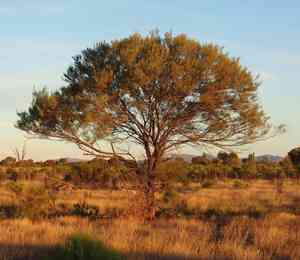
Mulga(Acacia aneura)

Mulga (Acacia aneura)

Also known as: Mulga acacia

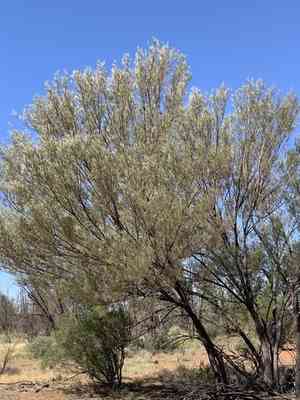
The Mulga tree (Acacia aneura) is well-suited to survive in arid regions. Key features include:

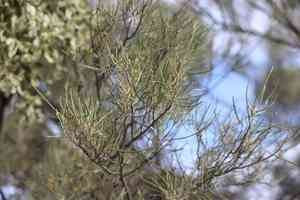
1. **Phyllodes:** Unlike typical leaves, it has thick, needle-like phyllodes that are grayish-green and waxy, reducing water loss.
2. **Roots:** Its deep and widespread root system helps it tap into underground water sources and quickly absorb surface moisture.
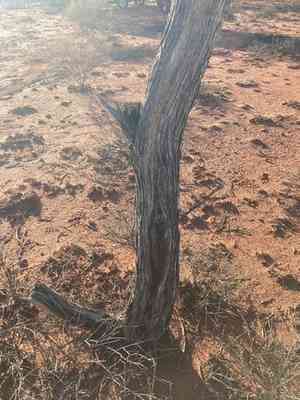
3. **Bark:** The tree's rough, thick bark offers protection from fire and further reduces water evaporation.
4. **Form:** It often grows as a shrub or small tree with a dense canopy, which provides shade and reduces soil moisture evaporation.
5. **Seeds:** Mulga seeds have a hard coating, enabling them to endure until the environment is suitable for growth.

These adaptations enable the Mulga to flourish in the challenging conditions of the Australian outback, offering vital habitat and nourishment for local wildlife.

Attributes of Mulga

Lifespan
Perennial
Plant Type
Tree
Plant Height
10 m
Spread
8 m
Leaf Color
Gray-green
Flower Size
1-1.5 centimeters
Flower Color
Yellow

ForwardPlant - Identify plants with a snap

Identify and diagnose plants, get toxicity alerts, and explore safety guides for all types of fungi.

Try for Free

Images of Mulga

Mulga(Acacia aneura)

Quickly Identify Mulga

1
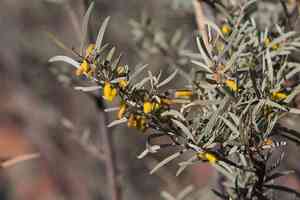
To identify Acacia aneura, look for its distinctive phyllodes, which are narrow and gray-green, and its yellow, fluffy, spherical flowers. The bark is rough and fissured.

Scientific Classification of Mulga

Phylum
Vascular plants
Class
Dicotyledons
Order
Fabales
Family
Legume
Genus
Acacias
Species
Mulga

Planting and Growing of Mulga

Care Difficulty
Moderate
Watering Schedule
Every 2 days
Sunlight Requirements
Full sun
Sunshine Duration
4-8 hours
Ideal Temperature
64-86℉
Soil Type
Potting Mix, Peat Mix
Soil pH
6.5-7.5
Fertilizer Type
Balanced
Pruning Season
Spring, Summer
Pruning Area
Branches, Leaves
Pruning Frequency
2 times a year
Repotting Season
Spring
Pot Type
Plastic, Ceramic

water icon How to Water Mulga?

For Acacia aneura, ensure you provide approximately 500 milliliters of water each time. The key is to soak the soil thoroughly until water slightly drains out from the bottom. This ensures that the root system receives adequate moisture.
What are the symptoms of an underwatered Mulga?
What should I do if my Mulga is not getting enough water?
What are the symptoms of an overwatered Mulga?
How to save an overwatered Mulga?

sunlight icon What Are the Sunlight Requirements for Mulga?

Sunlight Requirements: Full sun
Duration of light: 6 to 8 hours
Acacia aneura thrives best in full sun conditions, which is critical for maintaining its health and growth. Optimal light exposure enhances flowering and strengthens its resistance to environmental stress.
What are the ideal lighting conditions for Acacia aneura?
How can I provide ideal lighting for Acacia aneura?
What benefits does ideal lighting offer Acacia aneura?

temperature icon What Is the Ideal Temperature Range for Mulga?

Ideal Temperature: 64 ~ 86℉
Acacia aneura thrives best within a temperature range of 64°F to 86°F. This range supports optimal physiological processes, including photosynthesis and water uptake, promoting healthy growth and development. Maintaining this temperature range helps ensure the plant remains vigorous and resilient to environmental stressors.

soil icon What Soil is Best for Mulga?

Soil type: Sandy soil, Sandy loam, Loam
Soil PH: 6.5 ~ 7.5
Acacia aneura thrives in well-draining soils, a necessity to prevent waterlogging which can damage the roots. This quality helps the plant avoid root rot and provides the perfect environment for nutrient absorption. While Acacia aneura is adapted to poorer soils, a moderate amount of nutrients enhances its growth. Ensuring adequate nitrogen and phosphorus helps improve foliage and flowering vigor. The ideal soil mix for Acacia aneura includes a balance of sand and loam, providing stability and aeration. This composition ensures its roots can spread while minimizing the risk of overly compacted soil.

fertilize icon How to Fertilize Mulga?

Fertilizer type: Balanced
When fertilizing Acacia aneura, use about 50 grams of slow-release fertilizer per plant. For liquid fertilizers, mix at half the recommended rate on the package. This species is adapted to low-nutrient environments, so over-fertilization can be harmful.

prune icon How to Prune Mulga?

Pruning Time: Spring, Summer, Autumn
Acacia aneura does not require heavy pruning. Avoid cutting back more than a third of the plant’s foliage in one session. Over-pruning can stress the plant and lead to poor growth. Focus on maintaining the natural shape of the tree by selectively cutting out growth that disrupts its form. Pruning helps manage its size and mitigates potential damage from high winds by reducing excess bulk. More About Pruning Techniques

propagate icon How to Propagate Mulga plant?

Propagate Time: Spring, Early summer
1
Before sowing, Acacia aneura seeds should be soaked in hot water to simulate the natural conditions they need for germination. This process helps break the seed dormancy and can be done a day before planting.
2
After stratification, sow the seeds in trays filled with a well-draining soil mix. Cover lightly with soil and water gently. Keep the soil consistently moist but not waterlogged to encourage germination.
3
For cuttings, select healthy and semi-hardwood branches. Cut them into sections of about 10 cm and dip the cut end in rooting hormone. Plant the cuttings in a potting mix designed for cuttings and keep them in a humid environment.
More About Propagating Techniques

repot icon How to Repot Mulga plant?

Repotting frequency: Every 2-3 years
1
Acacia aneura usually requires repotting when its roots start outgrowing the current pot. Look for roots emerging from the drainage holes or visibly circling around the root ball. These are sure signs it's time for a larger home. The ideal repotting time is in spring or early summer, when the plant is active and can recover quickly.
2
Select a pot that is slightly larger than the current one, with ample drainage holes to prevent waterlogging. The material of the pot should also allow some breathability; unglazed clay pots are excellent. A well-suited pot helps prevent root rot and offers the plant room to expand, encouraging healthy growth.
3
Opt for a cactus mix or a sandy, well-draining soil to ensure proper aeration and avoid soggy roots. A soil mixture with added perlite or sand will enhance drainage quality. This type of soil mimics the Acacia's natural environment, helps prevent overwatering issues, and promotes vigorous root development.

ForwardPlant - Identify plants with a snap

Find the best spots for them to optimize their health, simply using your phone.

Try for Free