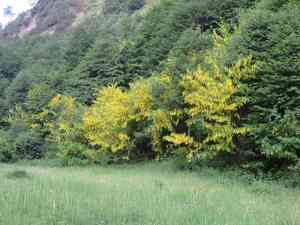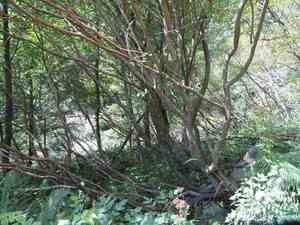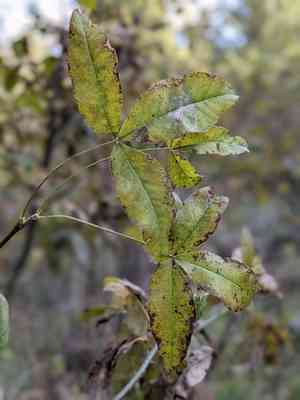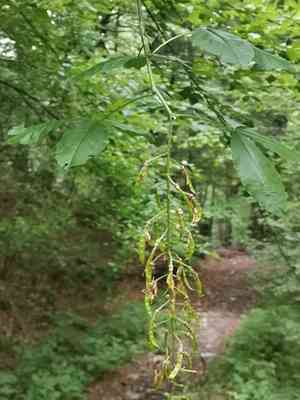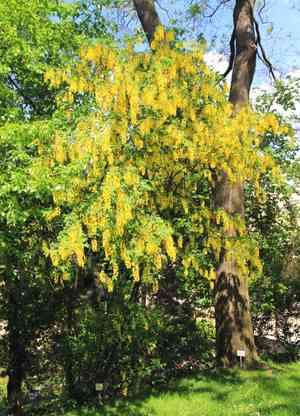
Scotch laburnum(Laburnum alpinum)

Scotch laburnum (Laburnum alpinum)

Also known as: Scottish laburnum

Planting Scotch laburnum (Laburnum alpinum) in a garden provides numerous advantages:

1. **Visual Beauty**: The tree showcases graceful, hanging clusters of bright yellow flowers in late spring, enhancing the garden's visual appeal.
2. **Wildlife Attraction**: Its blossoms attract bees and other pollinators, fostering biodiversity.
3. **Ease of Care**: This tree is low-maintenance and adaptable to various soil conditions.
4. **Shade and Screening**: The dense foliage offers ample shade and can serve as a natural privacy barrier.
5. **Soil Enrichment**: It has a beneficial relationship with soil bacteria that fix nitrogen, improving soil fertility for itself and neighboring plants.

Remember, all parts of this plant are toxic if ingested, so caution is needed.

Attributes of Scotch laburnum

Lifespan
Perennial
Plant Type
Tree
Plant Height
5 m
Spread
6 m
Leaf Color
Green
Flower Size
2.5 cm to 5 cm
Flower Color
Yellow

ForwardPlant - Identify plants with a snap

Identify and diagnose plants, get toxicity alerts, and explore safety guides for all types of fungi.

Try for Free

Images of Scotch laburnum

Scotch laburnum(Laburnum alpinum)

Quickly Identify Scotch laburnum

1
To identify Laburnum alpinum, look for its long, pendulous racemes of bright yellow flowers that bloom in late spring. Additionally, it has trifoliate leaves and smooth bark, which can help differentiate it from other similar species.

Scientific Classification of Scotch laburnum

Phylum
Vascular plants
Class
Dicotyledons
Order
Fabales
Family
Legume
Genus
Golden chain tree
Species
Scotch laburnum

Planting and Growing of Scotch laburnum

Care Difficulty
Easy
Watering Schedule
Every 3 days
Sunlight Requirements
Full sun
Sunshine Duration
4-8 hours
Ideal Temperature
55-75℉
Soil Type
Potting Mix, Peat Mix
Soil pH
6.5-7.5
Fertilizer Type
Balanced
Pruning Season
Spring, Summer
Pruning Area
Branches, Leaves
Pruning Frequency
2 times a year
Repotting Season
Spring
Pot Type
Terracotta, Plastic

water icon How to Water Scotch laburnum?

For Laburnum alpinum, ensuring the right watering amount is crucial for its health. Consider the soil moisture before watering, ensuring it has dried slightly but not completely. Around 500 milliliters is often adequate, providing enough water to reach the deeper roots without over-saturating the soil. This amount nurtures the plant without suffocating it, encouraging steady growth.
What are the symptoms of an underwatered Scotch laburnum?
What should I do if my Scotch laburnum is not getting enough water?
What are the symptoms of an overwatered Scotch laburnum?
How to save an overwatered Scotch laburnum?

sunlight icon What Are the Sunlight Requirements for Scotch laburnum?

Sunlight Requirements: Full sun, Partial sun
Duration of light: 4 to 6 hours
Laburnum alpinum thrives between full sun and partial sun. This balance ensures robust growth, maximizing blooming potential and sturdy structural development.
How much sunlight does Laburnum alpinum need?
What are the solutions for providing ideal light?
What benefits come from ideal lighting?
More About Sunlight Requirements Techniques

temperature icon What Is the Ideal Temperature Range for Scotch laburnum?

Ideal Temperature: 55 ~ 75℉
Laburnum alpinum thrives best in temperate climates. The ideal temperature range for its growth is between 55°F and 75°F. This range allows the plant to carry out its physiological processes efficiently without undue stress. It supports optimal photosynthesis and thereby ensures robust growth, a fuller bloom in spring, and a more resilient plant overall. Ensuring that the plant remains within this range as much as possible will lead to healthier growth and fewer stress-related issues.

soil icon What Soil is Best for Scotch laburnum?

Soil type: Loam, Sandy loam, Calcareous soil
Soil PH: 6.5 ~ 7.5
Laburnum alpinum thrives in well-drained soil which prevents root rot. Ensuring good drainage allows oxygen to reach the roots, promoting healthy growth and vibrant foliage. This plant prefers soil that retains moderate moisture, as it provides the roots with consistent access to water without staying soggy. This balance is crucial for sustained growth and flowering. A nutrient-rich soil supports Laburnum alpinum's growth by supplying essential nutrients needed for robust leaf and flower production. Fertility in soil aids in achieving lush blossoms and strong plant structure.

fertilize icon How to Fertilize Scotch laburnum?

Fertilizer type: Balanced
Laburnum alpinum, commonly known as the Scottish laburnum, requires a moderate amount of fertilization. Too much can lead to excessive leafy growth at the expense of flowers. It's important to follow the recommended application rates on the fertilizer package. For liquid fertilizers, a solution of half strength is generally sufficient, while for slow-release granules, a light application of 1-2 ounces (28-56 grams) per square yard is appropriate.

prune icon How to Prune Scotch laburnum?

Pruning Time: Spring, Summer, Autumn
Begin by removing any dead, diseased, or damaged branches. This will help focus the plant’s energy on new growth and prevent pests from establishing a foothold. Cut at the base of the branch to ensure complete removal. Prune not only to remove unwanted growth, but also to maintain an aesthetically pleasing framework. Trim back overlong branches to promote a balanced shape, enhancing both air circulation and sunlight penetration. Thin out the branches to reduce crowding in the canopy. This promotes better air flow and light penetration, which are essential for the plant’s overall health and vibrant flowering. More About Pruning Techniques

propagate icon How to Propagate Scotch laburnum plant?

Propagate Time: Spring,Early summer
1
For seed propagation, collect mature seeds from the plant in late summer or early autumn. Scarify the seed coat gently with sandpaper to improve germination rates, as Laburnum alpinum seeds have a hard outer layer that can impede water absorption.
2
In early summer, select healthy, non-flowering shoots for cuttings. Cut a 10-15cm section just below a node, remove the lower leaves and dip the cut end in rooting hormone to enhance root growth.
3
Insert the prepared cuttings into a potting mix of equal parts peat and perlite. Maintain high humidity around the cuttings using a propagator lid or plastic cover, and keep the mixture evenly moist but not waterlogged.
More About Propagating Techniques

repot icon How to Repot Scotch laburnum plant?

Repotting frequency: Every 2-3 years
1
Laburnum alpinum signals its need for repotting when its roots start emerging from the drainage holes or when growth becomes stunted. Ideally, repotting should be done in the spring or autumn, when the plant is not actively flowering, thus minimizing stress.
2
Select a pot that is one or two sizes larger than the current one, ensuring it has drainage holes to prevent waterlogging. A larger pot provides adequate space for root expansion, promoting healthier growth and sturdier branches in your Laburnum alpinum.
3
Opt for a well-draining acidic soil mix to mimic its natural rocky habitat. Such soil prevents root rot by allowing excess moisture to percolate away, providing the perfect environment for nutrient uptake and robust root development.

ForwardPlant - Identify plants with a snap

Find the best spots for them to optimize their health, simply using your phone.

Try for Free

Toxicity

Ingestion

Identify toxic plants for your safety

Learn which plants are harmful to you and your pets, and make informed choices for a safer home!

Try for Free
WARNING
The judgment on toxicity and danger is for reference only. We DO NOT GUARANTEE any accuracy of such judgment. Therefore, you SHALL NOT rely on such judgment. It is IMPORTANT TO SEEK PROFESSIONAL ADVICE in advance when necessary.