How to Propagate Scotch laburnum?
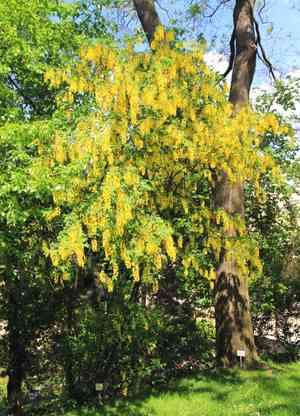
Scotch laburnum flourishes effectively when reproduced via the cutting technique. Utilize semi-hardwood sections taken from robust stems. Choose a segment around six inches in length and sever it directly beneath a leaf joint. Detach the bottom foliage and immerse the severed tip in rooting compound to stimulate root formation. Insert the segment into a container filled with a free-draining substrate, making sure the node from which the leaves were detached is submerged. Offer diffused illumination and sustain steady dampness until roots take hold.
Optimal Time for Scotch Laburnum Propagation
Propagation Method
Cutting
Propagation Period
Fall,Winter
Tools Required for Scotch Laburnum Propagation
Sharp Pruning Shears
Designed for precise cuts, sharp pruning shears are vital for harvesting scotch laburnum cuttings. Clean cuts minimize harm to the parent plant and ensure a healthy cutting base, boosting rooting success.
Rooting Hormone Powder
This product encourages root development in cuttings. Dipping the base of scotch laburnum cuttings in rooting hormone powder significantly increases the chance of successful root formation, essential for new plant establishment.
Sterile Potting Mix
A sterile potting mix offers a clean, controlled environment for scotch laburnum cuttings to root. This medium helps prevent disease and supports healthy root growth by balancing moisture and aeration.
Propagation Tray
Ideal for organizing multiple scotch laburnum cuttings in a confined space, propagation trays help maintain consistent moisture and temperature, crucial for encouraging root development.
Plastic Domes or Covers
Used to cover propagation trays, these domes maintain high humidity around scotch laburnum cuttings, mimicking a microclimate that promotes rooting. Proper humidity is key to preventing cuttings from drying out before rooting.
How to Propagate Scotch Laburnum
Propagation Difficulty
Moderately Challenging
Caring for Your Newly Propagated Scotch Laburnum
Caring for Your Newly Propagated Scotch Laburnum
Once scotch laburnum has rooted, gradually acclimate it to more direct sunlight over several weeks to prevent shock. Begin regular watering, ensuring good drainage to prevent root rot. Fertilize lightly with a balanced, slow-release fertilizer to support healthy growth. Prune scotch laburnum annually in late winter or early spring to shape and encourage branching, wearing protective clothing as all parts of scotch laburnum are highly toxic.
Common Errors to Avoid When Propagating Scotch Laburnum
Overwatering cuttings
Excessive moisture can lead to root rot or fungal infections in scotch laburnum cuttings. This hinders root development and can kill young plants.
Poor cutting selection
Using weak or diseased sections for cuttings can result in poor growth or propagation failure. Such materials lack the vigor needed for successful rooting and establishment.
Ignoring root hormone usage
Neglecting to use rooting hormones with scotch laburnum cuttings may lead to poorer root development. Root hormones help stimulate root growth, which is crucial for new plant establishment.
Planting at incorrect depth
Planting seeds or burying scotch laburnum cuttings too deep can impede germination or rooting due to insufficient light or air exposure, potentially causing the propagated material to rot.
Tips For Propagating Scotch Laburnum
Use semi-hardwood cuttings
Cuttings from scotch laburnum should be taken from semi-hardwood material as it combines sufficient maturity and vigor, enhancing rooting likelihood and overall growth stability.
Ensure sterile conditions
Using sterile tools and growing mediums prevents the introduction of pathogens that could harm scotch laburnum cuttings or seeds. This promotes healthier and more successful propagation.
Provide indirect light
While rooting, scotch laburnum cuttings benefit from bright, indirect light which supports photosynthesis without the stress of direct sunlight, further improving survival rates.
Control humidity
Maintaining moderate humidity around scotch laburnum cuttings helps prevent moisture loss from leaves while avoiding the excess moisture that can lead to fungal issues.



