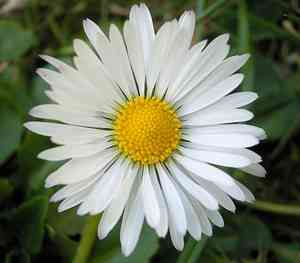
Oregon false goldenaster (Heterotheca oregona)
Also known as: Rayless goldenaster
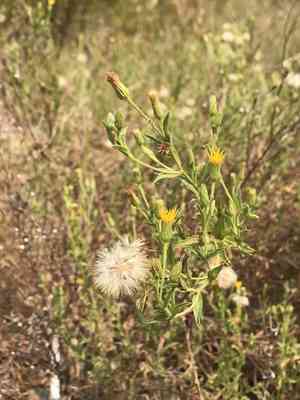
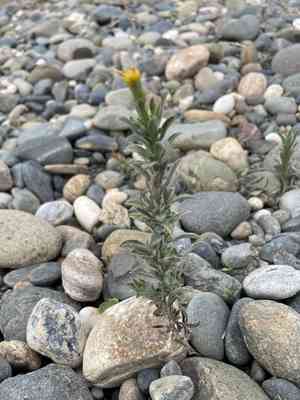
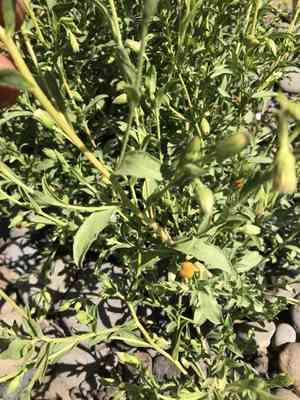
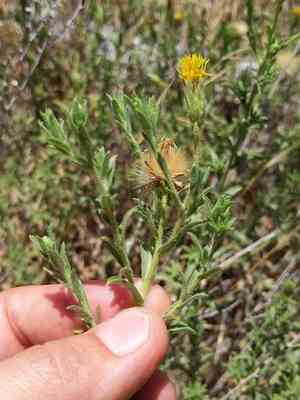
The Oregon false goldenaster (Heterotheca oregona) is a hardy perennial distinguished by its upright, branching stems and slender, lance-shaped foliage. It showcases bright yellow, daisy-like blooms, which thrive in well-drained soil and prefer ample sunlight. This plant is well-suited to rugged, open terrains, where its vibrant flowers often stand out, signaling its adaptability to its native surroundings.
In This Article
Attributes of Oregon false goldenaster
Lifespan
Perennial
Plant Type
Herb
Plant Height
15-60 cm
Spread
Varies depending on growth conditions
Leaf Color
Green
Flower Size
2.5-5 cm
Flower Color
Bright yellow
Images of Oregon false goldenaster
Quickly Identify Oregon false goldenaster
1
This plant can be identified by its oval to lance-shaped leaves with a rough texture, bright yellow daisy-like flowers, and its typical growth habit of forming dense clumps.
Scientific Classification of Oregon false goldenaster
Phylum
Vascular plants
Class
Dicotyledons
Order
Asterales
Family
Daisy
Genus
Telegraph Weed
Species
Oregon false goldenaster
Planting and Growing of Oregon false goldenaster
Care Difficulty
Easy
Watering Schedule
Every 2 days
Sunlight Requirements
Full sun
Sunshine Duration
4-8 hours
Ideal Temperature
60-75℉
Soil Type
Potting Mix, Peat Mix
Soil pH
6.5-7.5
Fertilizer Type
Balanced
Pruning Season
Spring, Summer
Pruning Area
Branches, Leaves
Pruning Frequency
2 times a year
Repotting Season
Spring
Pot Type
Plastic, Ceramic
 How to Water Oregon false goldenaster?
Heterotheca oregona prefers moderate watering. As a rule of thumb, water the plant until the top inch of soil is moist, but be cautious not to make it too soggy.
What are the symptoms of an underwatered Oregon false goldenaster?
›
What should I do if my Oregon false goldenaster is not getting enough water?
›
What are the symptoms of an overwatered Oregon false goldenaster?
›
How to save an overwatered Oregon false goldenaster?
›
 What Are the Sunlight Requirements for Oregon false goldenaster?
Heterotheca oregona benefits from full sun. Adequate sunlight encourages lush growth and prolific blooming, enhancing the plant's health and aesthetic value.
How much sunlight does Heterotheca oregona need?
›
What are the solutions for achieving ideal sunlight conditions?
›
What benefits does optimal lighting provide for Heterotheca oregona?
›
 What Is the Ideal Temperature Range for Oregon false goldenaster?
Heterotheca oregona thrives best in temperatures between 60°F and 75°F. This range provides a stable environment that supports optimal growth and flowering. Maintaining these temperatures helps the plant perform photosynthesis efficiently, contributing to healthy foliage and blooms.
 What Soil is Best for Oregon false goldenaster?
Heterotheca oregona thrives in well-drained soil conditions, which prevent root rot and other fungal infections. This ensures healthy growth and vibrant blooms by allowing excess water to escape easily. While tolerant of poor soils, Heterotheca oregona benefits from soil enriched with organic matter. This boosts energy reserves and supports sustained bloom periods through nutrient availability. The plant prefers soils with a pH between 6.5 and 7.5 to optimize nutrient uptake and maintain essential metabolic processes, ensuring robust growth and flowering.
 How to Fertilize Oregon false goldenaster?
For Heterotheca oregona, use a balanced fertilizer with an N-P-K ratio of 10-10-10. Each application should involve dissolving 1 tablespoon of fertilizer in 1 gallon of water. This amount ensures the nutrients are evenly distributed and promote healthy growth, providing the plant with just enough nutrients without overwhelming it.
 How to Prune Oregon false goldenaster?
Start by inspecting the plant for any dead, damaged, or diseased stems. Use clean shears to cut back these parts to healthy wood. Remove any fallen debris from around the base to help prevent disease. Prune the plant to maintain its natural shape, thinning out crowded branches to improve air circulation. Make cuts just above a bud or lateral branch to encourage outward growth and fuller appearance. After its blooming period, lightly trim the plant to remove spent flowers. This encourages a second wave of flowering and promotes bushier, compact growth for the following season.
More About Pruning Techniques→
 How to Propagate Oregon false goldenaster plant?
1
To propagate Heterotheca oregona by seeds, wait until the flowering season has ended in late summer to collect seeds. These seeds can be gathered directly from the flower heads once they have dried and turned brown.
2
Use well-draining potting mix for seed and cutting propagation. Ensure that the soil is moistened evenly but not waterlogged to promote healthy root development and prevent fungal diseases.
3
For seed propagation, sprinkle the seeds lightly on the soil surface and cover them with a thin layer of soil. Water gently to avoid washing away the seeds. For cuttings, place them in the prepared soil and water sparingly until roots establish.
 How to Repot Oregon false goldenaster plant?
1
You should consider repotting Heterotheca oregona when you notice roots growing out of the drainage holes, when the soil dries out very quickly after watering, or when the plant seems too large for its current pot. The best time to repot is during its active growing seasons in spring or early summer.
2
Select a pot that is slightly larger than the current one, with good drainage holes. A pot with a diameter 1-2 inches larger is ideal, allowing room for root expansion without overwhelming the plant. This helps prevent water-logging and encourages healthy growth.
3
Use a well-draining potting mix, preferably one that contains sand or perlite to enhance aeration. This kind of soil prevents root rot and ensures that the plant receives adequate nutrients and water without becoming waterlogged.



