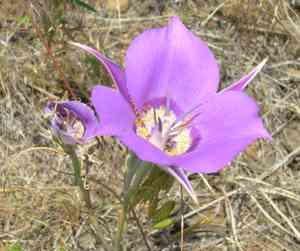
Sagebrush mariposa lily (Calochortus macrocarpus)
Also known as: Bigpod mariposa
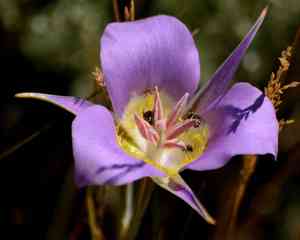
Sagebrush mariposa lily (Calochortus macrocarpus) is grown ornamentally for its showy violet flowers which have yellow centers. Though found in pine forest and juniper woodland, it primarily occurs in sagebrush habitat, which is why it is commonly called "sagebrush mariposa lily."
In This Article
Attributes of Sagebrush mariposa lily
Lifespan
Perennial
Plant Type
Herb
Plant Height
20 cm to 58 cm
Spread
Not applicable
Leaf Color
Green
Flower Size
5 to 8 cm
Flower Color
White Purple
Images of Sagebrush mariposa lily
Quickly Identify Sagebrush mariposa lily
1
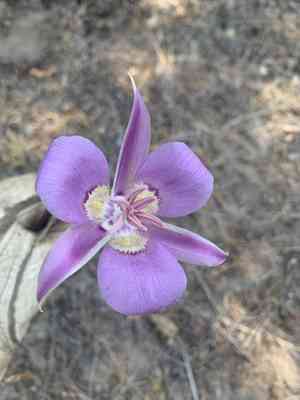
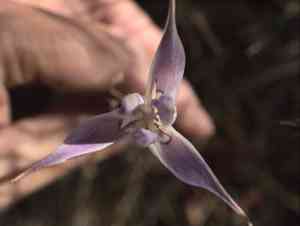
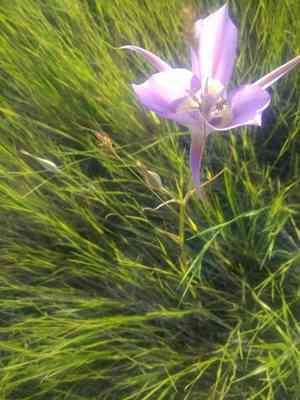
This plant can be recognized by its tall slender stem, large bell-shaped flowers with three broad petals and sepals, and a prominent central pistil. The petals usually have a darker purple base and fringes.
Scientific Classification of Sagebrush mariposa lily
Phylum
Vascular plants
Class
Monocotyledons
Order
Liliales
Family
Lily
Genus
Mariposas
Species
Sagebrush mariposa lily
Planting and Growing of Sagebrush mariposa lily
Care Difficulty
Hard
Watering Schedule
Every 2 days
Sunlight Requirements
Full sun
Sunshine Duration
6-10 hours
Ideal Temperature
65-75℉
Soil Type
Potting Mix, Peat Mix
Soil pH
6.5-7.5
Fertilizer Type
Balanced
Pruning Season
Spring, Summer
Pruning Area
Branches, Leaves
Pruning Frequency
2 times a year
Repotting Season
Spring
Pot Type
Plastic, Ceramic
 How to Water Sagebrush mariposa lily?
Calochortus macrocarpus benefits from a moderate watering approach. It should be watered deeply to allow the soil to soak up about 250 ml of water. This ensures the roots can access moisture without waterlogging, which can be detrimental to bulb plants.
What are the symptoms of an underwatered Sagebrush mariposa lily?
›
What should I do if my Sagebrush mariposa lily is not getting enough water?
›
What are the symptoms of an overwatered Sagebrush mariposa lily?
›
How to save an overwatered Sagebrush mariposa lily?
›
 What Are the Sunlight Requirements for Sagebrush mariposa lily?
Calochortus macrocarpus ideally enjoys full sun, benefiting from at least 6 to 8 hours of direct sunlight daily. This light range promotes lush growth and ensures abundant flowering, enhancing its decorative appeal.
What is the ideal amount of sunlight?
›
How to achieve optimal lighting conditions?
›
What benefits will the plant reap from perfect lighting?
›
 What Is the Ideal Temperature Range for Sagebrush mariposa lily?
The ideal temperature range for cultivating Calochortus macrocarpus is between 65°F and 75°F. This range provides optimal conditions for growth and flowering, ensuring that the plant can complete its life cycle effectively. Maintaining this temperature range supports the physiological processes necessary for the plant's survival and reproduction.
 What Soil is Best for Sagebrush mariposa lily?
Calochortus macrocarpus thrives in well-draining soil because it prevents waterlogging which can lead to root rot. This is particularly important for maintaining the plant's bulbous roots in good health. This plant prefers soil with moderate nutrient levels. Excessive fertility can lead to abundant foliage but poor flowering, while nutrient-poor soil can hamper overall growth. A neutral pH between 6.5 and 7.5 is ideal for Calochortus macrocarpus, as it allows for optimal nutrient absorption, ensuring healthy growth and vibrant blooms.
 How to Fertilize Sagebrush mariposa lily?
Calochortus macrocarpus prefers a balanced mix of nutrients. When using liquid fertilizer, ensure that the solution is well-diluted. Using too dense a concentration could harm the plant roots. A gentle application, once a month during the growth period, using half-strength liquid fertilizer is ideal.
 How to Prune Sagebrush mariposa lily?
Begin by identifying and removing any dead or withered leaves. Cut them back to their point of origin on the stem to provide more room for healthy foliage to flourish. After the blooming period, carefully snip away the spent flowers. This not only tidies the plant but also helps to direct the plant’s energy towards root development instead of seed production. Inspect the plant for damaged or diseased stems and trim them back to healthy tissue. This action promotes better air circulation and reduces the likelihood of pest infestations.
More About Pruning Techniques→
 How to Propagate Sagebrush mariposa lily plant?
1
Begin by preparing a well-draining soil mixture suitable for Calochortus macrocarpus, ensuring it is loose and nutrient-rich. Soil preparation involves mixing organic compost and coarse sand to promote proper drainage, which is crucial for bulbous plants.
2
When propagating from seeds, scatter the seeds evenly on the surface of the prepared soil. Lightly cover them with a thin layer of soil, no more than ¼ inch thick, to allow sunlight penetration critical for germination.
3
For division propagation, carefully lift the plant using a garden fork and gently separate the bulbs, ensuring each has roots attached. Replant them immediately in a pre-prepared hole to prevent drying out.
 How to Repot Sagebrush mariposa lily plant?
1
Watch for signs such as roots peeking through the drainage holes or if the plant is outgrowing its container. These indicate it's time to repot Calochortus macrocarpus to provide room for the bulb to flourish.
2
Select a pot that is 1-2 inches larger in diameter than the current one. Ensure it has adequate drainage holes to prevent waterlogging. A slightly deeper pot helps accommodate the bulb's growth and provides better moisture regulation.
3
Opt for a soil mix that is loose, combining elements such as sandy loam to promote drainage. This setup prevents root rot by allowing excess water to escape, maintaining optimal moisture levels around the bulb.
Learn More About Sagebrush mariposa lily Diseases
Anthracnose
Bacterial Leaf Spot
Bacterial Soft Rot
Bacterial Wilt
Black Spot
Chemical Injury
Crown Gall
Cyst Nematode
Damping-off
Downy Mildew
Drought Stress
Fusarium Wilt
Gray Mold
Leaf Curl
Leaf Spot
Mosaic
Nutrient Deficiency
Nutrient Toxicity
Powdery Mildew
Root Rot
Root-knot Nematode
Rusts
Sooty Mold
Spider Mites
Temperature Stress
Thrips Damage
White Mold



