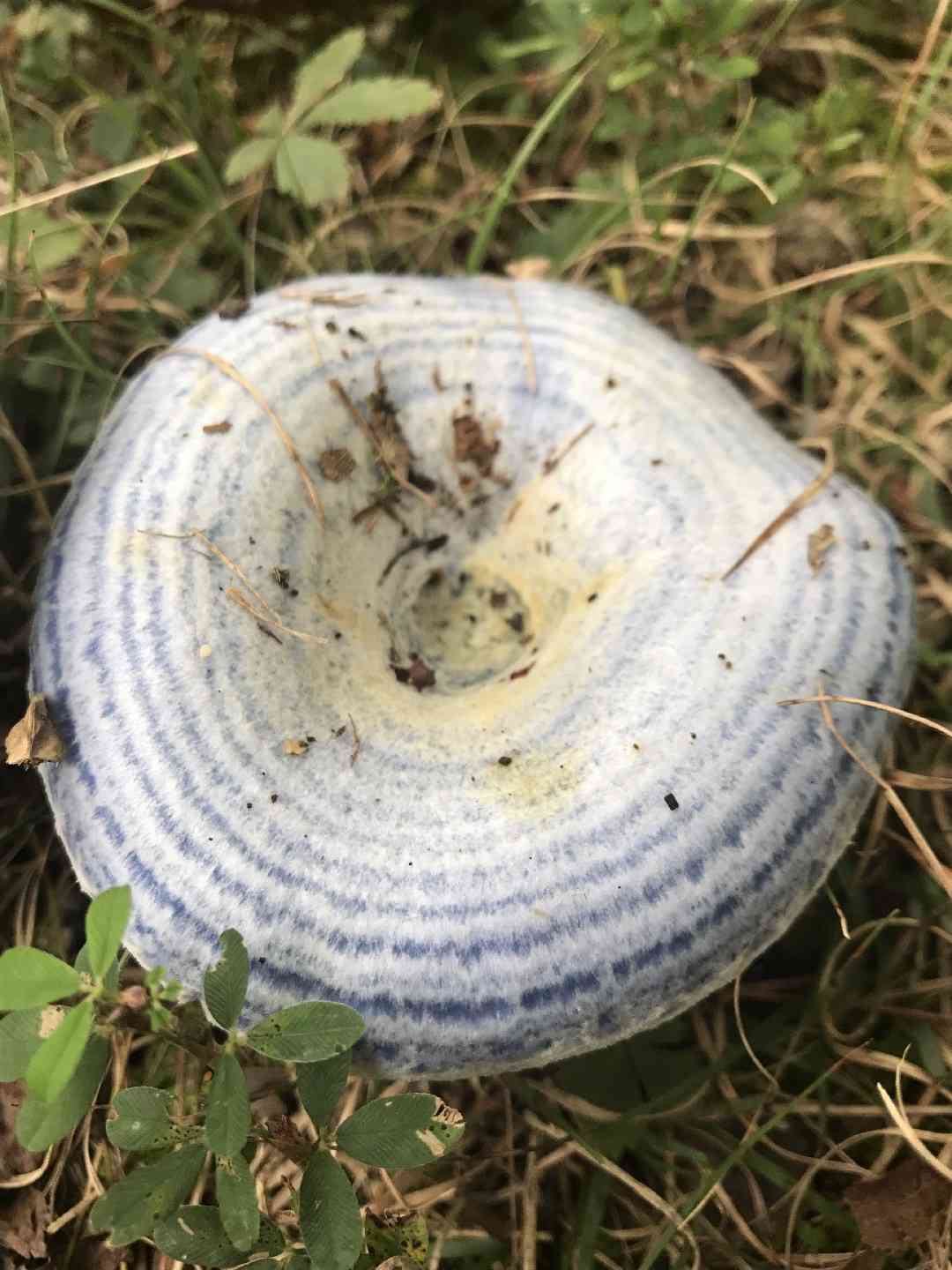
Indigo milk cap
Lactarius indigo
A species of Milk-caps. Also known as Indigo mushroom, Blue lactarius.
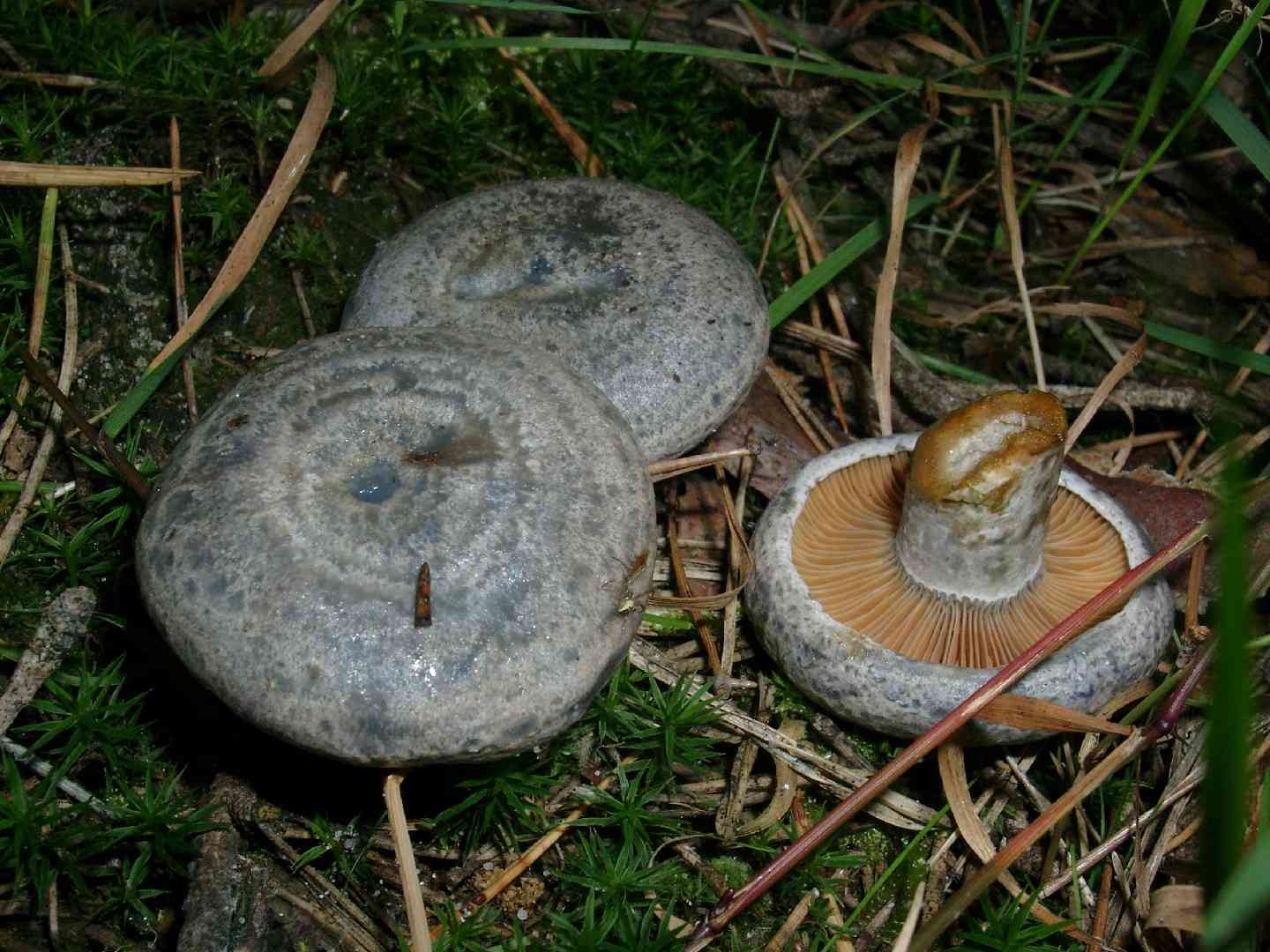
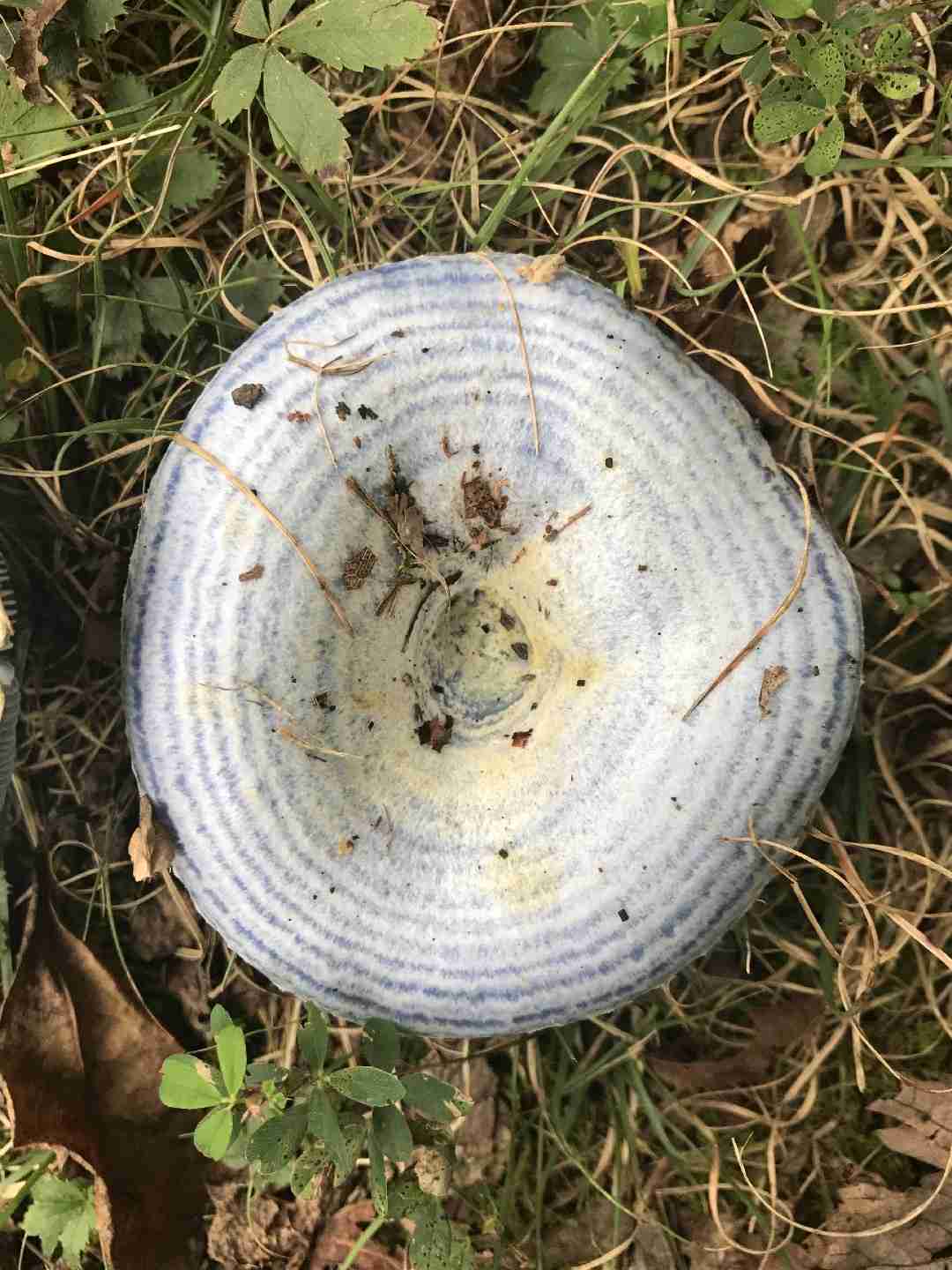
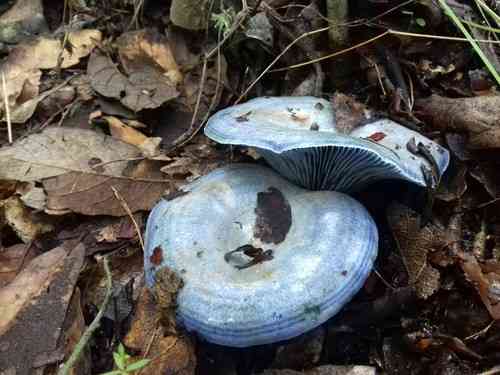
This stunning variety stands apart from the rest. The indigo milk cap, which belongs to the typically muted russula family, boasts a rich blue hue. Similar to its milk cap relatives, it exudes a latex-like fluid when sliced or harmed, yet uniquely, this species releases a profound blue instead of the customary white.
In This Article
Attributes of Indigo milk cap
Cap Diameter
4 - 16 cm
Height
3 - 10 cm
Cap
Cap 5 - 15 cm; convex becoming flat or vase-shaped; blue when fresh, grayish or silvery blue when faded; sticky or slimy when fresh; the margin at first inrolled; bruising and discoloring deep green with age
Cap Shape
Convex, Flat, Depressed
Cap Surfaces
Slimy or slightly sticky
Gills
Attached or decurrent; close; cap-colored or paler, becoming nearly yellowish at maturity; staining green
Gill Attachment
Attached
Stem
Stem 2 - 8 cm long, 1 - 2.5 cm thick; equal or tapering to base; cap-colored; slimy to dry, hard, hollowing
Stem Shapes
Cylindrical
Stem Surfaces
Smooth
Flesh
Whitish; turning indigo blue when cut, staining slowly greenish
Ring
Ringless
Spore Print Color
White
Odor
Mildly mushroomy but not distinctive.
Body Color
BrownSilverGrayBlue
Flesh Bruises
Discolor to blue
Growth Form
Solitary, Scattered, Gregarious
Nutrient Gathering
Mycorrhizal
Substrate
On soil
You can find Indigo milk cap by these plants
Oaks, Pines
Occurence Habitats
Deciduous Woodland, Coniferous Woodland
Species Status
Fairly widely distributed
Endangered Species
No
Scientific Classification of Indigo milk cap
Phylum
Club fungi
Class
Mushroom-forming fungi
Order
Russulales
Family
Russulaceae
Genus
Milk-caps
Toxicity and Edibility of Indigo milk cap
Is Indigo milk cap Toxic?
Toxicity information is not available for this mushroom. Always consult with an expert before consuming any wild mushrooms.