How to Prune Nodding saxifrage?
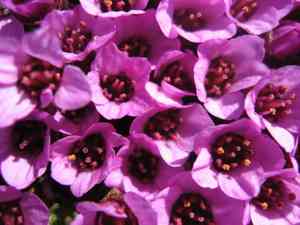
Nodding saxifrage, a robust perennial, flourishes in stony ground, distinguished by its drooping blossoms. In early spring, remove any withered or compromised leaves to preserve its vitality and form. Throughout the summer, after the initial flowering, cut back the plant to stimulate a subsequent bloom. In autumn, eliminate faded flowers and any excessively grown sections to deter self-propagation and enhance air movement. Consistent trimming improves both development and aesthetic appeal, and should ideally be carried out with sanitized, keen pruning tools to ensure accurate incisions without harming the specimen.
What Are the Advantages of Trimming Nodding Saxifrage?
What Are the Advantages of Trimming Nodding Saxifrage?
Trimming nodding saxifrage promotes more vigorous development, ensuring a strong and healthy structure. It also aids in maintaining its form, enhancing its overall visual appeal in a garden setting.
When Is the Optimal Time for Trimming Nodding Saxifrage?
When Is the Optimal Time for Trimming Nodding Saxifrage?
Trimming of nodding saxifrage in Spring, before new growth emerges, ensures the plant's energy is directed towards producing robust, healthy new foliage and flowers. Early Summer is also suitable, especially after nodding saxifrage has bloomed, to remove faded flowers and encourage a neat growth habit. Avoid Fall trimming as it can stimulate new growth that may not survive cold winter temperatures.
What Equipment Do I Need to Trim Nodding Saxifrage?
Small Pruning Shears
These are perfect for nodding saxifrage due to their compact size, allowing for precise cuts without harming the delicate foliage or stems.
Fine-pointed Scissors
Recommended for nodding saxifrage when it needs trimming of dead or yellow leaves, ensuring minimal disruption to the surrounding plant parts.
Tweezers
Useful for nodding saxifrage to remove dead material from the dense center of rosettes without causing damage to nearby healthy growth.
Soft Brush
Used to gently remove any debris from nodding saxifrage after trimming, maintaining plant cleanliness without harming the plant.
How to Trim Nodding Saxifrage
Identify
Examine nodding saxifrage thoroughly for diseased leaves, withered leaves, dead branches, and diseased branches that require trimming. Look closely at the base of the leaves and where branches meet the main stem for signs of disease or decay.
Disinfect
Clean and sanitize trimming tools before starting to prevent the spread of disease. Use a solution of one part bleach to nine parts water or rubbing alcohol to wipe down pruning shears and any other tools that will be used.
Remove leaves
Gently trim diseased and withered leaves from nodding saxifrage using sharp, disinfected scissors or pruning shears. Make cuts at the base of the leaves, ensuring not to damage healthy adjacent foliage or stems.
Prune branches
Carefully cut away dead and diseased branches from nodding saxifrage using sharp pruning shears. Make cuts at the node or the point of origin from the main stem to promote faster healing and minimize stubs that can attract pests.
Cleanup
After trimming, remove all trimmed foliage and branches from around nodding saxifrage to prevent the spread of any potential pathogens. Dispose of diseased plant materials properly, and avoid composting if the disease is known to be contagious.
Common Trimming Errors with Nodding Saxifrage
Over-trimming
Removing too much foliage or too many stems can stress nodding saxifrage, potentially leading to reduced vigor and fewer blooms.
Cutting into old wood
Nodding saxifrage may not respond well to severe trimming into old wood, which can cause irreversible damage and stunted growth.
Neglecting to use clean tools
Using dirty tools can introduce pathogens to nodding saxifrage, increasing the risk of disease after trimming.
Trimming indiscriminately
Random or improper cuts without understanding the growth pattern of nodding saxifrage can lead to an undesirable shape and affect flowering.
Not removing dead or diseased material
Failing to remove dead or diseased plant parts can hinder the overall health and appearance of nodding saxifrage.
General Trimming Advice for Nodding Saxifrage
Use sharp and clean tools
Ensure trimming tools are sharpened and disinfected to make clean cuts and reduce the risk of spreading disease to nodding saxifrage.
Trim for shape
Gently shape nodding saxifrage by selectively thinning out overgrown areas to maintain an aesthetically pleasing form without compromising its natural growth habit.
Deadheading
Regularly remove spent blooms to promote further flowering and prevent nodding saxifrage from diverting energy into seed production.
Remove only what's necessary
Focus on eliminating dead or diseased tissue and perform minimal additional trimming to avoid putting nodding saxifrage under unnecessary stress.
Understand growth habit
Before trimming, recognize the growth patterns to ensure that cuts will encourage healthy growth and not hinder the development of nodding saxifrage.
Monitor trimming frequency
Avoid frequent trimming sessions; instead, assess the need based on the health and shape of nodding saxifrage to determine when intervention is truly needed.



