How to Prune Illyrian cottonthistle?
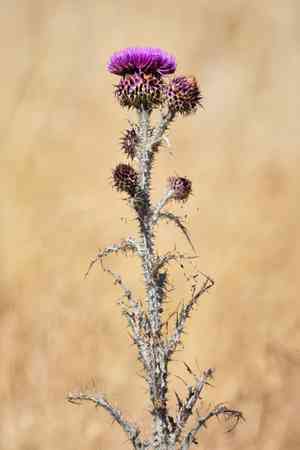
The spiky leaves and thistle-like blooms of illyrian cottonthistle necessitate regular pruning to preserve its form and stimulate robust development. During springtime, sever any lifeless or frail stalks at their base, fostering the emergence of strong new shoots. Summer maintenance includes removing faded blossoms to inhibit self-propagation and potential spread. By making precise cuts with sanitized implements, this variety thrives from the judicious removal of excessively dense sections, which improves air movement and lowers the likelihood of illness.
Advantages of Trimming Illyrian Cottonthistle
Advantages of Trimming Illyrian Cottonthistle
Trimming illyrian cottonthistle promotes vigorous development and maintains its desired form. Regular cutting fosters a healthier, more resilient plant capable of enduring environmental stressors.
Optimal Period for Pruning Illyrian Cottonthistle
Optimal Period for Pruning Illyrian Cottonthistle
Spring pruning is ideal for illyrian cottonthistle as it coincides with its emergence from dormancy, stimulating robust growth and ensuring the plant has sufficient energy to recover from cuts before the intense summer heat. Adhering to this schedule encourages healthy foliage and structurally sound plants, preparing illyrian cottonthistle for its blooming season. Early Summer pruning should be minimal, concentrating on removing any dead or diseased stems, as well as shaping the plant after flowering. This helps maintain the desired shape and prevents resources from being depleted by unnecessary or damaged growth, allowing illyrian cottonthistle to conserve energy for the subsequent season.
Necessary Tools for Pruning Illyrian Cottonthistle
Heavy-Duty Gloves
Given the thorny nature of illyrian cottonthistle, robust gloves are crucial for hand protection during pruning.
Secateurs
Secateurs are suitable for cutting through illyrian cottonthistle's thinner, flexible stems. They provide clean cuts that encourage healthy regrowth.
Loppers
For thicker stems of illyrian cottonthistle, loppers provide the necessary leverage for clean cuts without harming the plant or the tool.
Pruning Saw
If illyrian cottonthistle has matured and developed very thick stems, a pruning saw may be required to properly manage its growth.
Long-Handled Pruners
Due to the spiky foliage of illyrian cottonthistle, long-handled pruners can be used to access dense areas without getting scratched.
How to Prune Illyrian Cottonthistle
Disinfect tools
Before beginning, sanitize all pruning tools with a solution of 1 part bleach to 9 parts water to prevent disease transmission while trimming illyrian cottonthistle.
Remove diseased leaves
Carefully trim away diseased leaves from illyrian cottonthistle using clean, sharp scissors or secateurs. Cut the leaf stems close to the base, ensuring not to harm healthy surrounding tissue.
Remove withered leaves
Identify and remove withered or dead leaves from illyrian cottonthistle by cutting them at the base without disturbing new growth. This allows the plant to direct energy to healthy leaves.
Pruning diseased stems
Carefully cut away any diseased stems from illyrian cottonthistle, making cuts at least an inch below the diseased areas into healthy tissue to ensure complete removal of the affected parts.
Cleanup
Collect and dispose of all pruned diseased and dead material far from illyrian cottonthistle to prevent reinfection. Clean the tools again as per Step 1 after pruning is finished.
Common Pruning Errors with Illyrian Cottonthistle
Overpruning
Excessive pruning of illyrian cottonthistle can stress the plant, diminishing its vitality and flowering potential. Removing too much foliage at once can lead to reduced photosynthesis and a weakened state.
Improper cut location
Making cuts either too close or too far from the bud can result in damage or poor regrowth. Cut too close, and the bud may be harmed; cut too far, and unsightly or non-healing stubs may remain.
Using dull tools
Dull pruning tools can cause jagged cuts that are more susceptible to disease and decay. Always use sharp, clean tools for clean cuts that heal rapidly.
Ignoring plant structure
Failing to consider illyrian cottonthistle's natural growth pattern and branching structure while pruning can result in an unnatural appearance and potentially harm future growth.
Neglecting diseased material
Not removing all diseased, dead, or damaged material can allow diseases to persist and spread throughout illyrian cottonthistle.
Pruning in wet conditions
Pruning illyrian cottonthistle when it’s wet can facilitate the spread of diseases, as many pathogens thrive in moist environments.
General Pruning Advice for Illyrian Cottonthistle
Selective pruning
Focus on selective pruning to remove only dead, diseased, or overgrown branches while maintaining illyrian cottonthistle's natural shape. This approach encourages healthy growth and flowering.
Angled cuts
Make clean, angled cuts above buds or branching points to promote proper water runoff and discourage disease.
Tool sanitization
Sanitize pruning tools before and after use to prevent the spread of disease. A solution of one part bleach to nine parts water is effective for this purpose.
Consider growth cycle
Prune illyrian cottonthistle at a time in its growth cycle that supports blooming and sustainability, without reference to specific seasons.
Thinning
Thin out crowded areas to increase air circulation, which will help prevent disease and encourage more robust growth in illyrian cottonthistle.
Protective cuts
After making pruning cuts, consider applying a pruning sealant to protect illyrian cottonthistle from pests and diseases, especially if the species is prone to invasion through open wounds.



