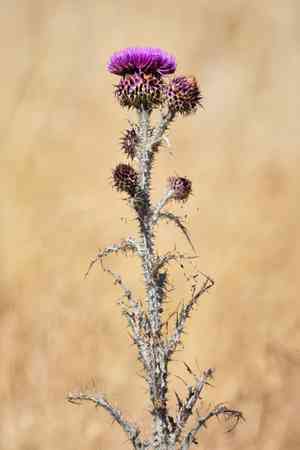
Illyrian cottonthistle (Onopordum illyricum)
Also known as: Illyric thistle
Illyrian cottonthistle, though visually appealing as an ornamental flower, is listed as a Federal Noxious Weed due to its invasive nature. It can produce up to 40,000 seeds per plant, which easily disperse and contaminate wool, agricultural products, and equipment. This prolific self-seeding ability allows it to spread rapidly, outcompeting native species and disrupting ecosystems. Its dense, spiny growth also poses challenges for livestock and reduces the quality of grazing land.
In This Article
Attributes of Illyrian cottonthistle
Lifespan
Biennial, Perennial
Plant Type
Herb
Plant Height
2 m
Spread
Typically up to 1 meter
Leaf Color
Gray-green
Flower Size
3 cm
Flower Color
Pink Purple Red
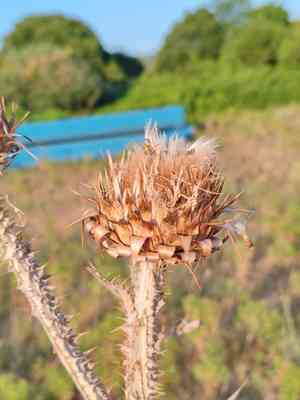
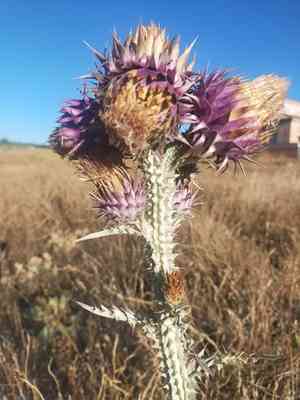
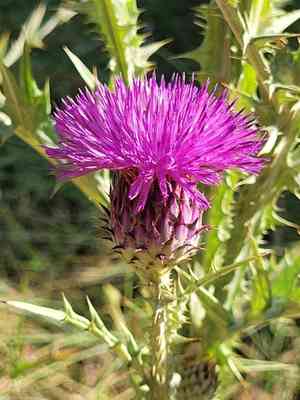
Images of Illyrian cottonthistle
Quickly Identify Illyrian cottonthistle
1
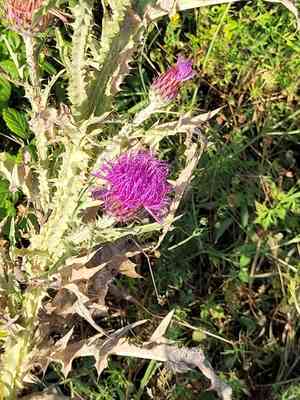
Onopordum illyricum can be identified by its tall, spiny stems covered with cobwebby hairs, deeply lobed, spiny leaves, and large, purple to pink flower heads surrounded by spiny bracts.
Scientific Classification of Illyrian cottonthistle
Phylum
Vascular plants
Class
Dicotyledons
Order
Asterales
Family
Daisy
Genus
Cottonthistles
Species
Illyrian cottonthistle
Planting and Growing of Illyrian cottonthistle
Care Difficulty
Easy
Watering Schedule
Every 2 days
Sunlight Requirements
Full sun
Sunshine Duration
6-10 hours
Ideal Temperature
60-75℉
Soil Type
Potting Mix, Peat Mix
Soil pH
6.5-7.5
Fertilizer Type
Balanced
Pruning Season
Spring, Summer
Pruning Area
Branches, Leaves
Pruning Frequency
2 times a year
Repotting Season
Spring
Pot Type
Terracotta, Plastic
 How to Water Illyrian cottonthistle?
For Onopordum illyricum, it's essential to water it deeply but infrequently. The aim is to soak the soil completely, allowing the roots to absorb the necessary moisture without leaving standing water. This promotes deep root growth, which is crucial for the plant's stability and nutrient uptake.
What are the symptoms of an underwatered Illyrian cottonthistle?
›
What should I do if my Illyrian cottonthistle is not getting enough water?
›
What are the symptoms of an overwatered Illyrian cottonthistle?
›
How to save an overwatered Illyrian cottonthistle?
›
 What Are the Sunlight Requirements for Illyrian cottonthistle?
Onopordum illyricum thrives best under full sun conditions, receiving about 6 to 8 hours of direct sunlight daily, which supports robust growth and ecological resilience.
More About Sunlight Requirements Techniques→
Optimal Duration
›
Solutions for Ideal Light
›
Benefits of Proper Light
›
 What Is the Ideal Temperature Range for Illyrian cottonthistle?
The ideal temperature range of 60-75°F is crucial for optimal growth and physiological functions of Onopordum illyricum. In this range, the metabolic processes of the plant such as photosynthesis, respiration, and transpiration function efficiently, fostering healthy growth, and minimizing stress.
 What Soil is Best for Illyrian cottonthistle?
Onopordum illyricum thrives in soils that offer excellent drainage. Retaining excess water is not ideal for this plant, as it can lead to root rot. Ensuring the soil has good drainage will keep the plant healthy and vigorous. This plant prefers soil with moderate fertility. Rich, nutrient-dense soils are unnecessary and can sometimes hinder growth. A balanced, loam-based soil will provide the essential nutrients needed for optimal growth. Onopordum illyricum does best in soils with a pH between 6.5 and 7.5. This range allows for good nutrient uptake and fosters a thriving environment for the plant's root systems.
 How to Fertilize Illyrian cottonthistle?
For Onopordum illyricum, fertilizers should be applied sparingly due to its preference for poor soil conditions. An excess of nutrients can do more harm than good. Liquid fertilizers should be diluted to half the recommended strength for most plants. Slow-release granules, when used, can be lightly sprinkled on the soil surface, ensuring that they do not come in direct contact with the plant stem.
 How to Prune Illyrian cottonthistle?
Focus on removing dead, damaged, or crossing branches. Start by identifying these problematic branches as they can hinder growth and lead to potential health issues. Make cuts at a 45-degree angle away from the main branch or stem. This angle helps water run off and reduces disease risk. Trim branches back to a healthy bud or lateral branch to guide new growth. Wear gloves and long sleeves to protect yourself from the plant's spines during pruning. Onopordum illyricum has sharp thistles that can cause irritation upon contact.
More About Pruning Techniques→
 How to Propagate Illyrian cottonthistle plant?
1
Loosely pack fine seedling mix into seed trays. The mix should be well-draining to prevent waterlogged roots, which can inhibit seed germination or lead to rot.
2
Scatter seeds evenly on the soil surface and lightly cover them with a layer of soil. Ensuring light reaches smaller seeds can aid germination.
3
Carefully select mature, healthy roots and cut them into sections. Each section should have at least one bud or node to encourage new growth.
 How to Repot Illyrian cottonthistle plant?
1
Look for signs like roots growing out of drainage holes, soil drying very quickly, or reduced growth. These are indicators that Onopordum illyricum needs more space to flourish.
2
Select a pot that is 2-3 inches larger in diameter. This size ensures ample room for root growth, prevents waterlogging, and supports stability as the plant matures.
3
Opt for well-draining sandy loam soil. This type ensures good drainage, preventing root rot, and provides a balanced environment with aeration and nutrient availability.
Learn More About Illyrian cottonthistle Diseases
Anthracnose
Bacterial Leaf Spot
Bacterial Soft Rot
Bacterial Wilt
Black Spot
Chemical Injury
Crown Gall
Cyst Nematode
Damping-off
Downy Mildew
Drought Stress
Fusarium Wilt
Gray Mold
Leaf Spot
Mosaic
Nutrient Deficiency
Nutrient Toxicity
Powdery Mildew
Root Rot
Root-knot Nematode
Rusts
Sooty Mold
Spider Mites
Temperature Stress
Thrips Damage
White Mold



