How to Prune Goat's-rue?
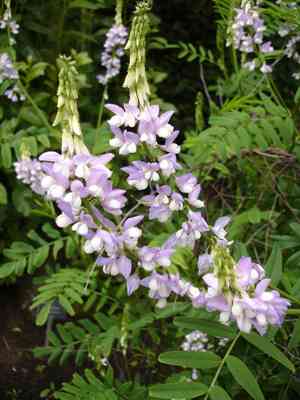
This perennial legume, characterized by its herbaceous nature, is recognized for its therapeutic properties and blossoms resembling peas. To foster a more compact form and manage the dimensions of goat's-rue, trimming should entail reducing its size by one-third following the initial bloom period in early summer. Subsequent minor pruning can be performed during the summer as flowers diminish, stimulating additional flowering. Refrain from autumn pruning to safeguard new shoots from frost damage. Consistent elimination of compromised or ailing stalks is crucial for preserving the plant's well-being and robustness.
Advantages of Trimming Goat's-rue
Advantages of Trimming Goat's-rue
Trimming goat's-rue promotes abundant flowering, maintains a desired shape, and stimulates vigorous development, ensuring an attractive and thriving plant.
Optimal Time for Pruning Goat's-rue
Optimal Time for Pruning Goat's-rue
Spring pruning coincides with goat's-rue's active growth phase, encouraging a strong flush of new growth as stored energy is directed towards recovery from cuts. Early Summer is perfect for trimming back overly robust growth or shaping the plant, ensuring these actions don't disrupt the main flowering period. Late Fall pruning benefits overall plant health and prepares it for dormancy; it involves removing dead or diseased wood and helps prevent potential pest and disease issues over winter.
Necessary Tools for Pruning Goat's-rue
Bypass Pruners
These are suitable for cutting through live stems of goat's-rue, providing a clean and precise cut without harming plant tissues. They can handle stems up to about 1/2 inch in diameter, which is typical for goat's-rue.
Hand Shears
Hand shears are ideal for shaping and thinning goat's-rue foliage. Their long blades make it easy to achieve a uniform appearance while fostering healthy growth and air circulation within the plant.
Loppers
If goat's-rue has matured and possesses thicker branches that bypass pruners cannot manage, loppers would be the next preferred tool. With their extended handles, they can cut through branches up to 1 1/2 inches in diameter and allow access into the plant without damaging surrounding growth.
Pruning Saw
For the thickest branches of goat's-rue exceeding 1 1/2 inches in diameter, a pruning saw may be required. It enables larger cuts without excessive effort, protecting the gardener from injury and the plant from jagged cuts.
How to Prune Goat's-rue
Identify diseased parts
Thoroughly inspect goat's-rue to locate all diseased leaves, as these must be removed to prevent further infection.
Clean cut
Use sanitized pruning shears to cleanly remove diseased and withered leaves at the stem's base to avoid leaving stubs that can decay.
Deadhead
Pinch or snip off faded goat's-rue flowers at the base of their stems to encourage new growth and prevent seeding if not desired.
Dispose
Gather and discard all removed plant material far from the garden to prevent the spread of diseases or pests.
Sanitize
Clean and sterilize your pruning tools after trimming goat's-rue to avoid transferring pathogens to other plants or the next pruning session.
Frequent Pruning Errors with Goat's-rue
Excessive Pruning
Removing too much foliage from goat's-rue at once can stress the plant, leading to reduced vigor and sparse blooming.
Neglecting deadheading
Goat's-rue benefits from the removal of spent flowers to encourage further blooming, and overlooking this task can result in fewer flowers and potential self-seeding.
Ignoring disease protocol
Using unsterilized tools or pruning when goat's-rue is wet can spread diseases. Always sanitize pruning tools and prune in dry conditions.
Incorrect cut placement
Cutting too close to or too far from the main stem can harm goat's-rue. Make clean cuts at a 45-degree angle just above a bud or branching point.
General Pruning Advice for Goat's-rue
Maintain plant shape
Prune goat's-rue to preserve its natural form, focusing on creating an open center for sunlight penetration and air circulation, which promotes healthy growth.
Removal of dead or damaged stems
Regularly inspect goat's-rue and remove any dead, damaged, or diseased stems to prevent the spread of pathogens and encourage new growth.
Encourage new growth
By selectively pruning the older stems of goat's-rue, gardeners can stimulate the growth of new, more vigorous stems that will produce abundant blooms.
Post-flowering pruning
Once goat's-rue has finished blooming, cut back the flower spikes to promote a potential second bloom and to keep the plant tidy.



