How to Prune San francisco wallflower?
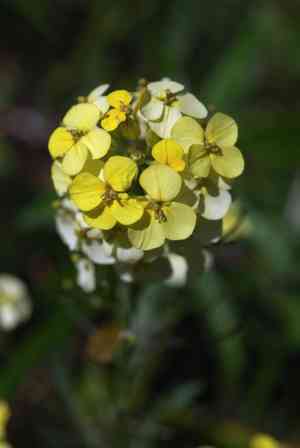
San Francisco wallflower, known for its vivid blossoms, thrives with trimming in late winter to early spring, prior to the emergence of new shoots. Eliminate any deceased or compromised stalks to foster vigorous growth. Gently snip faded flowers throughout the flowering period to stimulate additional blooms. Refrain from extensive cutting, as San Francisco wallflower favors limited interference. Pruning improves air circulation and diminishes the likelihood of disease, guaranteeing strong and extended flowering.
What Are the Benefits of Pruning San Francisco Wallflower?
What Are the Benefits of Pruning San Francisco Wallflower?
San francisco wallflower benefits from trimming by encouraging robust development, maintaining an appealing form, and preventing sparse growth. Pruning fosters healthier foliage and blooms, improves air circulation, and decreases vulnerability to pests and diseases.
What Is the Best Time for Pruning San Francisco Wallflower?
What Is the Best Time for Pruning San Francisco Wallflower?
Trimming san francisco wallflower during early spring or late winter is optimal as these periods precede its active growth phase. Pruning at this time minimizes potential harm and stress to san francisco wallflower, as the plant is dormant or just emerging from dormancy. This allows for more vigorous regrowth and enhances its flowering capacity. Trimming during these seasons also aids in managing plant shape and size effectively before the primary growing season, ensuring strong growth and bloom production.
What Tools Do I Need to Prune San Francisco Wallflower?
Hand Pruners
Hand pruners are perfect for precise cuts on stems and branches. For san francisco wallflower, which often requires selective trimming to maintain shape and remove spent flowers, hand pruners provide clean cuts that encourage healthy growth.
Bypass Pruners
These pruners are best for clean, exact cuts on living wood. San francisco wallflower has relatively slender stems, and bypass pruners ensure minimal damage by allowing sharp blades to slice through without crushing the plant tissue.
Pruning Shears
Pruning shears are suitable for more extensive trimming when san francisco wallflower becomes excessively bushy. They assist in shaping and removing faded blooms efficiently.
Gloves
Always wear gloves to shield your hands from potential irritants and sharp stems while handling san francisco wallflower.
How to Prune San Francisco Wallflower
Inspect
Examine san francisco wallflower to identify any diseased or withered leaves. Diseased leaves may show discolored spots, mold, or other irregularities, while withered leaves appear yellowed or brown and dry.
Tool Prep
Disinfect pruning tools to prevent the spread of disease. Use a solution of 70% isopropyl alcohol or a mixture of one part bleach to nine parts water.
Target Diseased Leaves
Begin by trimming any diseased leaves. Make clean cuts where the leaf meets the stem, ensuring to remove the entire affected area to prevent further infection.
Remove Withered Leaves
Prune away any withered leaves. Similar to diseased leaves, cut at the base where the leaf connects to the stem to promote healthy new growth.
Clean Area
Once pruning is complete, gather and dispose of all removed leaves properly. This step is crucial to ensure that no diseased material remains near san francisco wallflower, which could potentially cause a reinfection.
Common Pruning Mistakes with San Francisco Wallflower
Over-pruning
Excessive pruning is a common error, which can stress san francisco wallflower and reduce its capacity to produce flowers. Cutting back too much of the foliage and stems at once can be detrimental.
Incorrect technique
Using dull or unsuitable tools can cause jagged cuts, making san francisco wallflower vulnerable to diseases and pests. Additionally, improper cutting angles can harm the plant.
Pruning at the wrong nodes
Trimming above new buds rather than old growth can inadvertently remove flower-producing parts of san francisco wallflower, reducing its blooming potential.
Ignoring deadheading
Failing to remove spent flowers can lead to leggy and untidy growth, diminishing the overall appearance of san francisco wallflower.
Common Pruning Tips for San Francisco Wallflower
Use clean, sharp tools
Always ensure pruning shears and scissors are clean and sharp to make precise cuts, minimizing damage and risk of disease.
Prune strategically
Focus on removing dead, damaged, or diseased parts of san francisco wallflower first. This will help maintain its health and direct energy to growth and flowering.
Deadhead regularly
Regularly remove spent blooms to encourage more flowering and maintain a neat appearance.
Cut at an angle
When making cuts, do so at a slight angle to help water run off and reduce the risk of rot. Aim to cut just above a leaf node or bud to promote healthy new growth.



