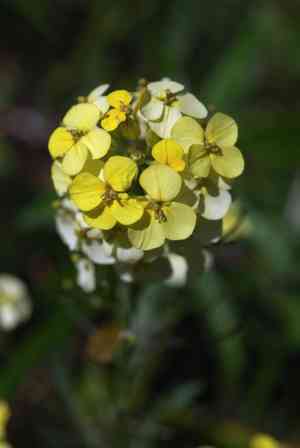
San francisco wallflower (Erysimum franciscanum)
Also known as: Franciscan wallflower, San Francisco wallflower
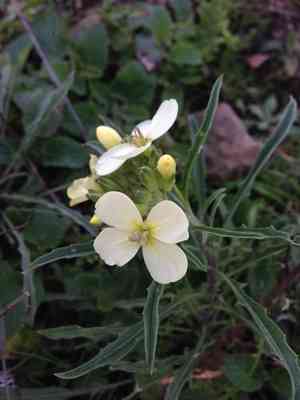
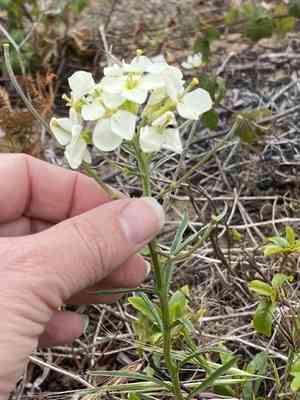
This biennial or short-lived perennial plant produces cream to yellow flowers. The blooms feature four sepals and four petals, forming a cross-like pattern typical of the Brassicaceae family. It typically flowers from late winter through late spring.
In This Article
Attributes of San francisco wallflower
Lifespan
Perennial
Plant Type
Herb
Plant Height
30-60 cm (12-24 inches)
Spread
20-30 cm (8-12 inches)
Leaf Color
Green
Flower Size
1-2 cm (0.4-0.8 inches)
Flower Color
Bright yellow
Images of San francisco wallflower
Quickly Identify San francisco wallflower
1
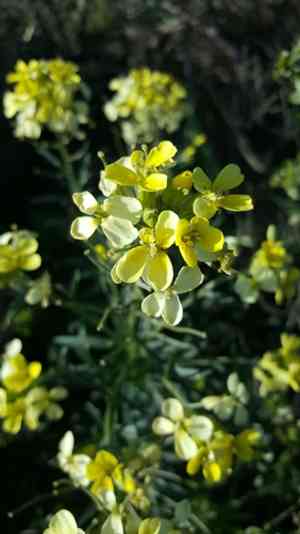
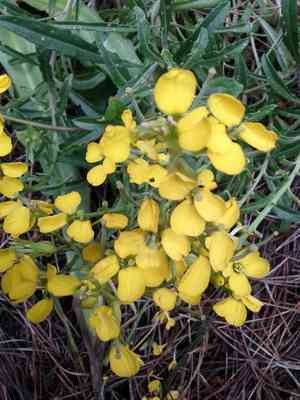
Erysimum franciscanum can be identified by its bright yellow flowers that are clustered in dense racemes. The plant has narrow, lance-shaped leaves that are covered with fine hairs, and it often grows on rocky slopes and coastal bluffs.
Scientific Classification of San francisco wallflower
Phylum
Vascular plants
Class
Dicotyledons
Order
Brassicales
Family
Cruciferae
Genus
Wallflower
Species
San francisco wallflower
Planting and Growing of San francisco wallflower
Care Difficulty
Easy
Watering Schedule
Every 2 days
Sunlight Requirements
Full sun
Sunshine Duration
6-10 hours
Ideal Temperature
60-75℉
Soil Type
Potting Mix, Peat Mix
Soil pH
6.5-7.5
Fertilizer Type
Balanced
Pruning Season
Spring, Summer
Pruning Area
Branches, Leaves
Pruning Frequency
2 times a year
Repotting Season
Spring
Pot Type
Ceramic, Plastic
 How to Water San francisco wallflower?
For Erysimum franciscanum, it's crucial to ensure the soil remains slightly moist without becoming waterlogged. Aim to saturate the soil to about 75% of its holding capacity. This plants grows well with about 500 ml of water per session during the growing season to keep it healthy and hydrated.
What are the symptoms of an underwatered San francisco wallflower?
›
What should I do if my San francisco wallflower is not getting enough water?
›
What are the symptoms of an overwatered San francisco wallflower?
›
How to save an overwatered San francisco wallflower?
›
 What Are the Sunlight Requirements for San francisco wallflower?
Erysimum franciscanum is best suited to full sun to partial sunlight conditions, ensuring vigorous blooming and growth. Suitable light exposure supports strong stem development and maximizes flower yield.
Optimal Light Duration
›
Solution to Achieve Ideal Light
›
Benefits of Ideal Lighting
›
 What Is the Ideal Temperature Range for San francisco wallflower?
Erysimum franciscanum thrives best within a temperature range of 60 to 75 degrees Fahrenheit. This temperature band ensures optimal growth, flowering, and photosynthesis. Maintaining temperatures within this range supports healthy leaves and vibrant blooms. Deviations from this range can result in stress, reduced growth, and potential for disease.
 What Soil is Best for San francisco wallflower?
Erysimum franciscanum thrives in well-draining soil that provides optimal root aeration and prevents waterlogging. This helps the plant to avoid root rot and supports healthy growth by ensuring proper oxygen access to the roots. A soil rich in organic matter benefits Erysimum franciscanum by supplying essential nutrients that promote robust growth and vibrant blooms. Incorporating compost or well-rotted manure can enhance soil fertility naturally. While Erysimum franciscanum prefers well-draining soil, it also requires a moderate level of moisture to sustain its growth. Regular watering ensures the soil remains adequately moist without becoming soggy.
 How to Fertilize San francisco wallflower?
For Erysimum franciscanum, a modest amount of fertilizer is recommended. When using liquid fertilizer, dilute it to half the suggested strength to avoid potential root burn. For granular slow-release fertilizers, apply at a rate of about 1 pound per 100 square feet. This ensures that the plant gets the necessary nutrients without overwhelming its system.
 How to Prune San francisco wallflower?
Start by removing any dead or diseased stems to improve airflow and prevent the spread of disease. Cut these parts back to the base or nearest healthy bud. Trim back branches that have outgrown the desired shape of the plant. Use your shears to shape the plant into a neat, rounded form. This will encourage even growth and blooming. Prune the plant just above a bud to encourage branching and a fuller appearance. Avoid cutting more than a third of the plant at a time to prevent shock.
More About Pruning Techniques→
 How to Propagate San francisco wallflower plant?
1
Place seed trays in a warm and sunny spot and fill them with a well-draining potting mix. Ensure the soil is moist before planting the seeds.
2
Scatter the seeds evenly across the surface of the moist soil. Cover them lightly with additional soil to a recommended depth and mist gently with water.
3
Select healthy stems and cut them using sterilized scissors. Insert the cuttings into a pot with a suitable rooting medium to encourage root development.
 How to Repot San francisco wallflower plant?
1
Erysimum franciscanum shows clear signs when it needs repotting. Look for roots protruding from the drainage holes, slow growth, or soil that dries too quickly. These indicators suggest it's time for more space and nutrients.
2
Select a pot that is 1 to 2 inches larger in diameter than the current one. Ensure the pot has good drainage holes to prevent water stagnation, which can cause root rot. A terracotta pot is ideal for its breathability.
3
Opt for a well-draining sandy loam. This soil type mimics its natural habitat, preventing waterlogged roots and promoting healthy growth. The ease of drainage helps in keeping root diseases at bay.
Learn More About San francisco wallflower Diseases
Anthracnose
Bacterial Leaf Spot
Bacterial Soft Rot
Clubroot
Crown Gall
Cyst Nematode
Damping-off
Downy Mildew
Fusarium Wilt
Gray Mold
Leaf Spot
Mosaic
Powdery Mildew
Root Rot
Root-knot Nematode
Rusts
Sooty Mold
White Mold
Chemical Injury
Drought Stress
Nutrient Deficiency
Nutrient Toxicity
Temperature Stress
Spider Mites
Thrips Damage



